

Key takeaways
- Does exercise cause hair loss? There is no good evidence which supports that ordinary cardio or resistance training damages healthy hair follicles.
- Why do some people notice shedding at the gym? Multiple factors may contribute to this scenario. A demanding training routine can come with rapid weight loss, nutritional deficiencies as a result of under-eating, or poor recovery. These can contribute to stress shedding of hair.
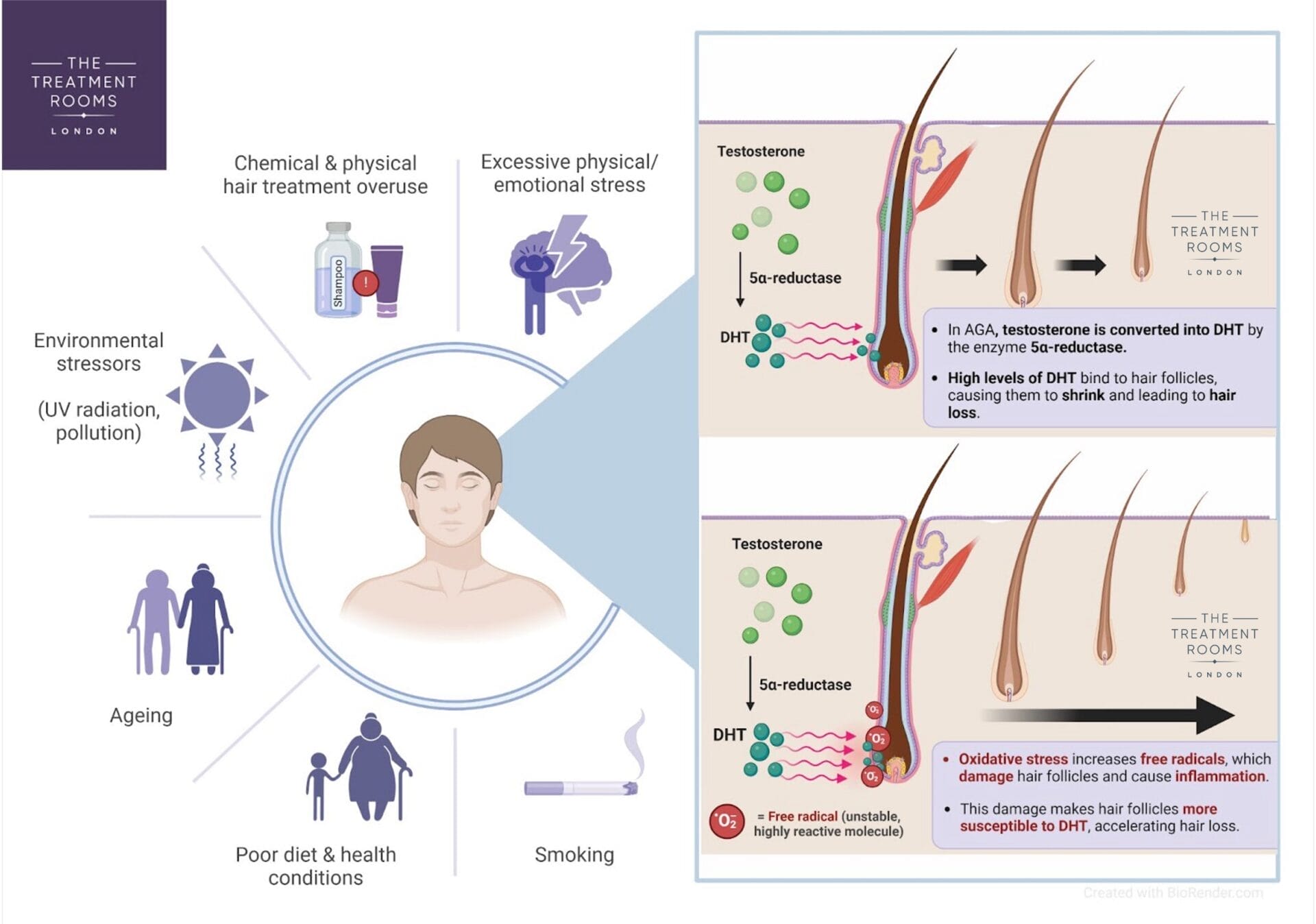
- Does working out raise dihydrotestosterone (DHT) and cause baldness? DHT is the primary biological driver of pattern baldness in those with genetic susceptibility. Strenuous exercise may temporarily increase naturally occurring (endogenous) DHT levels, as a result of increased freely-converted testosterone, but this has not been shown to have any impact on the progression of pattern baldness. Rather, pattern hair loss is a slow, progressive condition resulting from an increased sensitivity to DHT, as opposed to raised circulating levels.
- What about very intense training or crash diets? Rapid weight loss or crash diets can put significant metabolic stress on the body and are known to trigger stress-related shedding (known as telogen effluvium).1
- What should I do? Stay active, but be mindful of your body’s needs for adequate food intake and recovery. If your cause of hair loss is androgen-dependent, like pattern hair loss, be reassured that exercise is not contributing to its progression. However, arrange an assessment if the shedding is continuous, patchy, painful, or you notice it comes along with other changes in your health, which may imply other causes.
You may be wondering if your workout is causing your hair loss. Oftentimes, if you notice hair shedding or loss alongside a new gym routine, it is merely coincidental. The real cause might be due to having a calorie deficit, illness, a scalp flare-up, or noticing the early stages of pattern loss, which can often mistakenly be put down to being caused by exercise.
It’s very common for us to try to find a culprit for hair loss when it happens, but in the case of exercise and hair loss, it is likely coincidental unless it is telogen effluvium; this would present as rapid diffuse loss rather than slow, patterned recession or thinning.
Does exercise cause hair loss?
Exercise in itself does not cause hair loss. Engaging in regular, moderate exercise is a perfectly normal and healthy way of improving your fitness and overall health. The concerns around exercise and hair loss centre mainly around poor recovery after exercise, not getting enough nutrition, and the potential use of certain steroids and hormones as part of your exercise regimen.
When you are linking exercise and hair loss, it is most likely you are suffering from either telogen effluvium or androgenetic alopecia:
- Telogen effluvium causes an increase in hair being shed from across the entire scalp following a physiological trigger such as severe stress, abrupt nutritional changes, childbirth, undergoing major surgery, and several others. It is non-scarring, which means the follicles are undamaged and retain the possibility of resuming normal hair growth once the trigger has been resolved.
- Androgenetic alopecia, also known as pattern baldness, occurs more gradually. It is also non-scarring but can progress over time; as the condition advances, some of the hair follicles eventually lose the ability to produce hair. It can be exacerbated by exogenous (i.e. not naturally occurring, or injected) anabolic steroid use such as testosterone.
It is certainly possible to experience both at the same time. For example, a period of heavy shedding may reveal underlying patterned thinning. It is easy to jump to conclusions about the cause, but this is a prime example of why it is best to get a proper scalp assessment by a professional to know for sure what is causing your hair loss.
“Many of our patients often ask us whether exercise causes their hair loss. It often isn’t the cause, and they mistakenly link it if they are losing hair and exercising a lot. Most commonly, patients are suffering from other common hair loss conditions like androgenetic alopecia where the hairline and crown can thin over time.”
Dr Dilan Fernando, Hair Transplant Surgeon and Co-Founder at The Treatment Rooms London
Does exercise raise DHT levels and cause baldness?
Exercise has been shown to raise naturally occurring (endogenous) DHT levels post-workout, but the effect is temporary and unlikely to contribute to hair loss. Given the chronic, progressive nature of pattern hair loss, the small, short-lived rises of DHT caused by exercise are unlikely to meaningfully contribute.
Moreover, exercise does not change the genetic susceptibility of hair follicles to balding, which is the principal mechanism behind pattern hair loss.2
DHT is a potent hormone derived from testosterone which is linked to male pattern hair loss. It binds to hair follicles through their androgen receptors and causes hairs to become shorter and thinner over time. This usually only happens to follicles that are genetically susceptible.
Typically, this affects either the frontal hairline and temples, or the crown, or both. Over time, they can connect to leave the entire top-scalp bald, often sparing the back and sides of the head which are naturally resistant to DHT.
This usually happens only to follicles that are in some way susceptible to its effects genetically. Oftentimes, these are the follicles that are located across the scalp in areas where you usually see hair loss in male pattern baldness.
Does creatine or anabolic steroid use cause baldness?
In a short study on whether creatine causes hair loss in men, it was found that there was no difference in DHT levels between those who took creatine or not.3 This does not establish whether it may cause hair loss with longer term use.
Anecdotally, many report hair shedding or accelerated receding with creatine use; however, a link has not been established scientifically, with no clear physiological explanation behind the phenomenon.
Anabolic steroids, on the other hand, actively expose the body to external (exogenous) androgens. Studies suggest this has the potential to cause hair loss, most likely through significantly increasing DHT levels in the body via increased conversion of circulating testosterone; however, it can also be a result of general increased androgen exposure to hair follicles, independent of DHT.4,5
Either way, this can accelerate pattern hair loss that would naturally happen over a longer time period. If you are noticing hair loss and taking testosterone supplements, do not stop any prescribed steroids or testosterone without discussing it first with your doctor.
“Some of my patients do take testosterone or anabolic steroids as part of their exercise regimen. I have to explain to them that this dramatically increases the risk of future hair loss and that they ought to consider finasteride or other mechanisms to prevent further hair fall. Surgery is relatively contraindicated until they have stopped their use of testosterone and/or anabolic steroids.
“However, prescribed testosterone replacement therapy is a different matter, and requires a discussion with their prescriber, particularly if they are considering a hair transplant.”
Dr Dilan Fernando, Hair Transplant Surgeon and Co-Founder at The Treatment Rooms London
What is ‘gym hair loss’?
Gym hair loss is an informal label applied to shedding, thinning, or breakage of hair noticed during a period of increased gym training. It refers to several separate problems which may occur alongside a gym routine.
“One of the most useful clues we have when assessing causes of hair loss is by looking at the pattern that it presents in. If this hair loss or shedding is present across most of your scalp (diffuse), then it is likely due to physiological stress on the body, which may stem from physical, metabolic, or psychological triggers. This is much different to the sequence that is seen in pattern baldness, which is more concentrated in areas such as the temples and the frontal hairline initially.”
Dr Dilan Fernando, Hair Transplant Surgeon and Co-Founder at The Treatment Rooms London
Under-eating and crash dieting
The strongest link we have between the gym and hair shedding or hair loss is linked to diet, since this is a well-documented trigger of telogen effluvium.
Having a strenuous workout routine requires increased need for food intake for healing and repair. When you don’t meet energy or protein requirements but continue training regardless, it is almost inevitable that you will put your body under stress, which may result in telogen effluvium if severe enough.
It is thought that the biological cause of the shed is because the physiological trigger, whichever the cause, resets the hair growth cycle of many existing follicles in a synchronous wave, resulting in a shed that is more noticeable than our typical, daily hair shedding.6
Telogen effluvium usually becomes noticeable around two to three months after a trigger. Shedding and recovery can then take several months.7
“Sometimes, patients who are on crash diets with a severe calorie restriction can notice more sudden hair loss, a condition termed telogen effluvium. For those who are undergoing rapid weight-loss, hair transplant surgery shouldn’t be planned until after the weight goal has been achieved.”
Dr Dilan Fernando, Hair Transplant Surgeon and Co-Founder at The Treatment Rooms London
Key insight
Interestingly, recent large studies of patients with diabetes taking common GLP-1 medicines such as semaglutide and tirzepatide have shown that users display a higher risk of clinically recorded non-scarring hair loss compared to people taking other classes of diabetic medications.8
The reason why it increases hair loss is not fully known, but one of its major known side effects is rapid weight loss. Without claiming a direct link, it could be possible that a rapid change in body weight either due to a strenuous gym routine, or through medications, leads to hair loss in a similar way.
Extreme overtraining and physical stress
Training hard doesn’t impact hair follicles directly. The reason why your hair might be impacted is because there is a mismatch between your training and either your food intake or the amount of rest you are allowing between training sessions.
There is a recognised condition known as relative energy deficiency in sport (REDs), where sustained low energy availability from chronic underfuelling can disrupt normal hormone regulation, including increasing cortisol, as the body adapts to insufficient energy.
Rapid weight loss and inadequate nutrition are recognised triggers for telogen effluvium, although the relationship between overtraining, cortisol, and hair shedding is less clearly established.7
Sweat, scalp irritation, and post-gym hair habits
Exercise leads to sweating, which includes scalp sweating. This can create an environment which can worsen existing scalp conditions such as eczema, psoriasis, or folliculitis. If you also wear close fitting caps, helmets, or headbands, this can add friction and block the hair follicles. These conditions may irritate the scalp and may exacerbate hair shedding. However, regular cap-wearing that is not too tight should not be a cause for concern.
Wash according to how oily your scalp is, but remember to use a gentle shampoo and massage it in with your fingertips, avoiding scratching your scalp with your nails. Don’t rub your hair dry with a towel; it is better to pat or squeeze excess moisture out.
Washing your hair with cooler-temperatured water can also help in some cases. Air dry your hair if possible. If you are using a blow dryer, then use it on a moderate heat setting, keep it at least 15 cm away from your head, and keep the dryer moving and not concentrated in one spot. Research has found that repeatedly exposing your hair to high temperatures can cause significant breakage and damage.10
Traction from tight gym hairstyles
Wearing a tight hairstyle may keep your hair off your face, but over time, the tension can lead to hair loss through repeated pulling on your hair follicles. When you lose hair this way, it is called traction alopecia.
In its early stages, traction alopecia is non-scarring and often improves when the pulling force stops. If the tension continues, the continual force causes permanent damage to the hair follicles, leading to scarring; as a result, the hair may never regrow.
If you notice recession at the temples, broken hairs, scalp tenderness, and bumps around tightly held hairs, then you should loosen your hairstyle and seek advice from your GP or dermatologist.11
You should opt for fabric-covered bands or soft scrunchies and try to change the position of ponytails and buns. Avoid styles that cause you pain or give you a ‘facelift’ sensation.
No matter which style you choose, it should still feel comfortable and not overly tight at the scalp.
How to support your hair health while exercising
If you are noticing hair loss, you do not need to stop exercising. Having a steady training and recovery plan is more helpful than abandoning activity altogether.
Instead of throwing out your exercise habits, consider the following:
- Increase your training volume gradually rather than ramping it up all of a sudden.
- Make sure you are eating enough to cover your body’s caloric and nutritional requirements for both normal function and the additional training.
- Include regular sources of protein and iron as part of a balanced diet.
- Keep in mind good scalp hygiene, maintain sweaty headwear clean, manage an existing flaky or itchy scalp, and use gentle washing and drying habits.
- Wear looser hairstyles and rotate the point at which the hair is secured.
- Take monthly photographs in the same lighting and position if you are worried about progression.
When to see a health professional
If you notice the following signs of hair loss, then it is best to contact your GP for an assessment:
- Sudden or rapid increase in shedding
- Distinctive bald patches
- Progressive temple, crown, or parting line thinning
- Scalp pain, burning sensation, redness, crusts, or lumps
- Smooth, shiny patches, excessive flaking, or itching
- Loss of eyebrows, eyelashes, or body hair
- Shedding that continues beyond six months
- Hair loss after starting a medication
Your doctor will look at your pattern of hair loss and symptoms and decide what further testing and possible referral you need.
Early diagnosis matters as this gives you the best chance of minimising hair loss if present and keeping as much of your hair density as possible.
Conclusion
Exercise alone is rarely the cause of hair thinning. As we discussed in the article, there are numerous factors and possible explanations for hair loss while exercising.
Our advice is therefore to continue exercising but make sure you fuel your body properly, allow adequate recovery time between sessions, and treat your hair and scalp gently with styling and hair care techniques.
If you are concerned about your hair loss with exercise, then seek advice from your GP, who will be able to establish a cause or refer you to an appropriate specialist.
References
- Kang DH, Kwon SH, Sim WY, Lew BL. Telogen effluvium associated with weight loss: a single center retrospective study. Ann Dermatol. 2024;36(6):384-388. doi:10.5021/ad.24.043.
- Smith AA, Toone R, Peacock O, Drawer S, Stokes KA, Cook CJ. Dihydrotestosterone is elevated following sprint exercise in healthy young men. J Appl Physiol (1985). 2013;114(10):1435-1440. doi:10.1152/japplphysiol.01419.2012.
- Lak M, Forbes SC, Ashtary-Larky D, Dadkhahfar S, Robati RM, Nezakati F, et al. Does creatine cause hair loss? A 12-week randomized controlled trial. J Int Soc Sports Nutr. 2025;22(Suppl 1):2495229. doi:10.1080/15502783.2025.2495229.
- Gupta S, Bai JQA, Geng RSQ, Donovan J. The effect of androgen supplementation on hair loss: a systematic review. JAAD Int. 2026;26:20-22. doi:10.1016/j.jdin.2026.03.011.
- Bond P, Smit DL, de Ronde W. Anabolic–androgenic steroids: how do they work and what are the risks? Front Endocrinol (Lausanne). 2022;13:1059473. doi:10.3389/fendo.2022.1059473.
- Yin GOC, Siong-See JL, Wang ECE. Telogen effluvium – a review of the science and current obstacles. J Dermatol Sci. 2021;101(3):156-163. doi:10.1016/j.jdermsci.2021.01.007.
- British Association of Dermatology: Telogen Effluvium. Published Oct 2025. URL: https://www.bad.org.uk/pils/telogen-effluvium. Accessed 13/11/26.
- Tang H, Zhang B, Lu Y, Zhang D, Liu R, Lu Y, et al. Risk of hair loss associated with glucagon-like peptide-1 receptor agonists in adults with type 2 diabetes: target trial emulation. BMJ. 2026;394:e100077. doi:10.1136/bmj-2026-100077.
- Mountjoy M, Ackerman KE, Bailey DM, Burke LM, Constantini N, Hackney AC, et al. 2023 International Olympic
Committee’s(IOC) consensus statement on Relative Energy Deficiency in Sport (REDs). Br J Sports Med. 2023;57(17):1073-1098. doi:10.1136/bjsports-2023-106994. - Lee Y, Kim YD, Hyun HJ, Pi LQ, Jin X, Lee WS. Hair shaft damage from heat and drying time of hair dryer. Ann Dermatol. 2011;23(4):455-462. doi:10.5021/ad.2011.23.4.455.
- Billero V, Miteva M. Traction alopecia: the root of the problem. Clin Cosmet Investig Dermatol. 2018;11:149-159. doi:10.2147/CCID.S137296.
Share:
Authored by
Dr Roshan Vara
Dr. Roshan Vara is a renowned hair transplant surgeon in London and the Co-Founder of our award winning hair transplant clinic, The Treatment Rooms London.He has over 10 years of experience in hair transplant surgery and is recognised for delivering natural-looking results through ethical, patient-centred care. He is a Full Medical Member of BAHRS and an Associate Member of ISHRS, reflecting his commitment to the highest standards in modern hair restoration.
Reviewed by
Dr Dilan Fernando
Dr. Dilan Fernando is regarded as one of the best hair transplant surgeons in London and Co-Founder of The Treatment Rooms London. He has over 10 years of experience in hair transplant surgery and is known for his meticulous technique and commitment to ethical practice. He served on the Executive Committee of BAHRS from 2020 to 2024, helping to shape industry standards for patient safety and quality of care. Dr. Fernando personally performs each surgery, ensuring natural results built on trust and experience.
Book a Consultation
Related Blogs
How Much Hair Loss Per Day Is Normal for Men
November 17, 2026
Key takeaways Perhaps you have noticed extra hair in the shower after you have finished washing or…
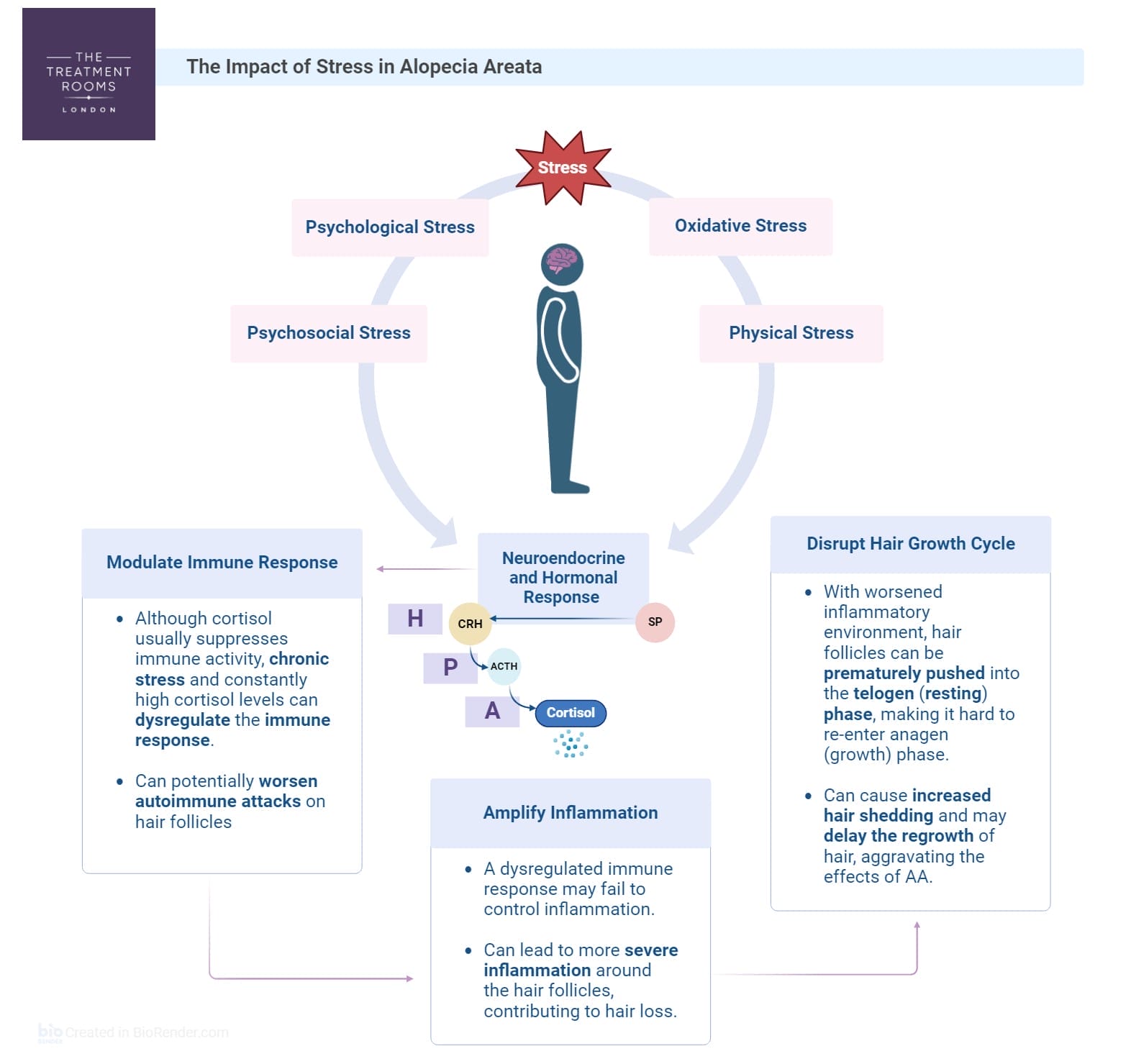
What to Know About Stress and Alopecia Areata
November 16, 2026
Key takeaways: Alopecia areata is an autoimmune condition in which the immune system attacks the hair follicles,…

Understanding Hair Loss in People with Trichotillomania
November 13, 2026
Key Takeaways: What Is Trichotillomania? Trich is a mental health condition where people suffering from it experience…

Hair Growth Cycle Explained
November 13, 2026
Key Takeaways: Each hair follicle is a small, self-renewing structure that goes through periods of growth, transition,…
Did Kyle Walker Have a Hair Transplant? Expert Review of His Hair Loss and Restoration
November 13, 2026
Key Takeaways: Kyle Walker is a widely known athletic superstar. He burst onto the football scene with…

Jürgen Klopp Hair Transplant: Expert Analysis of His Hair Loss and All You Need to Know
November 13, 2026
Key takeaways Jürgen Klopp is one of football’s most celebrated managers. He made his name through his…

Can a Norwood 7 Get a Hair Transplant? All You Need to Know
November 13, 2026
Key takeaways Hair transplantation may be possible for selected patients with Norwood 7 hair loss. However, it…

Retrograde Alopecia: Causes, Symptoms, and Treatment Options
November 13, 2026
Key takeaways: Retrograde alopecia has always been recognised as a phenomenon where the hair loss starts at…
Female Pattern Baldness (Androgenetic Alopecia): Symptoms, Causes & Treatments
November 12, 2026
Key takeaways Female pattern hair loss (FPHL) is the most common hair loss condition affecting women, where…