

Key Takeaways
- Has David Silva had a hair transplant? David Silva has never publicly confirmed having a hair transplant done. However, evidence suggests he likely had one around 2017.
- What does available evidence suggest? He previously had recession along his temples during his time at Manchester City. He now sports fuller hair and a lower hairline. This degree of restoration is unlikely to occur naturally or through medications alone; our surgeons believe the changes seen are more consistent towards a hair transplant.
- What was the extent of hair loss? Dr Dilan Fernando estimates his hair loss at around Norwood stage 3. He had an m-shaped hairline with progressive recession along the temple area.
- Which technique was likely used? If he had a hair transplant, he would have likely had an FUE (Follicular Unit Excision) procedure. There is no sign of a linear scar on his scalp when he shaved his head back in 2017, which would have suggested a FUT hair transplant.
Born in Arguineguín on Spain’s Canary Islands in 1986, he made his name with Valencia before arriving at Manchester City in 2010. Over the next decade, he became a City legend and a key part of their winning four Premier League titles.
He earned the nickname El Mago (the magician) for his vision and control. Silva was also integral to Spain’s 2010 World Cup victory and consecutive European Championships.
During his career, he mostly wore his hair long, which became his signature style. During this time, while wearing his long hair, he began to have hair loss at his temples and frontal hairline, which is usually how male pattern hair loss presents in some people.

David Silva’s Hair Over the Years
Hair loss happens over an extended period of time, with the affected parts of the hair changing as the hair loss progresses. We will now review David Silva’s hair loss from around 2007 in his twenties to when we estimate he had his hair restoration.
Around 2007
He began to present early signs of hair loss in his 20s while playing at Valencia. The earliest signs were mild recession along both sides of the temple area, forming an m-shape hairline.
Male pattern hair loss is driven by genetic sensitivity to the hormone dihydrotestosterone (DHT), which gradually causes susceptible follicles to shrink, producing finer and shorter hairs; particularly susceptible are the follicles at the front and top of the scalp as well as the crown. The hairs at the sides and back of the scalp are DHT resistant.
His hair loss was generally subtle at this time.
2010 to 2016
His hairline recession deepened around this time while playing for Manchester City as a key player helping the club win four Premier League titles.
The recession along the temples further pulled back, making them more apparent, with the frontal hairline now forming a deeper m-shape. He was able to disguise much of the hair loss by wearing his hair long and shaggy throughout this period.
At this time, our surgeons assessed his hair loss based on photographic evidence at around Norwood stage 3.
2017
In the summer of 2017, Silva was seen to have shaved his hair, which is quite uncharacteristic of him. He usually wears his hair long, which effectively concealed hair loss.
Shaving the hair is more commonly performed as part of a hair transplant procedure, although patients can opt for a minimal shave or even an unshaven procedure.
We estimate he may have had his hair transplant at this time.
2018
At this time, his hairline appeared to be noticeably different. He now has fuller hair at the temples and a more youthful hairline. The change observed between 2017 and 2018 is consistent with a hair transplant timeline, with shedding usually taking place early after the procedure, followed by hair regrowth taking place over the next few months.
What Type of Hair Transplant Did David Silva Likely Have?
If Silva had a transplant, our surgeons consider FUE (Follicular Unit Excision) as the most likely method.
FUE techniques involve moving individual follicles from the donor area, usually at the back and sides of the scalp, and implanting them into the areas with hair loss.
The FUE method is a modern technique that is preferred over the FUT technique, which usually leaves a linear scar on the scalp. His 2017 low buzz cut did not reveal any such linear scar, further making the FUE method the most likely procedure used.

David Silva’s wavy hair also adds another layer to the procedure, as wavy hair can create more density with fewer grafts when compared to straight hair for the same space.
However, wavy or curly hair requires more technical expertise and relatively more time for the procedure.
Wavy hair also has the same shape beneath the skin, making it more delicate and requiring a surgeon experienced and knowledgeable in handling wavy hair.
How to Choose a Hair Transplant Clinic
If you are inspired by David Silva’s hair transformation and you are considering having a hair transplant, you should be aware that the clinic or surgeon you choose matters,
While hair transplant is now more popular than ever, it is a permanent procedure which, if not done by a skilled surgeon, can lead to poor outcomes, scars, and loss of valuable donor hair for future procedures.
We recommend choosing a surgeon-led hair transplant clinic. Check past reviews about your clinic of choice and ask if the procedure will be led by a surgeon or a technician.
A genuine and reputable clinic will also be concerned about addressing your concerns and determining your suitability rather than simply selling hair transplants to you. A good clinic will give you honest expert advice based on your hair assessment during your consultation.
At The Treatment Rooms London, we operate a surgeon-led system where all our patients receive expert medical advice during consultation, and their procedure is led by the same surgeon
Visit our extensive successful hair transplant gallery, which is one of the UK’s largest.
Click here to book a consultation with one of our surgeons.
Share:
Authored by
Dr Roshan Vara
Dr. Roshan Vara is a renowned hair transplant surgeon in London and the Co-Founder of our award winning hair transplant clinic, The Treatment Rooms London.He has over 10 years of experience in hair transplant surgery and is recognised for delivering natural-looking results through ethical, patient-centred care. He is a Full Medical Member of BAHRS and an Associate Member of ISHRS, reflecting his commitment to the highest standards in modern hair restoration.
Reviewed by
Dr Dilan Fernando
Dr. Dilan Fernando is regarded as one of the best hair transplant surgeons in London and Co-Founder of The Treatment Rooms London. He has over 10 years of experience in hair transplant surgery and is known for his meticulous technique and commitment to ethical practice. He served on the Executive Committee of BAHRS from 2020 to 2024, helping to shape industry standards for patient safety and quality of care. Dr. Fernando personally performs each surgery, ensuring natural results built on trust and experience.
Book a Consultation
Related Blogs

A Guide to the Norwood Hamilton Scale: Understanding Hair Loss Stages
October 19, 2026
Key takeaways: The Norwood scale (also known as the Hamilton-Norwood scale) is the main classification system used…
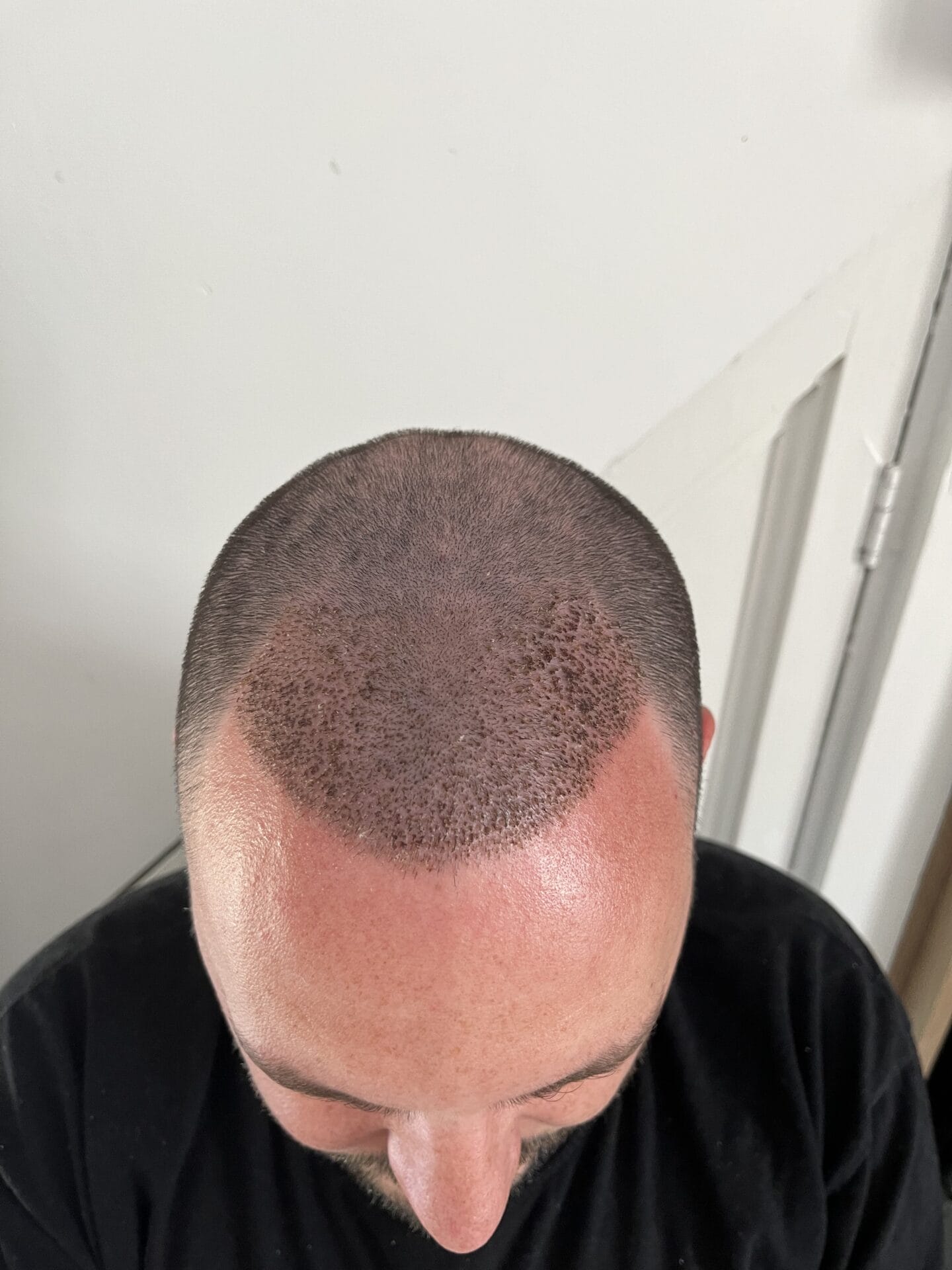
When Do Scabs Fall Off After Having a Hair Transplant?
October 17, 2026
Key takeaways: Scabs will form immediately after having a hair transplant and should wash away after 7-10…

What Happens If You Stop Using Minoxidil
October 13, 2026
Key Takeaways: If you’ve been consistently applying minoxidil to support your hair growth and have been doing…

Hair Transplant After 7 Days: What To Expect
October 9, 2026
Key takeaways: 7 days after your hair transplant, you can expect to see the scabs in your…

Minoxidil Side Effects: What to Expect, Risks, and How to Manage Them
October 9, 2026
Key takeaways Medications are often a first step people take when tackling pattern baldness. They can help…
What Is A Hair Graft In A Hair Transplant?
October 7, 2026
Key takeaways: What is a Hair Graft in a Hair Transplant? Hair loss can be a distressing…

Widow’s Peak Hair Transplant for Women: Everything You Need to Know
October 6, 2026
Key takeaways: There is no absolute definition of a widow’s peak in women. It is often based…

Has Steve Carell Had a Hair Transplant? What the Evidence Really Shows
October 6, 2026
Key Takeaways Steve Carell is arguably one of the most liked and versatile actors of his generation….

When Can You Drink Alcohol After Your Hair Transplant?
October 6, 2026
Key takeaways: It’s common for our patients to ask us when it is okay to resume drinking…