

Key Takeaways
- Hair loss (alopecia) occurs when the normal hair growth cycle is disrupted, leading to excessive shedding, thinning, or bald patches, and it affects people of all ages and genders.
- Identify the cause first: Hair loss can result from a combination of factors, including genetics, hormones, stress, nutritional deficiencies, certain medications, or lifestyle choices. Correct diagnosis ensures effective treatment.
- Medical and surgical treatments are most effective: FDA-approved options such as minoxidil and finasteride, along with PRP, laser therapy, and hair transplants, yield the best results.
- Supportive measures help: managing stress, improving diet, and using cosmetic strategies such as hair fibres or scalp micropigmentation can enhance appearance while treatments take effect.
What is Hair Loss?
Hair loss, also known as alopecia, occurs when the natural hair growth cycle is disrupted, resulting in excessive shedding, thinning, or noticeable bald patches. While shedding 50–100 hairs per day is normal, losing more than this can signal an underlying issue affecting hair follicle health. 1
Hair loss is a common condition that affects people of all ages and genders. For example, genetic hair loss (androgenetic alopecia), a type of hair loss, affects up to 50% of men by age 50 and a significant proportion of women over their lifetimes. Non-genetic or environmental causes of hair loss, such as stress or nutrition-related hair loss, are increasingly seen in younger adults. 1
Symptoms of hair loss vary depending on the cause, with some patients noticing gradual thinning over time, while others experience sudden shedding or develop patchy bald spots. Understanding the link between causes and symptoms is key, as effective treatment depends on identifying the pattern of hair loss and addressing the root cause.

What causes hair loss?
Identifying the primary cause of hair loss is essential, as different causes lead to distinct shedding or thinning patterns that require specific treatment.
Below are the most common and clinically recognised causes of hair loss:
1. Patterned Hair Loss (Androgenetic Alopecia)
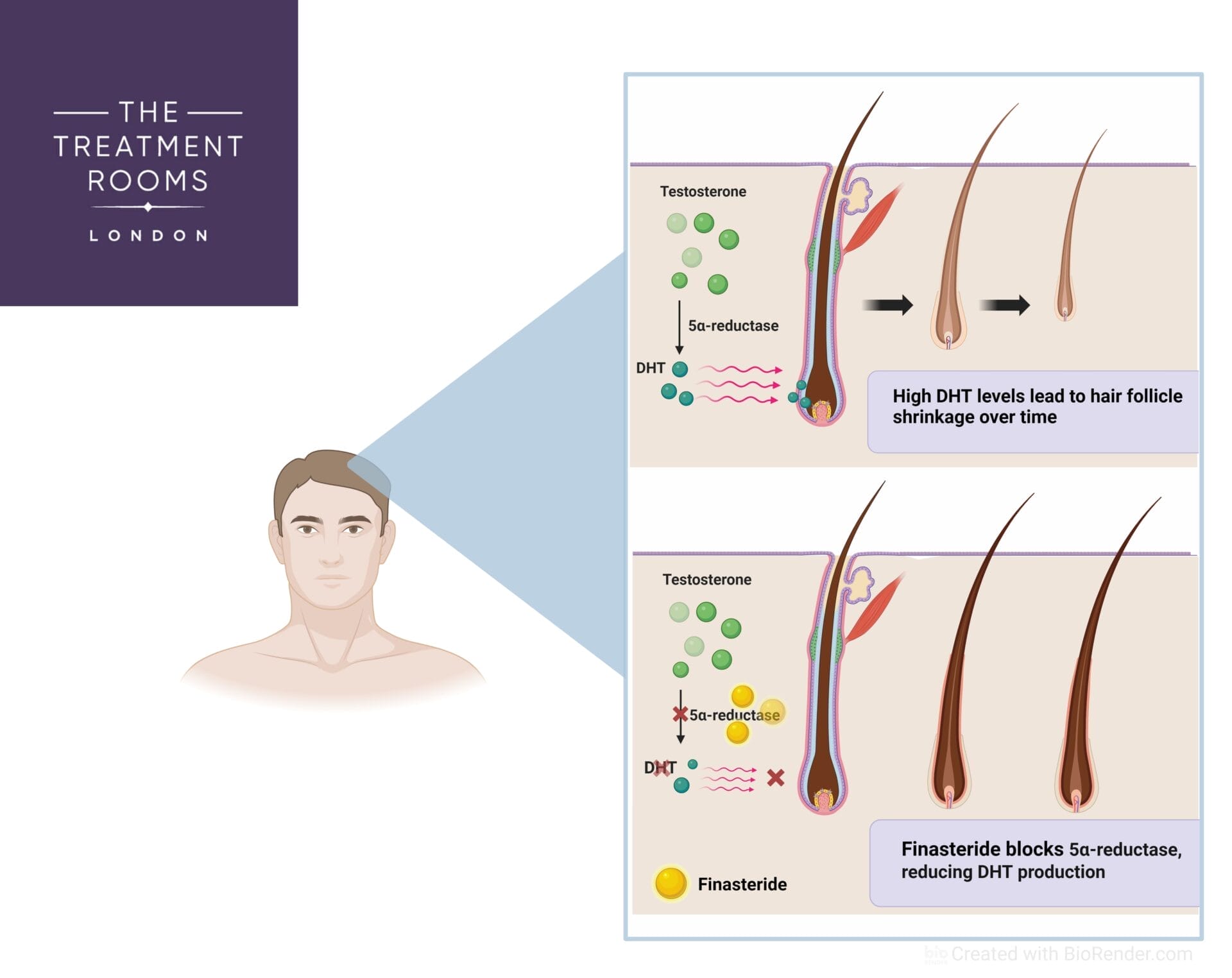
This is the most common cause in both men and women. Certain hair follicles are genetically sensitive to dihydrotestosterone (DHT), a hormone that shortens the hair growth phase, producing thinner, weaker hairs over time.1
2. Hormonal Imbalances
Changes in hormones can disrupt hair growth. Common triggers include thyroid disorders, polycystic ovary syndrome (PCOS), menopause, and postpartum hormonal shifts.2
3. Chronic Stress
Long-term stress can cause Telogen effluvium, where hair prematurely enters the resting phase, leading to noticeable shedding months later.3
4. Nutritional Deficiencies
Deficiencies in iron, vitamin D, biotin, zinc, or protein can weaken hair follicles, causing diffuse thinning.4
5. Autoimmune Disorders
Diseases such as alopecia areata, lupus, and severe infections can impair follicle function. Autoimmune hair loss often presents as sudden, patchy hair loss. 5
6. Medications and Treatments
Certain drugs, such as antidepressants, beta blockers, and hormonal treatments, can also influence the hair cycle, leading to temporary or prolonged hair shedding. 6
7. Hairstyling and Mechanical Stress
Tight hairstyles, braids, extensions, chemical treatments, and excessive heat can damage hair and cause traction alopecia. 7
8. Lifestyle Factors
Smoking, poor sleep, and inactivity impair blood flow, nutrient delivery, and hormone regulation. Alone, they rarely cause hair loss but can worsen thinning. 8
Symptoms and Types of Hair Loss
Hair loss symptoms vary depending on the underlying cause. Below, we explore common symptoms associated with specific hair loss conditions.
Common hair loss symptoms
Commonly seen hair loss symptoms can be part of any underlying hair loss condition. They are seen in common conditions like male pattern baldness or rarer conditions like frontal fibrosing alopecia. Below are some examples of common hair loss symptoms:
- Gradual thinning of hair, especially on the scalp
- Increased hair shedding when washing, brushing, or styling
- Visible widening of the parting or reduced hair volume
- Hair loss occurring across the entire scalp (diffuse hair loss)
- Hair loss limited to specific areas (patchy or focal hair loss)
Pattern hair loss symptoms
As mentioned above, patterned hair loss is caused by DHT, a hormone that thins the hair in a hairline, crown or hair parting. There are distinct hair loss symptom differences between men and women, as summarised below:
- Male pattern hair loss (androgenetic alopecia): Receding hairline, thinning at the temples, or hair loss at the crown, gradually leaving hair around the sides and back of the scalp
- Female pattern hair loss: General thinning across the scalp, most noticeable at the top or crown, with the frontal hairline usually preserved
Rarer hair loss conditions
There are some rarer hair loss conditions, and what a patient sees in their hair loss can vary from one condition to the next. Below is an overview of some rarer conditions and their associated hair loss symptoms.
- Alopecia areata: Sudden, smooth, round or oval patches of hair loss
- Telogen effluvium (stress-, illness-, or medication-related): Sudden shedding of large amounts of hair, often noticed as clumps
- Trichotillomania: Irregular patches of broken or missing hair caused by repeated pulling
- Inflammatory or medical conditions, such as lichen planopilaris: itching, tenderness, and redness with hair loss.
Symptoms can overlap between conditions, so accurate diagnosis is essential to identify the underlying cause and guide appropriate treatment.
Why is hair loss treatment needed?
Hair loss affects self-esteem, social interactions, and quality of life. Many people seek treatment to improve their appearance, confidence, and psychological well-being. Others pursue therapy to address underlying health issues, such as hormonal or nutritional imbalances, which also have a benefit in preventing further hair loss. 9
“We’re now seeing genuine progress in both medical and surgical hair restoration methods, from refined FUE techniques to adjunct treatments like PRP and emerging therapies such as exosomes, all aimed at revitalising weakened hair follicles. These advancements mean we can achieve natural outcomes with less downtime, helping patients regain not just their hair, but their confidence too.”
Dr Roshan Vara, Director and Hair Transplant Surgeon at Treatment Rooms London
Hair Loss Treatment Options
Hair loss can be treated in different ways, depending on the cause. Treatments may focus on correcting underlying causes, slowing or reversing follicle miniaturisation with medication, surgically restoring hair, or improving appearance with cosmetic solutions.
“In 2026, we’re fortunate to have a wide range of effective treatments for hair loss, but the key remains a precise diagnosis. Hair loss is usually a symptom of an underlying issue, which can range from certain lifestyle habits or nutritional deficiencies to broader causes like genetic or autoimmune conditions. Our role as clinicians is to understand the root cause before recommending any course of action. A tailored plan always produces the safest and most sustainable results.”
Dr Dilan Fernando, Director and Hair Transplant Surgeon at Treament Rooms London
1. Treating the Underlying Cause
Before hair transplant surgery, your hair loss doctor will investigate potential causes of your hair loss and perform tests such as blood tests, scalp examinations, and a review of your medical history.
Correcting deficiencies or hormonal imbalances, or adjusting medications, can stabilise hair loss and support regrowth. Lifestyle management, including stress reduction, adequate sleep, and a balanced diet, can also enhance hair recovery.
2. Medical (Non-Surgical) Treatments
Minoxidil and Finasteride are the 2 proven, licensed medications used to treat hair loss. They are most commonly taken by men, with women often using Minoxidil to help. Both medication options should be discussed with your Doctor and they are outlined below:
- Minoxidil: A topical vasodilator which increases blood on the scalp. It works by prolonging the active growth phase (anagen) of the hair cycle and increasing follicle size, leading to thicker hair over time. It is available in 2% and 5% concentrations in a foam or a liquid mixture. Results are seen in 4–6 months.
- Finasteride: An oral 5-alpha-reductase inhibitor that reduces DHT, slowing hair loss and promoting regrowth in genetic hair loss. It is the most effective medication for male pattern hair loss.
3. Adjunctive and Supportive Procedures
Alongside Minoxidil and Finasteride, other procedures and treatment protocols have been shown to help stimulate hair growth. PRP, LLLT and microneedling are 3 such examples and they are outlined below:
- Platelet-Rich Plasma (PRP): Patient’s blood plasma is injected into the scalp to release growth factors that can stimulate follicle activity.
- Low-Level Laser Therapy (LLLT): Specific light wavelengths are shone onto the scalp to stimulate follicle metabolism and increase hair count. 16
- Microneedling: Creates micro-injuries with small needles on a rolling device, enhancing the absorption of topical treatments and promoting regrowth.
4. Surgical Hair Restoration
Hair transplant surgery focuses on restoring hair where it has been permanently lost. There are 2 main types of hair transplant surgery:
- Follicular Unit Extraction (FUE): Individual follicles are harvested and transplanted into areas of balding, like the hairline, crown or temples. It can provide natural results and permanent hair restoration.
- Follicular Unit Transplantation (FUT): A strip of scalp is removed and dissected into grafts to implant into areas of balding. It is a technique used for large surgical procedures.
5. Cosmetic & Concealment Options
As discussed above, not all approaches to hair loss focus on regrowth. Cosmetic and concealment options aim to improve the appearance of thinning hair and often offer immediate visual improvement without affecting the underlying cause.
Examples include;
- Fibres and concealers: They instantly increase apparent density without stimulating growth.
- Scalp micropigmentation: Pigment tattoo mimics hair follicles; improves visual density.
- Strategic styling & colouring: Cuts, layers, or dyes create the illusion of volume.
Natural Remedies for Hair Loss
Natural remedies for hair loss help support hair follicle health rather than directly stimulating regrowth. Their benefits are mainly seen in cases of nutritional deficiency, inflammation, or mild hormonal imbalance, and they cannot reverse genetic or advanced hair loss.
Patients should have realistic expectations as dramatic regrowth is unlikely in areas of extensive hair loss and excessive supplementation can be harmful. Natural remedies should be used to complement medical treatments rather than as standalone solutions.
Examples are;
- Saw Palmetto: Plant extract that may slow hair thinning by mildly inhibiting DHT
- Biotin (Vitamin B7): Supports keratin production; effective in deficiency but not for general hair loss
- Iron: Corrects deficiency-related shedding; excessive supplementation can be harmful
- Vitamin D: Supports hair follicle cycling; supplementation helps only if deficient
- Zinc: Promotes follicle structure and scalp health; excess intake can be harmful
- Omega-3 Fatty Acids: Reduce inflammation and improve hair quality; do not stimulate new growth
How to Choose the Right Hair Loss Treatment
No single treatment works for everyone. The most effective approach depends on the underlying cause, the pattern and severity of hair loss, and the patient’s goals.
It is important to see a hair loss specialist like a trichologist, a Doctor or a hair transplant surgeon to discuss which treatment is appropriate according to the underlying cause of your hair loss.
You may have an underlying health condition that can be treated without extensive surgery. Your specialist may also recommend lifestyle changes or supplements that will help thicken or regrow hair in the coming months. The options of medication and surgery require detailed discussion with a clinician to ensure they are in your best interests.
Conclusion
Effective hair loss treatment depends on identifying the underlying cause and selecting the right combination of medical, surgical, or supportive therapies. Lifestyle measures and cosmetic solutions can complement regrowth.
Always consult a certified dermatologist or surgeon before starting treatment to ensure safe, evidence-based outcomes.
References
- Hair Loss: Common Causes and Treatment. PubMed. https://pubmed.ncbi.nlm.nih.gov/28925637/
- NHS. Hair loss causes. https://www.nhs.uk/symptoms/hair-loss/
- Healthline. Why is my hair falling out? https://www.healthline.com/health/beauty-skin-care/why-is-my-hair-falling-out
- Micronutrients and Androgenetic Alopecia: A Systematic Review. PubMed. https://pubmed.ncbi.nlm.nih.gov/39440586/
- ISHRS. Types of hair loss. https://ishrs.org/patients/types-of-hair-loss/
- WebMD. Hair Loss: Understanding the Basics. https://www.webmd.com/skin-problems-and-treatments/hair-loss/understanding-hair-loss-basics
- Healthline. Hair loss after weight loss: Causes & prevention. https://www.healthline.com/nutrition/weight-loss-and-hair-loss
- Hair Loss: Causes, Treatments and Prevention Options. Cleveland Clinic. https://my.clevelandclinic.org/health/diseases/21753-hair-loss
- Efficacy of non‑surgical treatments for androgenetic alopecia: a systematic review and network meta-analysis. PubMed. https://pubmed.ncbi.nlm.nih.gov/29797431/
- Everything You Need to Know About Hair Loss. Healthline. https://www.healthline.com/health/hair-loss
- Alopecia (hair loss) diagnosis and treatment. NHS inform. https://www.nhsinform.scot/illnesses-and-conditions/skin-hair-and-nails/alopecia/
Share:
Authored by

Dr Roshan Vara
Dr. Roshan Vara is a renowned hair transplant surgeon in London and the Co-Founder of our award winning hair transplant clinic, The Treatment Rooms London.He has over 10 years of experience in hair transplant surgery and is recognised for delivering natural-looking results through ethical, patient-centred care. He is a Full Medical Member of BAHRS and an Associate Member of ISHRS, reflecting his commitment to the highest standards in modern hair restoration.
Reviewed by

Dr Dilan Fernando
Dr. Dilan Fernando is regarded as one of the best hair transplant surgeons in London and Co-Founder of The Treatment Rooms London. He has over 10 years of experience in hair transplant surgery and is known for his meticulous technique and commitment to ethical practice. He served on the Executive Committee of BAHRS from 2020 to 2024, helping to shape industry standards for patient safety and quality of care. Dr. Fernando personally performs each surgery, ensuring natural results built on trust and experience.
Book a Consultation
Related Blogs

Steve Carell Hair Transplant: Before, After, and His New Hairline
March 2, 2026
Steve Carell, best known as Michael Scott in The Office, began sparking curiosity amongst fans when his…

What Is Nutrafol and Does It Really Work for Hair Growth?
February 24, 2026
Key Takeaways Hair thinning can feel frustrating and confusing. You might notice more hair falling out in…

Peppermint oil for hair growth: Evidence, Benefits, Uses & Safety
February 24, 2026
Key Takeaways What Is Peppermint Oil? Peppermint oil, also known as Mentha piperita oil, is an essential…

Why Winter Hair Loss Happens and All You Need to Know
February 6, 2026
Key Takeaways As temperatures drop and indoor heating kicks in, many people notice their hair feels drier,…

Can You Take Finasteride With Minoxidil For Hair Loss?
February 5, 2026
Key Takeaways Consistency Matters: Stopping treatment often leads to a recurrence of hair loss; ongoing medical guidance…
Does Finasteride Cause Erectile Dysfunction?
February 3, 2026
Key Takeaways Finasteride can cause erectile dysfunction in some men, but it isn’t common. Most men who…
What is a Hair Transplant? How it Works, Success Rate & What to Expect
February 2, 2026
Key Takeaways Cost: Varies from £3,000 to £10,000, depending on the number of grafts and the technique….
What Causes Hair Loss During Menopause?
February 2, 2026
Key Takeaways Many women notice increased hair shedding and thinning during menopause. This happens because hormonal changes…

Can a Norwood 7 Get a Hair Transplant? All You Need to Know
February 2, 2026
Key Takeaways Yes, someone with Norwood 7 hair loss may be able to have a hair transplant,…