

Quick Summary:
– Sleep’s Role: Adequate sleep is crucial for hair health, supporting repair and regeneration processes important for hair follicle growth.
– Research Insights: Studies link sleep deprivation with increased risk of alopecia areata, highlighting poor sleep’s impact on hair loss.
– Stress Connection: Long term lack of sleep elevates cortisol, a stress hormone that can lead to hair thinning and shedding.
– Improving Sleep: Enhancing sleep quality through consistent routines and stress-reduction techniques can support hair health.
– Professional Guidance: Consulting healthcare professionals for hair loss concerns ensures tailored advice and treatment options, addressing both sleep and hair health issues.
In today’s fast-paced world, many of us prioritise work, social obligations, and screen time over getting enough rest. But could our lack of sleep be contributing to hair loss?
In this article, we’ll explore the intricate relationship between sleep deprivation and hair loss, backed by scientific evidence. We’ll delve into the mechanisms behind how lack of sleep affects hair health, discuss the potential consequences of chronic sleep deprivation, and offer practical tips for improving sleep quality to promote healthy hair growth.
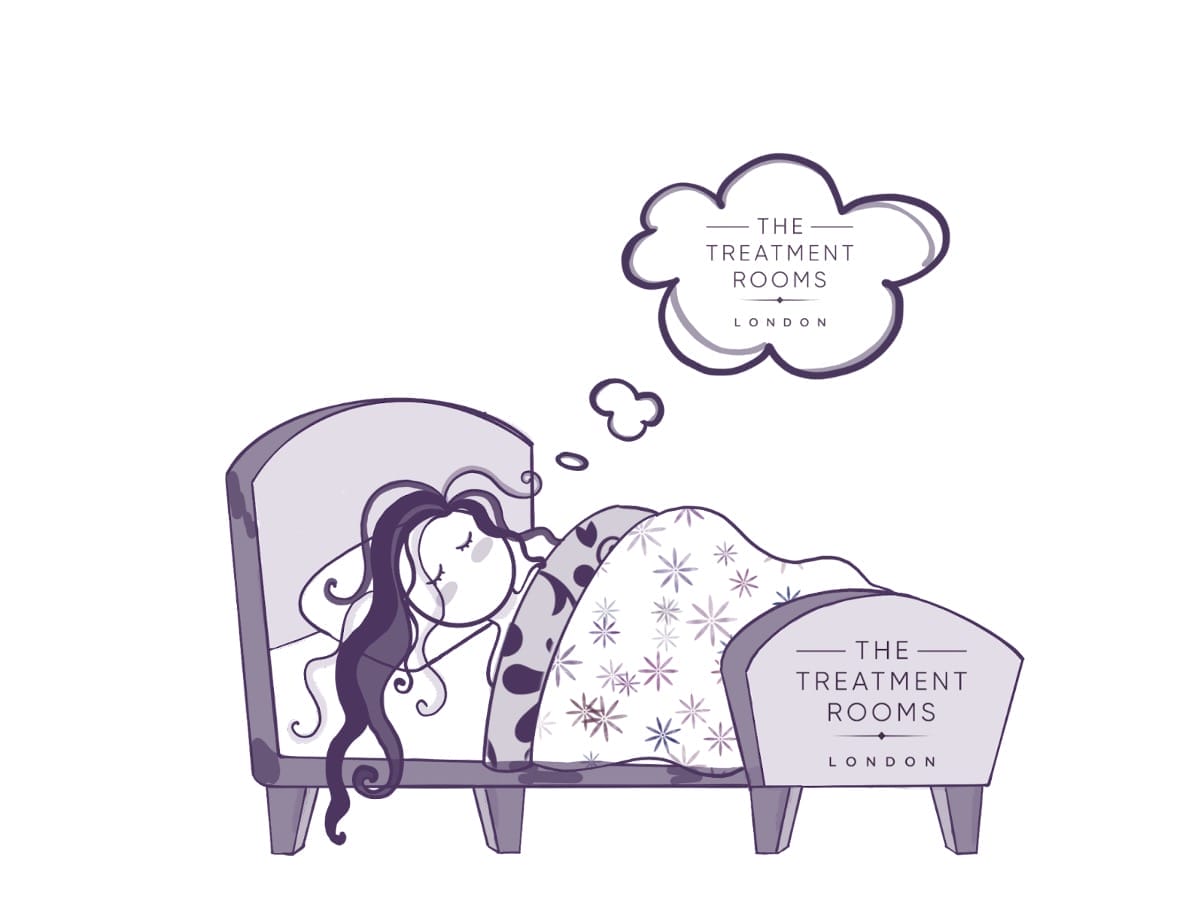
The role of sleep in hair health
Quality sleep is crucial for overall health and well-being. This importance extends to hair health as well.
During sleep, the body undergoes essential repair and regeneration processes, including those related to hair follicles. Disruption of the sleep cycle can interfere with these processes, potentially affecting the hair growth cycle and leading to hair loss1. Additionally, inadequate sleep can impair blood circulation to the scalp, depriving hair follicles of essential nutrients and oxygen needed for healthy growth.
Research highlights on sleep and hair health
Recent research underscores the link between sleep quality and hair loss. Here’s a simplified overview:
- A 2022 study found a strong link between severe alopecia areata (a type of patchy hair loss) and sleep issues, including less than six hours of sleep, high stress scores, and obstructive sleep apnea2.
- Research comparing 51 alopecia areata patients to controls highlighted hair loss amongst those with significantly poorer sleep. Additionally, alopecia areata patients with anxiety or depression experienced worse sleep quality, emphasising the importance of addressing both sleep and mental health in managing alopecia areata3.
- A larger study involving over 25,000 individuals showed that those with sleep disorders were at a higher risk of developing alopecia areata. This underlines the importance of good sleep habits and addressing sleep disorders in preventing hair loss3.
The link between stress, sleep and hair loss
Stress is a common consequence of sleep deprivation and can exacerbate hair loss.
Chronic stress triggers an inflammatory response in the body, which can lead to conditions like telogen effluvium, characterised by excessive shedding of hair. Stress-induced hair loss can further compound the effects of sleep deprivation on hair health4.
Research also suggests that chronic sleep deprivation can disrupt hormonal balance and increase levels of stress hormones such as cortisol. Elevated cortisol levels can contribute to hair thinning and shedding by disrupting the hair growth cycle5.
Cortisol is a hormone produced in response to stress that plays a significant role in various neuropsychiatric diseases and sleep disorders6. Recent research has highlighted the use of hair cortisol concentration as a promising biomarker for assessing long-term stress levels, making it a useful tool for studying cortisol alterations in individuals with sleep disorders7.
Given that a lack of sleep is a common cause of stress and disrupts the body’s cortisol balance, it stands to reason that poor sleep may impact cortisol levels detected in hair samples and thus hair health itself. Therefore, understanding the relationship between cortisol levels and sleep disturbances through hair analysis can shed light on how lack of sleep may affect overall hair health.
Practical tips for improving sleep quality
Fortunately, there are steps you can take to improve sleep quality and mitigate the risk of hair loss associated with sleep deprivation. Establishing a consistent sleep schedule, creating a relaxing bedtime routine, and optimising your sleep environment can help promote restful sleep8. Additionally, practising stress-reducing techniques such as mindfulness meditation, deep breathing exercises, and yoga can help alleviate the effects of chronic stress on hair health9.
Seeking professional advice
If you’re experiencing hair loss or have concerns about the impact of sleep deprivation on your hair health, it is essential to consult with a healthcare professional. A dermatologist or trichologist can assess your scalp and hair health, identify any underlying issues contributing to hair loss, and recommend appropriate treatments or interventions10. This may include taking medications like Minoxidil or undergoing a hair transplant where you have lost hair that cannot be regrown.
Conclusion
The connection between lack of sleep and hair loss is multifaceted, with chronic sleep deprivation potentially disrupting the hair growth cycle and exacerbating hair thinning and shedding. By prioritising quality sleep and implementing stress-reducing techniques, you can support healthy hair growth and overall well-being. If you’re experiencing hair loss or sleep disturbances, please do not hesitate to seek professional advice for personalised guidance and treatment options.
References
- National Institute of Neurological Disorders and Stroke. Brain Basics: Understanding Sleep. Available at: Brain Basics: Understanding Sleep | National Institute of Neurological Disorders and Stroke (nih.gov)
- Yi, Y., Qiu, J., Jia, J., Djakaya, G.D.N., Li, X., Fu, J., Chen, Y., Chen, Q., Miao, Y. & Hu, Z. (2020) ‘Severity of androgenetic alopecia associated with poor sleeping habits and carnivorous eating and junk food consumption—A web‐based investigation of male pattern hair loss in China’, Dermatologic Therapy, 33(2), pp. e13273-n/a. Available at: https://pubmed.ncbi.nlm.nih.gov/32061036/
- Shakoei, S., Torabimirzaee, A., Saffarian, Z. & Abedini, R. (2022) ‘Sleep disturbance in alopecia areata: A cross‐sectional study’, Health Science Reports, 5(3), pp. e576-n/a. Available at: https://www.ncbi.nlm.nih.gov/pmc/articles/PMC8973252/
- American Academy of Dermatology Association. Telogen Effluvium. Available at: Do you have hair loss or hair shedding? (aad.org)
- Altemus, M., Rao, B., Dhabhar, F. S., Ding, W., Granstein, R. D. (2001) ‘Stress-induced changes in skin barrier function in healthy women’, Journal of Investigative Dermatology, 117(2), pp. 309-317. Available at: https://pubmed.ncbi.nlm.nih.gov/11511309/
- Thom, E. (2016) ‘Stress and the hair growth cycle: Cortisol-Induced hair growth disruption’, Journal of Drugs in Dermatology, 15(8), pp. 1001-1004. Available at: https://jddonline.com/articles/stress-and-the-hair-growth-cycle-cortisol-induced-hair-growth-disruption-S1545961616P1001X/?_page=4
- El Mlili, N., Ahabrach, H. & Cauli, O. (2021) ‘Hair cortisol concentration as a biomarker of sleep quality and related disorders’, Life (Basel, Switzerland), 11(2), pp. 81. Available at: https://www.ncbi.nlm.nih.gov/pmc/articles/PMC7911396/
- National Sleep Foundation. Sleep Hygiene. Available at: Mastering Sleep Hygiene: Your Path to Quality Sleep | Sleep Foundation
- Harvard Health Publishing. Relaxation techniques: Breath control helps quell errant stress response. Available at: Relaxation techniques: Breath control helps quell errant stress response – Harvard Health
- American Academy of Dermatology Association. Hair loss: Diagnosis and treatment. Available at: Hair loss: Diagnosis and treatment (aad.org)
Share:
Authored by

Dr Roshan Vara
Dr. Roshan Vara is a renowned hair transplant surgeon in London and the Co-Founder of our award winning hair transplant clinic, The Treatment Rooms London.He has over 10 years of experience in hair transplant surgery and is recognised for delivering natural-looking results through ethical, patient-centred care. He is a Full Medical Member of BAHRS and an Associate Member of ISHRS, reflecting his commitment to the highest standards in modern hair restoration.
Reviewed by

Dr Dilan Fernando
Dr. Dilan Fernando is regarded as one of the best hair transplant surgeons in London and Co-Founder of The Treatment Rooms London. He has over 10 years of experience in hair transplant surgery and is known for his meticulous technique and commitment to ethical practice. He served on the Executive Committee of BAHRS from 2020 to 2024, helping to shape industry standards for patient safety and quality of care. Dr. Fernando personally performs each surgery, ensuring natural results built on trust and experience.
Book a Consultation
Related Blogs

Male To Female (MTF) HRT Hair Regrowth
September 28, 2026
Key takeaways: Hair loss can have a negative impact on your well-being, and it can affect any…
Ben Stokes’s Hair Transplant: Before, After and All You Need to Know
September 25, 2026
Key Takeaways: Ben Stokes is widely considered one of England’s greatest all-rounders in cricket. He was born…

Has Jamie Laing Had a Hair Transplant? Expert Analysis of His Hair Loss and Recovery
September 24, 2026
Key Takeaways Jamie Laing is one of Britain’s most recognisable reality TV personalities turned entrepreneurs. His first…
Jude Law Hair Transplant: Before, After, and His New Hairline
September 23, 2026
Key takeaways: Jude Law, the British actor known for roles in The Talented Mr Ripley, Sherlock Holmes,…

Hair Shedding vs Hair Loss: What’s the Difference?
September 23, 2026
Key Takeaways: When you notice more hair falling out than usual, it can cause a lot of…

David Silva’s Hair Transplant: Expert Review of His Hair Loss and Recovery
September 23, 2026
Key Takeaways Born in Arguineguín on Spain’s Canary Islands in 1986, he made his name with Valencia…
Did Kyle Walker Have a Hair Transplant? Expert Review of His Hair Loss and Restoration
September 21, 2026
Key Takeaways: Kyle Walker is a widely known athletic superstar. He burst onto the football scene with…
Can Women Take DHT Blockers for Hair Loss? Benefits & Risks
September 20, 2026
Key takeaways In the UK, for example, finasteride and dutasteride, the main DHT blocking medications, are not…

Analysing Jimmy Carr’s Hair Transplant: Expert Review and All You Need to Know
September 20, 2026
Key takeaways As one of Britain’s best-known comedians, Jimmy Carr is no stranger to the public eye….