

There is a wide variety of DHT-blocking shampoos that promise to stop hair loss. Before you purchase any of them, research the products, examine their ingredients, and consult a professional to understand the effectiveness of DHT-blocking shampoos.
In this article, we’ll outline how DHT-blocking shampoo works, examine potential side effects, and assess its effectiveness.
Understanding Hair Loss
Hair loss is a common issue that affects millions of people worldwide. It can be caused by a combination of genetic, hormonal, and environmental factors. One of the main culprits behind hair loss is the conversion of testosterone to dihydrotestosterone (DHT), a strong male steroid hormone. DHT is known to contribute to male pattern baldness and hair thinning, which can eventually result in a receding hairline or balding crown. Understanding the role of DHT in hair loss is crucial for exploring effective treatments, such as DHT blocking shampoos.
What does DHT do?
DHT is important for men to develop their male sex characteristics, such as body hair and facial hair, a deep voice and the growth of the male sex organs. But it also offers benefits when we get older, being important to maintaining muscle mass, as well as sexual health and fertility.
Women with too much DHT may see:
- Development in body hair, facial hair and pubic hair
- Increased acne
- Periods stopping
These are commonly seen in women suffering from a condition called PCOS, you can read more about the topic here: PCOS and hair loss in women.
In men, not having enough DHT can have a significant impact, including underdeveloped genitalia and less body hair than usual. Puberty may be delayed in girls with low DHT levels.
DHT and hair loss
Dihydrotestosterone, abbreviated to “DHT”, is a common type of hormone called androgen. It is a byproduct of testosterone produced in the body. Around 10% of testosterone in men and women is converted to DHT.
Excessive DHT can lead to hair loss in the hairline and crown. This happens because DHT binds to androgen receptors in hair follicles, shortening the anagen phase of hair growth, causing the follicles to shrink and eventually stop producing hair.
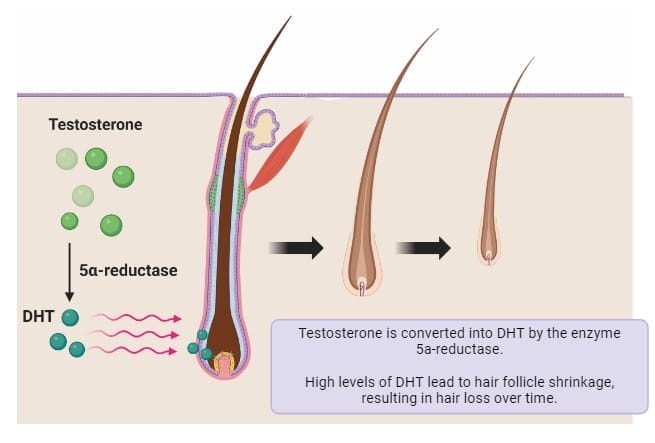
This commonly manifests as a hair loss condition in men and women called androgenic alopecia:
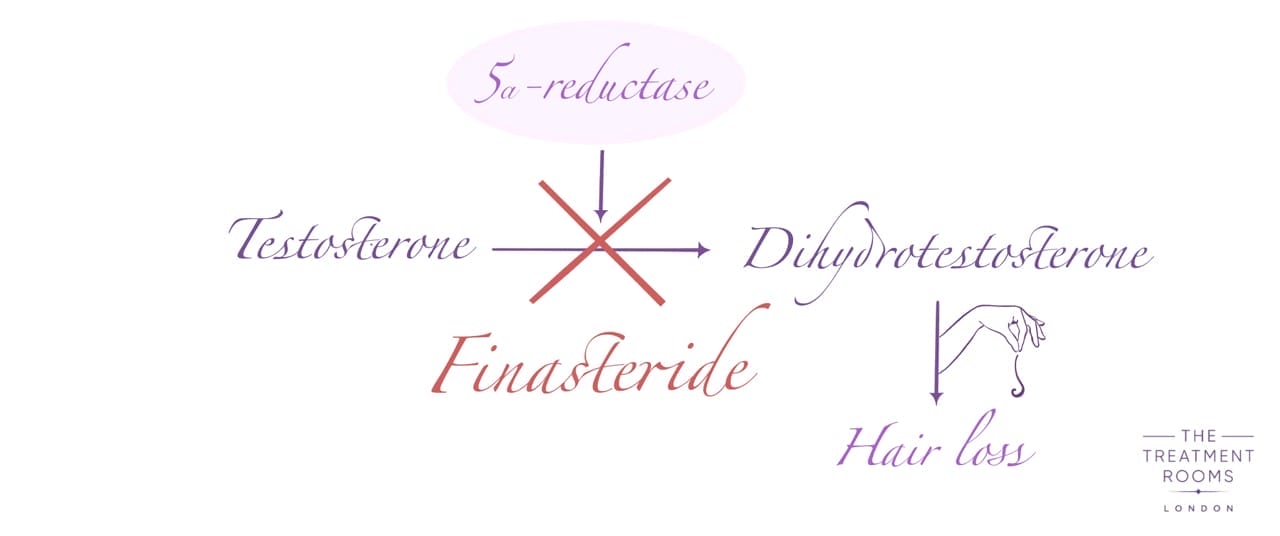
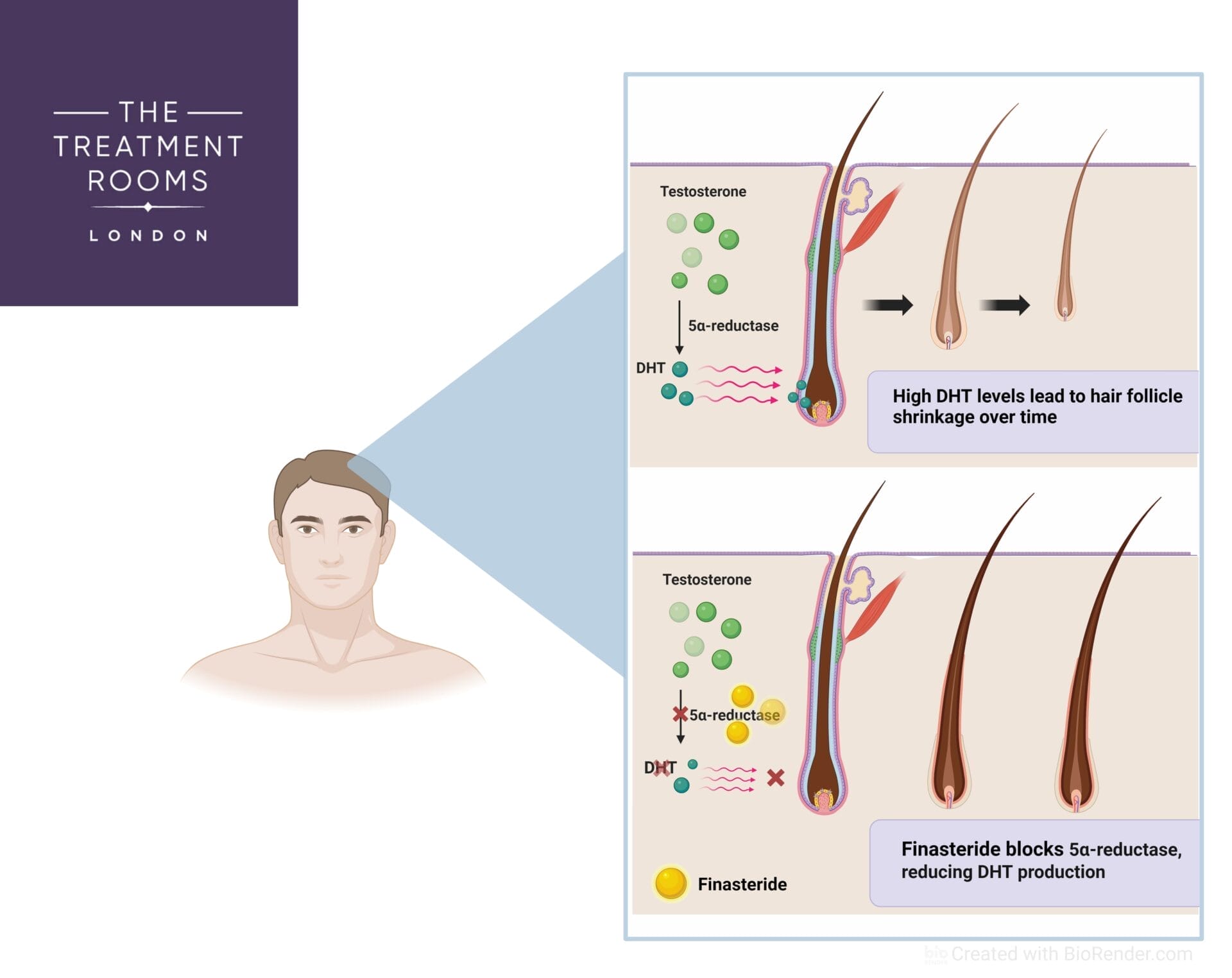
DHT blockers, such as saw palmetto (a natural blocker) and Finasteride (a medication), work by inhibiting the enzyme 5-alpha reductase, thereby reducing the body’s ability to convert testosterone into DHT. By blocking DHT, these ingredients help prevent hair follicle miniaturisation and hair loss. It is important to note that it is rare for women to take Finasteride, and they must talk to their GP before starting it.
Hair loss can manifest in various ways, including thinning hair, a receding hairline, and a balding crown. A receding hairline is characterised by the gradual loss of hair follicles along the forehead, creating an M-shaped pattern with deep temples. Additionally, you may findthat your hair parting starts to widen, causing the scalp to appear more prominent. Recognising these signs early can help in seeking timely treatment to prevent further hair loss.
What happens when you block DHT?
So, how do DHT blockers work, and how do they aim to prevent male and female pattern baldness? Testosterone converts to DHT with assistance from the 5-alpha reductase (5-AR) enzyme. DHT blockers prevent DHT from binding to 5-AR receptors. This includes receptors in your hair follicles. When DHT fails to bind to these receptors, it is unable to shrink hair follicles.
Blocking DHT side effects
DHT blockers are safe, but some medications and products may cause side effects. Usually, people don’t have to worry about their DHT levels, but excessive levels of this hormone can cause hair loss, so DHT blocking may be beneficial for some. Among the potential side effects of blocking DHT are:
- Premature ejaculation
- Taking a long time to ejaculate
- Erectile dysfunction
- Nausea
- Vomiting
- Rash
- Excess of fat in the breast area
- Tenderness in the breast area
- Congestive heart failure caused by salt or water retention
- Darkening of hair on the face and upper body
- Thickening of hair on the face and upper body
What is DHT blocker shampoo?
DHT-blocking shampoo is a type of shampoo that contains ingredients that can block the effects of DHT, reducing its ability to cause hair loss. It is typically used by men with male-pattern baldness. DHT-blocking shampoos work similarly to hair loss medication such as finasteride, inhibiting the 5-AR enzyme and reducing the conversion of testosterone into DHT. However, DHT-blocking shampoos contain ingredients that reduce DHT activity at the scalp rather than throughout the body.
Typical ingredients of DHT blocking shampoos include:
- Pumpkin seed oil
- Saw palmetto, which is extracted from the Serenoa repens plant.
Active Ingredients in DHT-Blocking Shampoos
DHT-blocking shampoos contain a range of active ingredients designed to block DHT’s effects and promote healthy hair growth. One of the most common active ingredients is saw palmetto. Saw palmetto is a natural supplement that has been seen to block the conversion of testosterone to DHT. The shampoos may also contain other ingredients that can help prevent hair loss, such as ketoconazole (Nizoral).
These ingredients work synergistically to reduce DHT activity, promote a healthy scalp, nourish hair follicles, and support the hair growth cycle. By incorporating these shampoos into your hair care routine, you can help mitigate the effects of DHT and encourage healthier, thicker hair.
Ketoconazole shampoo: its benefits for hair growth
Ketoconazole is an antifungal ingredient that has been shown to promote hair growth and prevent hair loss. Ketoconazole shampoo (also known as Nizoral) has also been shown to improve hair density and the size of hair follicles by prolonging the anagen (growth phase) of the hair cycle, making it an effective treatment for androgenetic alopecia. This makes it a valuable component in DHT-blocking shampoos, helping to maintain a healthy scalp environment and support robust hair growth.
Do DHT-blocking shampoos work?
There are no robust studies demonstrating the effectiveness of DHT-blocking shampoos, and it is unlikely that these shampoos prevent or reverse hair loss. The shampoo’s potential effectiveness will also depend on the severity of the problem and what the hair loss is associated with (e.g., hormones, stress, etc.). You should also remember that the shampoo may not work for everyone, and even if it helps with the prevention of hair loss, it may not be the best solution for hair regrowth.
Is DHT shampoo safe?
In general, DHT blocking shampoos are safe. However, in rare cases, some of the ingredients may cause side effects.
Be wary of shampoos that cause skin irritation – some ingredients in many shampoos, such as parabens and sulfates, may irritate sensitive skin. The parabens and sulfates in DHT blocking shampoos can dehydrate your scalp, removing its natural oil and causing the thinning of the hair. The good news is that there are plenty of alternatives such as sulfate-free shampoo.
Proven hair loss treatments
If you suffer from hair loss, there are a range of surgical and non-surgical treatments out there that can help combat this issue and restore a full head of hair.
Non-surgical treatments you can ask your specialist about include:
- Finasteride, which stops the balding process of androgenic alopecia, blocking the enzymes which assist the conversion of testosterone into DHT

- Minoxidil, which increases hair vitality by promoting good oxygen and nutrient supply and
- Platelet rich plasma (PRP) therapy, which may be beneficial in preventing hair loss and encouraging hair growth by helping to heal hair follicles.
There are also surgical treatments, such as FUE or FUT hair transplants. This is an advanced, minimally invasive procedure that uses tiny punches to remove individual hair follicles from the back and sides of the head, before transplanting them to the part of your scalp suffering from hair loss.
Conclusion
If you are experiencing hair loss, consulting with a specialist such as the surgeons at The Treatment Rooms London can give you the best advice on treatment.
Discover more about our non-surgical treatments and surgical treatments for hair loss.
You can book a consultation at The Treatment Rooms London by calling us on 020 8706 0076 or using the contact form
References
https://onlinelibrary.wiley.com/doi/abs/10.1111/j.1524-4725.1998.tb00009.x
https://www.medicalnewstoday.com/articles/68082#effects
https://www.americanhairloss.org/women_hair_loss/causes_of_hair_loss.html
Share:
Authored by

Dr Roshan Vara
Dr. Roshan Vara is a renowned hair transplant surgeon in London and the Co-Founder of our award winning hair transplant clinic, The Treatment Rooms London.He has over 10 years of experience in hair transplant surgery and is recognised for delivering natural-looking results through ethical, patient-centred care. He is a Full Medical Member of BAHRS and an Associate Member of ISHRS, reflecting his commitment to the highest standards in modern hair restoration.
Reviewed by

Dr Dilan Fernando
Dr. Dilan Fernando is regarded as one of the best hair transplant surgeons in London and Co-Founder of The Treatment Rooms London. He has over 10 years of experience in hair transplant surgery and is known for his meticulous technique and commitment to ethical practice. He served on the Executive Committee of BAHRS from 2020 to 2024, helping to shape industry standards for patient safety and quality of care. Dr. Fernando personally performs each surgery, ensuring natural results built on trust and experience.
Book a Consultation
Related Blogs

Steve Carell Hair Transplant: Before, After, and His New Hairline
March 2, 2026
Steve Carell, best known as Michael Scott in The Office, began sparking curiosity amongst fans when his…

What Is Nutrafol and Does It Really Work for Hair Growth?
February 24, 2026
Key Takeaways Hair thinning can feel frustrating and confusing. You might notice more hair falling out in…

Peppermint oil for hair growth: Evidence, Benefits, Uses & Safety
February 24, 2026
Key Takeaways What Is Peppermint Oil? Peppermint oil, also known as Mentha piperita oil, is an essential…

Why Winter Hair Loss Happens and All You Need to Know
February 6, 2026
Key Takeaways As temperatures drop and indoor heating kicks in, many people notice their hair feels drier,…

Can You Take Finasteride With Minoxidil For Hair Loss?
February 5, 2026
Key Takeaways Consistency Matters: Stopping treatment often leads to a recurrence of hair loss; ongoing medical guidance…
Does Finasteride Cause Erectile Dysfunction?
February 3, 2026
Key Takeaways Finasteride can cause erectile dysfunction in some men, but it isn’t common. Most men who…
What is a Hair Transplant? How it Works, Success Rate & What to Expect
February 2, 2026
Key Takeaways Cost: Varies from £3,000 to £10,000, depending on the number of grafts and the technique….
What Causes Hair Loss During Menopause?
February 2, 2026
Key Takeaways Many women notice increased hair shedding and thinning during menopause. This happens because hormonal changes…

Can a Norwood 7 Get a Hair Transplant? All You Need to Know
February 2, 2026
Key Takeaways Yes, someone with Norwood 7 hair loss may be able to have a hair transplant,…