

Quick Summary: Does Radiotherapy Cause Hair Loss?
- What is Radiotherapy? Radiotherapy is a type of treatment that uses high doses of radiation that target cancer cells to prevent them from growing and multiplying.
- Hair Loss from Radiotherapy: Hair loss typically begins 2 to 3 weeks after starting treatment, and occurs mainly in the treated area. The extent of hair loss depends on the radiation dose and duration, with higher doses potentially causing permanent hair loss.
- Managing Hair Loss: Scalp cooling, topical treatments like minoxidil, gentle hair care, and nutritional support can help mitigate hair loss. In cases of permanent hair loss, hair transplants may be considered once the patient is in remission.
- Psychological Support: Hair loss can have a significant emotional impact, and support from healthcare professionals, support groups, or counsellors can help manage these feelings.
- Conclusion: While radiotherapy can cause hair loss, understanding the causes and being proactive can help patients cope better with this side effect. Consulting with healthcare providers for personalised care is crucial for improving quality of life during and after radiotherapy.
Does Radiotherapy Cause Hair Loss?
Radiotherapy, also known as radiation therapy, is a common treatment for various types of cancer. While it can be highly effective at targeting and destroying cancer cells, it also has several side effects, including hair loss. This article explores how radiotherapy causes hair loss, the extent of this hair loss, and potential treatments to mitigate or reverse its effects.
What is Radiotherapy?
Radiotherapy uses high doses of ionising radiation to kill cancer cells and shrink tumours. The treatment works by damaging the DNA of cancer cells, which prevents them from multiplying and growing. When the DNA of cancer cells is damaged, the cells lose their ability to repair themselves and eventually die off, allowing healthy cells to replace them over time. Radiotherapy contributes towards 40% of curative treatment for cancer. The radiation can be delivered externally, via external beam radiation, or internally, via brachytherapy, which is delivered from inside the body via catheters or seeds directly into the tumour site.
Another widely used treatment for cancer is chemotherapy. Chemotherapy works systemically, using drugs that travel throughout the body to kill rapidly dividing cancer cells. Unfortunately, these drugs also affect other rapidly dividing cells, such as those in hair follicles, leading to widespread hair loss across the scalp and other parts of the body. When considering hair loss, radiotherapy has an advantage over chemotherapy because it typically causes hair loss only in the area where the radiation beam is targeted.
How Does Radiotherapy Cause Hair Loss?
Hair loss usually begins about 2 to 3 weeks after the start of radiotherapy. Hair loss from radiotherapy, known as radiotherapy-induced alopecia, occurs primarily in the area being treated. For example, if the treatment is directed at the head or neck, hair loss will occur in these areas. Additionally, you might experience hair loss on the opposite side of the head or neck, where the radiotherapy beams exit, known as the exit site.
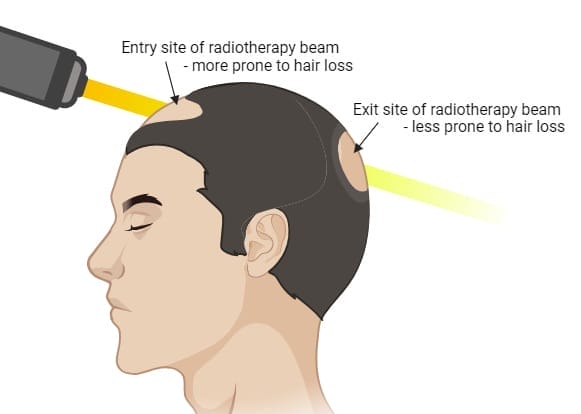
- Radiation Dose: The extent of hair loss depends on the dose and duration of radiation. Higher doses of radiation are more likely to cause significant hair loss. According to the NHS, radiation doses above 20 Gy (Gray units) can cause permanent hair loss in the treated area.
- Mechanism of Hair Loss: While many research studies have been done on how radiation affects hair, the specific processes that cause these reactions at the molecular level are not entirely understood.
As far as we currently know, radiation damages hair follicles – the structures in the skin responsible for hair growth. This damage can disrupt the normal hair growth cycle, leading to hair shedding. Initially, the hair may become thin and brittle before falling out entirely. In some cases, hair loss may be temporary, with regrowth occurring a few months after treatment ends. However, high doses of radiation can cause permanent hair loss by destroying hair follicles.
Factors Influencing Hair Loss
- Individual Sensitivity: Some individuals may be more sensitive to radiation and experience more significant hair loss even at lower doses. Genetics, overall health, and the presence of other medical conditions can influence this sensitivity.
- Concurrent Treatments: Patients undergoing concurrent treatments, such as chemotherapy, may experience more pronounced hair loss. Chemotherapy drugs, particularly those that are cytotoxic, can exacerbate hair loss caused by radiotherapy.
Other Side Effects of Radiotherapy
Other side effects of radiotherapy depend on the part of the body being treated, the dose of radiation, and the duration of the treatment. Common side effects include:
- Skin Reactions: The treated area may become red, irritated, or dry. These reactions are similar to sunburn and can range from mild to severe.
- Fatigue: Many patients experience fatigue during and after radiotherapy, which can persist for weeks or months.
- Gastrointestinal Issues: Radiotherapy to the abdomen or pelvis can cause nausea, vomiting, diarrhoea, and other digestive problems.
- Long-Term Effects: In some cases, radiotherapy can lead to long-term side effects, such as fibrosis or organ damage.
Managing Hair Loss During Radiotherapy
- Scalp Cooling: Scalp cooling, or cryotherapy, involves cooling the scalp before, during, and after radiotherapy sessions to reduce blood flow to the scalp. This can help minimise hair loss by dampening the amount of radiation that reaches the hair follicles. However, its effectiveness is more established in chemotherapy than in radiotherapy.
- Topical Treatments: Topical treatments like minoxidil (Regaine) may help stimulate hair regrowth after radiotherapy. While primarily used for androgenetic alopecia, some studies suggest it can be beneficial for promoting hair regrowth following radiation-induced hair loss.
- Gentle Hair Care: Adopting a gentle hair care routine can help minimise hair breakage and loss during treatment. This includes using mild shampoos, avoiding harsh chemical treatments, and minimising the use of heat styling tools.
- Nutritional Support: Maintaining a balanced diet rich in vitamins and minerals that support hair health can be beneficial. Nutrients like biotin, vitamin E, and omega-3 fatty acids are known to promote healthy hair growth.
Hair Transplants as a Solution for Radiotherapy-Induced Alopecia
While hair often regrows after treatment, it can sometimes be patchy or have a different texture or colour.
The extent and speed of hair regrowth depend on the amount and duration of radiotherapy received. In cases of permanent hair loss, patients may consider hair transplant surgery as a viable solution. Hair transplants involve relocating healthy hair follicles from one part of the scalp, also known as the donor area, to the area affected by radiotherapy. This procedure can effectively restore hair growth and improve appearance and self-confidence.
For men, the area of hair loss can also include beard growth, depending on the position of the radiation beam and the dose. This loss could be permanent if the treatment area consists of the facial hair region.
At The Treatment Rooms, we are happy to advise on what areas can be addressed and how to go about it. It’s essential to consult a specialist to determine whether a hair transplant is suitable, as factors such as the extent of radiation damage and overall health can influence the procedure’s success.
If you are cancer-free and concerned about scarring, please feel free to reach out to our friendly team. We’re here to help you explore your options and address any concerns you may have.
Psychological and Emotional Support
Hair loss can have a significant emotional and psychological impact on patients. Feelings of self-consciousness, anxiety, and depression are common. Seeking support from healthcare professionals, joining support groups, or talking to a counsellor can help manage these emotions. Some patients find wearing wigs, hats, or scarves helpful during this period. Whatever you are feeling, help is readily available to soothe the distress of losing your hair.
Conclusion
Radiotherapy can indeed cause hair loss, but the extent and permanence of this loss depend on several factors, including the radiation dose, the area treated, and individual sensitivity. While hair loss from radiotherapy can be worrying, consulting with healthcare providers about potential treatments and implementing supportive measures can help improve your quality of life during and after radiotherapy.
References
- Baskar R, Lee KA, Yeo R, Yeoh KW. (2012) ‘Cancer and radiation therapy: current advances and future directions’, Int J Med Sci, 9(3), pp. 193-9.Available at: https://www.ncbi.nlm.nih.gov/pmc/articles/PMC3298009/
- Haider M, Hamadah I, Almutawa A. (2013) ‘Radiation- and Chemotherapy-Induced Permanent Alopecia: Case Series’, Journal of Cutaneous Medicine and Surgery, 17(1), pp. 55-61. Available at: https://pubmed.ncbi.nlm.nih.gov/23364152/
- American Cancer Society. Radiation Therapy Side Effects. Available at: https://www.cancer.org/treatment/treatments-and-side-effects/treatment-types/radiation/effects-on-different-parts-of-body.html
- NHS. Radiotherapy – Side effects. Available at: https://www.nhs.uk/tests-and-treatments/radiotherapy/side-effects/
- Song, S., & Lambert, P. F. (1999) ‘Different responses of epidermal and hair follicle cells to radiation correlate with distinct patterns of p53 and p21 induction’, American Journal of Pathology, 155*(4), pp. 1121-1127. Available at: https://doi.org/10.1016/S0002-9440(10)65215-7
- National Cancer Institute. Chemotherapy and Hair Loss. Available at: https://www.cancer.gov/about-cancer/treatment/side-effects/hair-loss
- Silva GB, Ciccolini K, Donati A, Hurk CVD. (2020) ‘Scalp cooling to prevent chemotherapy-induced alopecia’, An Bras Dermatology, 95(5), pp. 631-637. Available at: https://www.ncbi.nlm.nih.gov/pmc/articles/PMC7563013/
- Gupta, A. K., Talukder, M., Shemer, A., Piraccini, B. M., & Tosti, A. (2023) ‘Low-Dose Oral Minoxidil for Alopecia: A Comprehensive Review’, Skin Appendage Disorders, 9(6), pp. 423–437. Available at: https://doi.org/10.1159/000531890
- Rajput, R. (2022) ‘Influence of nutrition, food supplements and lifestyle in hair disorders’, Indian Dermatology Online Journal, 13(6), 721. Available at: https://www.ncbi.nlm.nih.gov/pmc/articles/PMC9650738/
- Rassman, W. R., Bernstein, R. M., McClellan, R., Jones, R., Worton, E. and Uyttendaele, H. (2002) ‘Follicular unit extraction: minimally invasive surgery for hair transplantation’, Dermatol Surg, 28(8), pp. 720-8. Available at: https://pubmed.ncbi.nlm.nih.gov/12174065/
Share:
Authored by

Dr Roshan Vara
Dr. Roshan Vara is a renowned hair transplant surgeon in London and the Co-Founder of our award winning hair transplant clinic, The Treatment Rooms London.He has over 10 years of experience in hair transplant surgery and is recognised for delivering natural-looking results through ethical, patient-centred care. He is a Full Medical Member of BAHRS and an Associate Member of ISHRS, reflecting his commitment to the highest standards in modern hair restoration.
Reviewed by

Dr Dilan Fernando
Dr. Dilan Fernando is regarded as one of the best hair transplant surgeons in London and Co-Founder of The Treatment Rooms London. He has over 10 years of experience in hair transplant surgery and is known for his meticulous technique and commitment to ethical practice. He served on the Executive Committee of BAHRS from 2020 to 2024, helping to shape industry standards for patient safety and quality of care. Dr. Fernando personally performs each surgery, ensuring natural results built on trust and experience.
Book a Consultation
Related Blogs
Jude Law Hair Transplant: Before, After, and His New Hairline
March 31, 2026
Jude Law, the British actor known for roles in The Talented Mr Ripley, Sherlock Holmes, and Fantastic…
Hair Loss In Your 20s- What You Need To Know
March 24, 2026
Key Takeaways Hair thinning or excessive hair shedding in your 20s is often due to genetics, stress,…
How Long Does a Hair Transplant Take? The Average FUE & FUT Surgery Duration Explained
March 24, 2026
Key Takeaways Are you considering a hair transplant and wondering how long the process takes? The answer…

Steve Carell Hair Transplant: Before, After, and His New Hairline
March 2, 2026
Steve Carell, best known as Michael Scott in The Office, began sparking curiosity amongst fans when his…

What Is Nutrafol and Does It Really Work for Hair Growth?
February 24, 2026
Key Takeaways Hair thinning can feel frustrating and confusing. You might notice more hair falling out in…

Peppermint oil for hair growth: Evidence, Benefits, Uses & Safety
February 24, 2026
Key Takeaways What Is Peppermint Oil? Peppermint oil, also known as Mentha piperita oil, is an essential…

Why Winter Hair Loss Happens and All You Need to Know
February 6, 2026
Key Takeaways As temperatures drop and indoor heating kicks in, many people notice their hair feels drier,…

Can You Take Finasteride With Minoxidil For Hair Loss?
February 5, 2026
Key Takeaways Consistency Matters: Stopping treatment often leads to a recurrence of hair loss; ongoing medical guidance…
Does Finasteride Cause Erectile Dysfunction?
February 3, 2026
Key Takeaways Finasteride can cause erectile dysfunction in some men, but it isn’t common. Most men who…