

Quick Summary
What is a Receding Hairline? In women, a receding hairline is often more subtle than in men, manifesting as widespread thinning across the head or a more even recession at the forehead.
Common Causes: Besides genetic factors, receding hairlines in women can be influenced by hormonal fluctuations (such as those during menopause), certain hairstyles (such as tight ponytails that can cause traction alopecia), and medical conditions such as frontal fibrosing alopecia or trichotillomania.
Diagnosis and Treatment: Early diagnosis by a specialist is crucial to managing and potentially reversing the condition. Treatments vary based on the underlying cause and may include topical solutions like Minoxidil, hormone therapy, or even surgical options such as hair transplants.
Key Takeaway: If you’re experiencing a receding hairline, it’s essential to consult with a healthcare provider to determine the cause and appropriate treatment. Managing hair health involves both medical intervention and lifestyle adjustments to ensure the best outcomes for hair restoration and maintenance.
Experiencing a receding hairline can be a distressing change for many women, impacting not only their appearance but also their self-esteem. This article explores the nuances of receding hairlines in women, shedding light on their causes, symptoms, and available treatments.
What is a Receding Hairline in Women?
A receding hairline is when you notice gradual hair loss at the forehead and temples, resulting in the hairline moving backwards. In women, the way the hairline recedes differs from that in men. Women with female pattern hair loss (FPHL, also known as female androgenetic alopecia) tend to retain their frontal hairline, but experience widespread hair thinning across the top of the head.1
In postmenopausal women, a receding hairline can typically occur more evenly across the forehead2, rather than forming the distinctive “M”- shaped hairline seen in men. This is different from a V-shaped, widow’s-peak hairline that some women can develop as a natural part of ageing. You can find out about a widow’s peak in women by reading our dedicated article on the topic here. An example of this hairline can be seen in the image below.

While a receding hairline is more commonly one of the first signs of male androgenetic alopecia, women also experience it due to factors such as genetics, hormonal imbalances, ageing, and certain medical conditions.1,2
A receding hairline is a sign of significant hair loss in women, and a specialist must diagnose the underlying condition. It can occur at different points in a woman’s life, and it is difficult to know at what age hair loss will stop. At The Treatment Rooms, we advise seeking timely advice to prevent further hair loss and to improve hair and overall health.
A lot of my female patients with a receding hairline will require investigations to ensure their hair loss isn’t caused by an underlying health condition. Most commonly they will benefit from a period of lifestyle and medications before exploring hair transplant surgery
Dr Roshan vara, Co-Founder and Surgeon at the treatment rooms london
Apart from being a late sign of Female Pattern Hair Loss, a receding hairline may be an initial sign of other types of hair loss. These include the following1,2,4:
- Frontal fibrosing alopecia (FFA) – Primarily affecting post-menopausal women, this type of scarring alopecia presents with a symmetrically receding hairline, forming a band of hair loss along the front and sides of the scalp.
- Traction alopecia – Prolonged tension on the hair, often due to tight hairstyles such as high ponytails, braids, and extensions, may cause the hairline to recede as hairs are pulled in these areas. This occurs typically in the forehead and temple regions.
- Trichotillomania – Depending on the area where compulsive hair pulling occurs most frequently, damage done by this motion can cause the hairline to recede.
Other eventual causes of a receding hairline in women that initially present as diffuse or patchy hair loss include:
- Other Cicatricial (Scarring) Alopecia – A group of rare disorders that destroy hair follicles and replace them with scar tissue, leading to permanent hair loss. Frontal Fibrosing Alopecia, discussed above, falls into this category. A receding hairline can occur when the frontal scalp is affected and is often accompanied by inflammation, redness, and eventual scarring.
- Telogen Effluvium– A sudden, temporary loss of hair due to situational stress (illness, hormonal changes, physical or mental stress), causing a drive in free radical production, causing a large number of hair follicles to enter the telogen (resting) phase of the hair growth cycle. This can result in diffuse thinning across the scalp. In severe or chronic cases, this can lead to hairline recession. The relationship of stress and hair loss is summarised in the diagram below.

Female Hair Loss Overview
Female hair loss is a complex topic, and it’s hard to give a definitive answer for the cause of a receding hairline. However, by exploring the different types of hair loss women face and acknowledging its complex nature, we may better understand what can cause a hairline to recede.
To simplify, we can categorise the possible causes as described below:
- Genetic predisposition:
Female Pattern Hair Loss can be inherited, and although a receding hairline may not be its first sign, it can be a contributing factor.5
- Hormonal changes:
Women are especially prone to hormonal fluctuations throughout their lives. Changes experienced during puberty, pregnancy, after childbirth, and menopause can all contribute to hair loss.6
- Underlying medical conditions:
Hair loss can indicate underlying health conditions, particularly genetic, hormonal or autoimmune disorders. Conditions such as Polycystic Ovary Syndrome (PCOS), alopecia areata, lupus, anaemia, and thyroid issues6,7 are more prevalent in women than in men, and can contribute to hair loss.
- Medications:
Side effects from medications, including blood thinners, beta blockers (for heart conditions), certain antidepressants, and chemotherapy, may cause hair loss.8
- Nutritional deficiencies:
Lack of essential nutrients, especially iron (due to anaemia) and vitamins D and B (including B5, B6, and B7 or biotin), can affect hair health. Maintaining a well-balanced diet rich in essential nutrients is crucial for promoting natural, healthy hair growth.
- Stress:
Stress can push hair into a resting phase, leading to shedding. Managing stress through healthy lifestyle habits can help prevent hair loss caused by excessive hair or scalp picking, smoking, lack of protection from excessive UV exposure, and work- and personal-life stressors.
- Hair styling practices
Hair styling can be another common cause of a receding hairline, especially when styles pull the hair back tightly, leading to traction alopecia. Frequent chemical treatments such as dyes, bleaches, or perms can also damage the hair shaft and follicles.
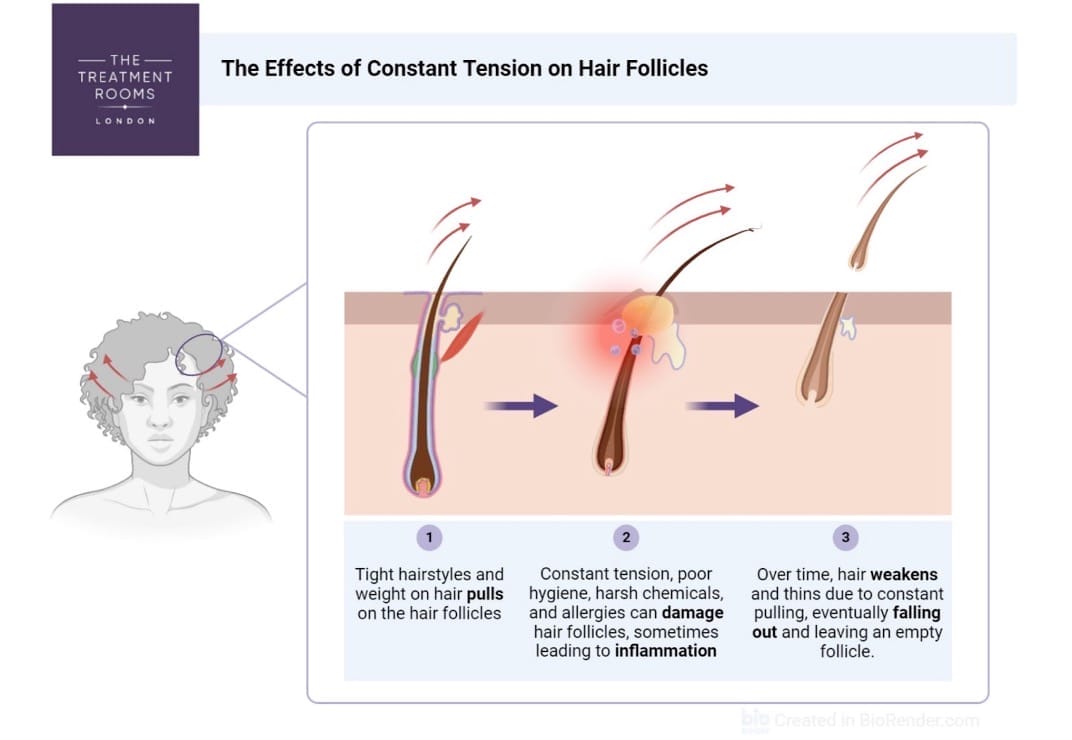
Signs and symptoms of female pattern hair loss and a receding hairline in women
The most common signs and symptoms of significant hair loss in women are:
- Thinning hair – noticeable reduction in hair volume, particularly at the temples (hairline) and crown.
- Widening part – the part in your hair may become broader and more visible, indicating hair thinning.
- Excessive shedding – you may find more hair fall on your pillow, brush and/or in the shower.
- Visible scalp – you may see your scalp more through the hair.
- Slow hair growth – hair might take longer to grow back after falling out because of disruption to the normal hair growth cycle caused by the factors mentioned above.
- Hair breakage – hair may become more fragile, leading it to break easily. This, in turn, can affect the overall hair density, even around the hairline.
Research Highlights on FPHL and Receding Hairline in Women
Studies have examined the impact of hair loss in women, particularly on receding hairlines. Here are highlights from two notable studies:
Study 1: Maryborough, Australia9
In this study, the prevalence of male- and female-pattern hair loss was investigated using questionnaires. Focusing on receding hairlines in women, the key findings included the following:
- The study assessed mild and marked bitemporal recession. It found that moderate recession affected 55.2% of the 474 women surveyed, while marked recession affected 9.2%.
- While marked bitemporal recession is less common in women than in men, moderate recession is quite prevalent, underscoring the importance of recognising and addressing a receding hairline in women.
- The study found a significant association between hair thickness and the degree of recession in both men and women. Restoring or enhancing hair thickness could be beneficial for women experiencing a receding hairline.
- About 55% of women potentially affected by FPHL rated their hair pattern as stage 3 to stage 5 on a grading scale, but did not report hair loss as a significant concern. This suggests that women with FPHL may not initially perceive hair loss as cosmetically substantial enough to seek medical intervention.
Both studies emphasise the need for greater awareness of hair loss in women and of when it is significant enough to seek medical help. They highlight the importance of educating women on proper hair care to prevent significant hair loss, recognising symptoms that may indicate underlying health conditions, and seeking timely, appropriate treatment.
At The Treatment Rooms, we strongly encourage women to take proactive steps to manage their hair health and seek medical advice when necessary, rather than waiting for obvious signs of hairline recession.
How to Stop a Receding Hairline
It is essential first to identify the cause of your hair loss, and the best way to do this is to speak with your GP, who may also refer you to a dermatologist or hair specialist, such as our team. After identifying the underlying issue, you may be suggested treatment methods that include5,11:
- Making Lifestyle Adjustments
- Diet: Ensure a well-balanced meal that includes hair-nourishing nutrients such as protein, omega-3 fatty acids, iron, and vitamins. You may find our blog on a healthy diet for hair health helpful.
- Stress management: As mentioned, stress is a common factor in hair loss. Taking time out of your day to perform stress-relieving activities like meditation, yoga, or therapy if needed, can help manage stress-related hair loss.
- Improving Hair Care Practices
- Gentle Styling: Spend some time carefully reviewing your hair care routine and stopping any practices that could be damaging your hair and scalp. This includes avoiding tight hairstyles, harsh chemical treatments, and excessive heat styling.
- Product Choice: Everyone’s hair and skin are different, so it’s essential to choose the right products that work best for your hair and scalp. Milder products that are gentler on your hair and scalp would be beneficial.
- Taking Medical treatments:
- Topical Minoxidil 2% or 5%: A well-known and scientifically proven medication that can stimulate hair growth.
- Hormone therapy: For menopausal women, who are most at risk of hair loss, hormone replacement therapy may help compensate for reduced oestrogen and progesterone levels, both of which play protective roles against hair loss.
- Anti-androgens: These medications (e.g., spironolactone) can reduce androgen levels. Androgens are male hormones (e.g., testosterone) present in both men and women, and cause hair loss through androgenetic alopecia. You can read a dedicated article on this topic: Can women take DHT blockers?

4. Considering Advanced treatments:
- Platelet-Rich Plasma (PRP) Therapy: This involves injecting your own platelets (cell fragments found in your blood that contain growth factors) into the scalp to promote hair growth in areas experiencing hair loss.
- Low Level Laser Therapy (LLLT): Low-intensity lasers or LEDs are used to stimulate hair follicles, improve blood flow, and promote hair growth in needed areas.
- Hair Transplant Surgery: Procedures such as Follicular Unit Extraction (FUE) or Follicular Unit Transplantation (FUT) can provide a permanent solution for hair loss, provided that any underlying causes are identified and effectively controlled.
Sometimes, individuals naturally have a hairline that sits slightly higher on the forehead. This can be completely normal and not necessarily indicative of any underlying medical condition, but rather a genetic trait also called a congenitally high hairline.
Suppose you are considering a cosmetic adjustment to your hairline. In that case, our hair transplant specialists are highly experienced and knowledgeable and can provide personalised advice and discuss the best options to bring your hairline forward. You can review our case studies or contact us directly to learn more about the procedures available.
Conclusion
To summarise, a receding hairline in women can result from several factors. Understanding the signs and seeking appropriate treatment can help manage and potentially reverse hair loss.
Our first advice would be to assess whether your hair styling or lifestyle habits might be contributing to your receding hairline. Opt for gentle hair care routines and relaxed hairstyles to minimise damage. However, if you suspect that your hair loss is more significant and not solely due to styling practices, we strongly recommend consulting with a healthcare provider. They can diagnose any underlying conditions and develop a treatment plan tailored to your specific needs.
Taking proactive steps now can make a significant difference in maintaining and restoring your hair’s health. If you have any questions or require further assistance, please don’t hesitate to contact our team of specialists, and we will be happy to help.
Get in Touch
Ready to elevate your hair restoration journey? Book a free consultation call with our London-based FUE hair transplant clinic.
Our award-winning team, including leading London hair transplant surgeons Dr Fernando and Dr Vara, are here to support you every step of the way.
References
- Phillips TG, Slomiany WP, Allison R. Hair loss: Common causes and treatment. American Family Physician 2017. https://www.aafp.org/pubs/afp/issues/2017/0915/p371.html (accessed May 11, 2024).
- Zaouak, A., Ghorbel, H. H., Badri, T., Koubaa, W., & Fenniche, S. (2015). Frontotemporal hairline recession in a postmenopausal woman. Dermatology practical & conceptual, 5(2), 129–131. https://doi.org/10.5826/dpc.0502a26
- Dinh, Q. Q., & Sinclair, R. (2007). Female pattern hair loss: current treatment concepts. Clinical interventions in aging, 2(2), 189–199. Available from: https://www.ncbi.nlm.nih.gov/pmc/articles/PMC4462917
- Singal, A., Sonthalia, S., & Verma, P. (2013). Female pattern hair loss. Indian journal of dermatology, venereology and leprology, 79(5), 626–640. https://ijdvl.com/female-pattern-hair-loss/
- Fabbrocini, G., Cantelli, M., Masarà, A., Annunziata, M. C., Marasca, C., & Cacciapuoti, S. (2018). Female pattern hair loss: A clinical, pathophysiologic, and therapeutic review. International journal of women’s dermatology, 4(4), 203–211. https://doi.org/10.1016/j.ijwd.2018.05.001
- Grymowicz, M., Rudnicka, E., Podfigurna, A., Napierala, P., Smolarczyk, R., Smolarczyk, K., & Meczekalski, B. (2020). Hormonal Effects on Hair Follicles. International journal of molecular sciences, 21(15), 5342. https://doi.org/10.3390/ijms21155342
- Redler, S., Messenger, A. G., & Betz, R. C. (2017). Genetics and other factors in the aetiology of female pattern hair loss. Experimental dermatology, 26(6), 510–517. https://doi.org/10.1111/exd.13373
- Dyall-Smith D. Alopecia from drugs. DermNet 2009. https://dermnetnz.org/topics/alopecia-from-drugs (accessed May 11, 2024).
- Gan, D. C., & Sinclair, R. D. (2005). Prevalence of male and female pattern hair loss in Maryborough. The Journal of Investigative Dermatology. Symposium proceedings, 10(3), 184–189. https://linkinghub.elsevier.com/retrieve/pii/S0022202X15525840
- Eneh, Onyenekenwa & Chima, Faith. (2013). Receding Hairlines: Prevalence, Importance, Causes, Prevention And Remediations Among Nigerian City Women. Journal of Applied Sciences and Development, 4, 17-53. Available from: https://www.researchgate.net/publication/279511811
- NHS. Women and hair loss: coping tips. NHS Choices 2024. https://www.nhs.uk/conditions/hair-loss/coping-tips-for-women/ (accessed May 11, 2024).
- Diagrams illustrated using BioRender.com
Share:
Authored by

Dr Roshan Vara
Dr. Roshan Vara is a renowned hair transplant surgeon in London and the Co-Founder of our award winning hair transplant clinic, The Treatment Rooms London.He has over 10 years of experience in hair transplant surgery and is recognised for delivering natural-looking results through ethical, patient-centred care. He is a Full Medical Member of BAHRS and an Associate Member of ISHRS, reflecting his commitment to the highest standards in modern hair restoration.
Reviewed by

Dr Dilan Fernando
Dr. Dilan Fernando is regarded as one of the best hair transplant surgeons in London and Co-Founder of The Treatment Rooms London. He has over 10 years of experience in hair transplant surgery and is known for his meticulous technique and commitment to ethical practice. He served on the Executive Committee of BAHRS from 2020 to 2024, helping to shape industry standards for patient safety and quality of care. Dr. Fernando personally performs each surgery, ensuring natural results built on trust and experience.
Book a Consultation
Related Blogs

Jude Law Hair Transplant: Before, After, and His New Hairline
March 31, 2026
Jude Law, the British actor known for roles in The Talented Mr Ripley, Sherlock Holmes, and Fantastic…
Hair Loss In Your 20s- What You Need To Know
March 24, 2026
Key Takeaways Hair thinning or excessive hair shedding in your 20s is often due to genetics, stress,…
How Long Does a Hair Transplant Take? The Average FUE & FUT Surgery Duration Explained
March 24, 2026
Key Takeaways Are you considering a hair transplant and wondering how long the process takes? The answer…

Steve Carell Hair Transplant: Before, After, and His New Hairline
March 2, 2026
Steve Carell, best known as Michael Scott in The Office, began sparking curiosity amongst fans when his…

What Is Nutrafol and Does It Really Work for Hair Growth?
February 24, 2026
Key Takeaways Hair thinning can feel frustrating and confusing. You might notice more hair falling out in…

Peppermint oil for hair growth: Evidence, Benefits, Uses & Safety
February 24, 2026
Key Takeaways What Is Peppermint Oil? Peppermint oil, also known as Mentha piperita oil, is an essential…

Why Winter Hair Loss Happens and All You Need to Know
February 6, 2026
Key Takeaways As temperatures drop and indoor heating kicks in, many people notice their hair feels drier,…

Can You Take Finasteride With Minoxidil For Hair Loss?
February 5, 2026
Key Takeaways Consistency Matters: Stopping treatment often leads to a recurrence of hair loss; ongoing medical guidance…
Does Finasteride Cause Erectile Dysfunction?
February 3, 2026
Key Takeaways Finasteride can cause erectile dysfunction in some men, but it isn’t common. Most men who…