

Key takeaways
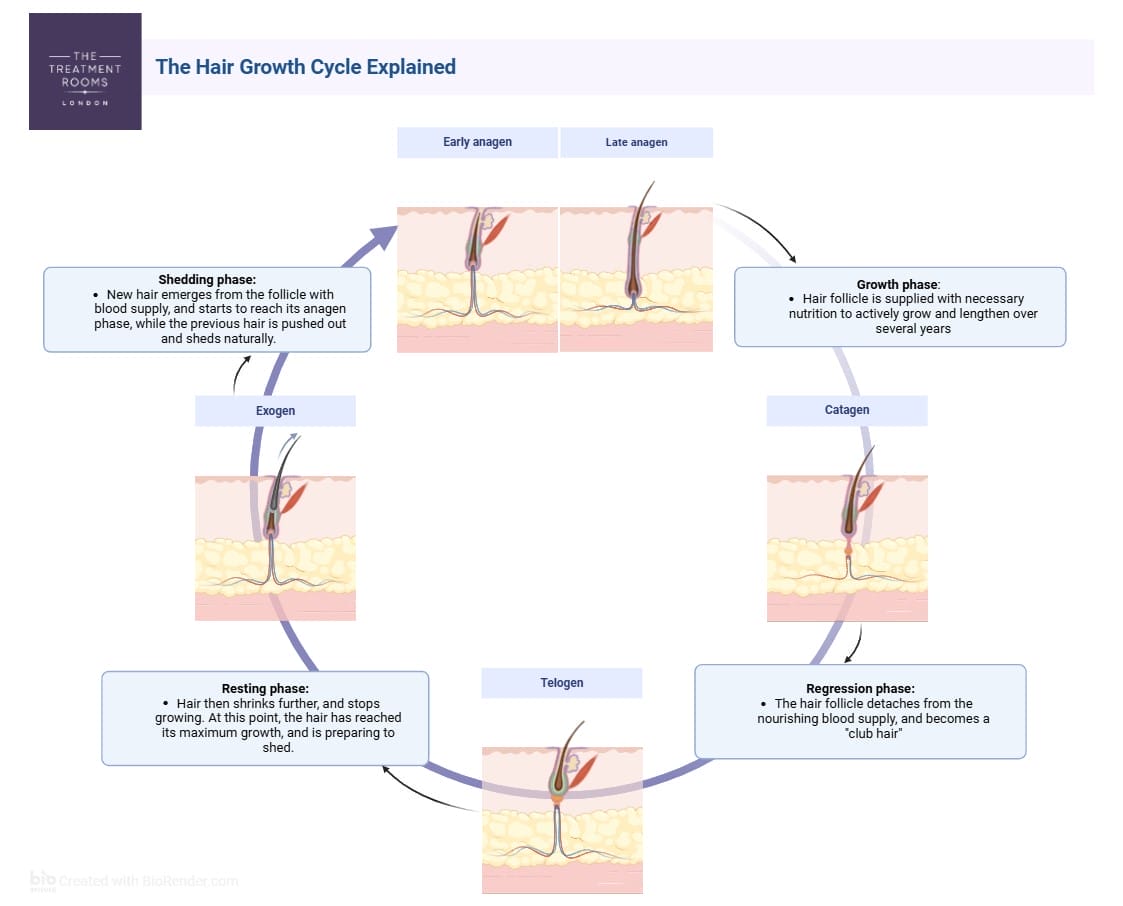
- Hair growth is cyclical, and this process cannot be hastened. Keeping the scalp healthy and clean allows for the growth cycle to continue unimpeded.
- Hair growth after a hair transplant can take a while to appear, and while tracking your progress is important, full results are expected by 12 to 18 months following surgery.
- You may want to take Finasteride and/or Minoxidil to support hair growth, with some patients finding that it helps grow their hair faster after a hair transplant.
- Food, sleep, stress management, and aftercare adherence are encouraged to support a smoother recovery and better-looking results.
Following a hair transplant, many individuals are eager to get back into the swing of things while waiting for their hair to grow to its full potential. But can this hair growth phase be sped up?
In essence, hair growth follows its own predictable biological timeline that cannot be rushed. However, you can support healing and avoid common setbacks that can slow your recovery.
In this article, we will explore what aids healing, what can slow things down and what to expect as your hair grows following a hair transplant procedure.
You can expect to see early growth of your hair transplant at approximately 3 to 4 months after the procedure, with full maturation by 12 to 18 months. For visual examples of what this looks like, check out our Hair Transplant Recovery Timeline.
Can You Actually Make Hair Grow Faster?
Once hair follicles are transplanted back into their intended recipient areas, they follow the normal hair cycle, which consists of growth, transition, resting, and shedding phases. This is a natural process that cannot, currently, be altered. That being said, healing can be optimised to ensure each graft grows unhindered and safely.
What you can influence
While the biological pace of hair growth cannot be accelerated, the way you care for your scalp during recovery can help create the best possible conditions for healing, graft survival, and healthy regrowth.
Good Scalp Hygiene and Practices
Keeping the scalp clean and free of debris is essential for good growth. During the initial healing phase, please follow your clinic’s aftercare protocol very carefully to help protect your grafts and clear away scabs.
In practice, wash only when your clinic advises in their aftercare guidance. Use gentle techniques when washing; don’t scratch, rub, or pick at scabs, as this may cause further trauma.
If you notice worsening redness, heat, swelling, increasing pain, or discharge/pus, contact your clinic, as these may indicate a wound infection.
Avoid tight headwear and anything that causes friction, protect the scalp from the sun, and delay strenuous exercise until your surgeon advises. You can typically resume aerobic exercise routines after 2 weeks post-op.
Preserving Existing Hair
Medications such as finasteride and minoxidil can help slow ongoing male and female pattern hair loss and improve overall appearance by promoting hair growth across the scalp.
Lifestyle and Health
Maintaining a balanced diet, reducing smoking and alcohol intake, and keeping vitamin and mineral levels adequate all help boost hair health. By keeping overall health in check, hair also significantly benefits. Sleep significantly aids in wound repair, so make sure to get plenty of rest.
What you cannot influence
Unfortunately, there are some factors outside of your control, such as:
- Follicle biology: you can’t reliably “force” follicles into growth.
- Person-to-person variations: growth and thickening can be slower due to age, genetics and lifestyle factors.2
The Hair Growth Timeline: What To Expect
Hair growth after having a transplant happens in stages that cannot be rushed or altered. However, following your aftercare guidance can ensure the efficiency of these stages.
- What to Expect After 7 Days Post-Op
In the first week after a hair transplant, the donor area (where grafts were taken from) and recipient area (where they were placed) begin to heal. Scabs form in both of these areas as initial healing sets in, and it’s normal to feel an achy or itchy sensation as things start to repair.
- What to Expect After 14 Days Post-Op
After the second week, grafts should be well-tethered to the skin, and normal bathing routines can resume. You should be entirely scab-free by this point and ready to return to many normal daily activities. Redness, mild swelling and itchy sensations can still persist at this point, and this can be managed.
In the weeks following this point, you may also notice shedding in the recipient areas, which is expected as follicles reset before new growth begins.
- What to Expect After 1 Month to 6 Months Post-Op
The growth phase is now in full swing, and this transitional period is typically known as the ‘ugly duckling’ phase, during which hair grows unevenly yet consistently across the recipient areas. The donor area should be well-healed, with the rest of the head’s scalp hair growing as normal.
It is important during this transitional growth phase to remain patient, as different areas are at different points in their growth cycles and grow at varying rates.
- What to Expect Between 12 and 18 months Post-Op
Between 12 and 18 months after your hair transplant, you expect to see the full results of your transplant, it is important to note that due to the length of the hair growth cycle, it can take even up to two years for every graft to grow to full calibre. fully.

Conclusion
While the process of hair growth following a transplant cannot necessarily be rushed, maintaining adequate scalp health is essential to ensure that grafts grow and thrive unhindered.
At The Treatment Rooms London, we are focused on quality surgery, detailed and effective aftercare procedures and supporting our patients throughout the entire hair care journey. Armed with the tools and knowledge of what to expect, patients can feel more confident as they embark on a journey towards fuller hair.
References
1. National Health Service (NHS). Hair transplant. NHS. Last reviewed 29 Sep 2023 [cited 13 Jan 2026]. Available from:https://www.nhs.uk/tests-and-treatments/cosmetic-procedures/cosmetic-surgery/hair-transplant/
2. Van Neste D. Thickness, medullation and growth rate of female scalp hair are subject to significant variation according to pigmentation and scalp location during ageing. Eur J Dermatol. 2004 Jan-Feb;14(1):28-32. PMID: 14965792. Available from: https://pubmed.ncbi.nlm.nih.gov/14965792/
3. The British Association of Aesthetic Plastic Surgeons (BAAPS) & The British Association of Plastic, Reconstructive and Aesthetic Surgeons (BAPRAS). Hair transplant surgery. BAPRAS [Internet]. [cited 2026 Jan 13]. Available from: https://www.bapras.org.uk/public/patient-information/surgery-guides/hair-transplant-surgery
4. Oxford University Hospitals NHS Foundation Trust. Dietary information to promote wound healing [Internet]. Oxford: NHS; 2020 [cited 2026 Jan 12]. Available from: https://www.ouh.nhs.uk/patient-guide/leaflets/files/104379woundhealing.pdf
5. Zhang FF, Barr SI, McNulty H, Li D, Blumberg JB. Health effects of vitamin and mineral supplements. BMJ. 2020 Jun 29;369:m2511. doi:10.1136/bmj.m2511.
6. National Health Service (NHS). Iron deficiency anaemia. NHS. Last reviewed 26 Jan 2024 [cited 13 Jan 2026]. Available from: https://www.nhs.uk/conditions/iron-deficiency-anaemia/
Share:
Authored by
Dr Roshan Vara
Dr. Roshan Vara is a renowned hair transplant surgeon in London and the Co-Founder of our award winning hair transplant clinic, The Treatment Rooms London.He has over 10 years of experience in hair transplant surgery and is recognised for delivering natural-looking results through ethical, patient-centred care. He is a Full Medical Member of BAHRS and an Associate Member of ISHRS, reflecting his commitment to the highest standards in modern hair restoration.
Reviewed by
Dr Dilan Fernando
Dr. Dilan Fernando is regarded as one of the best hair transplant surgeons in London and Co-Founder of The Treatment Rooms London. He has over 10 years of experience in hair transplant surgery and is known for his meticulous technique and commitment to ethical practice. He served on the Executive Committee of BAHRS from 2020 to 2024, helping to shape industry standards for patient safety and quality of care. Dr. Fernando personally performs each surgery, ensuring natural results built on trust and experience.
Book a Consultation
Related Blogs

How Long Does Swelling Last After Having a Hair Transplant?
October 2, 2026
Key takeaways: It is natural to experience some swelling after having a hair transplant, and it is…

Male To Female (MTF) HRT Hair Regrowth
September 28, 2026
Key takeaways: Hair loss can have a negative impact on your well-being, and it can affect any…
Ben Stokes’s Hair Transplant: Before, After and All You Need to Know
September 25, 2026
Key Takeaways: Ben Stokes is widely considered one of England’s greatest all-rounders in cricket. He was born…

Has Jamie Laing Had a Hair Transplant? Expert Analysis of His Hair Loss and Recovery
September 24, 2026
Key Takeaways Jamie Laing is one of Britain’s most recognisable reality TV personalities turned entrepreneurs. His first…
Jude Law Hair Transplant: Before, After, and His New Hairline
September 23, 2026
Key takeaways: Jude Law, the British actor known for roles in The Talented Mr Ripley, Sherlock Holmes,…

Hair Shedding vs Hair Loss: What’s the Difference?
September 23, 2026
Key Takeaways: When you notice more hair falling out than usual, it can cause a lot of…

David Silva’s Hair Transplant: Expert Review of His Hair Loss and Recovery
September 23, 2026
Key Takeaways Born in Arguineguín on Spain’s Canary Islands in 1986, he made his name with Valencia…
Did Kyle Walker Have a Hair Transplant? Expert Review of His Hair Loss and Restoration
September 21, 2026
Key Takeaways: Kyle Walker is a widely known athletic superstar. He burst onto the football scene with…

Can Women Take DHT Blockers for Hair Loss? Benefits & Risks
September 20, 2026
Key takeaways In the UK, for example, finasteride and dutasteride, the main DHT blocking medications, are not…