

Have you ever sat on a busy London tube or a black cab looking at a glossy poster offering dramatic hair loss solutions or the latest in hair transplant surgery? Despite being presented with so many treatments for male pattern baldness it’s hard to know just how much hair loss is affecting you, and more importantly, when you should consider acting on it.
Male pattern baldness, also known as androgenetic alopecia, is the most common type of hair loss in men. Research shows that the process can begin in adolescence and affect as many as 50% of men by age 50.
In this guide we will be exploring male pattern hair loss, what causes it, FUE hair transplants and other hair loss treatments. There are many viable options in treating hair loss and with the odds stacked against men, we want you to know that you are not alone.
What is male pattern baldness?
It’s normal to lose hair; in fact, studies show that we shed between 50 and 100 hairs a day without even noticing. Just like the natural world, your hair has a life cycle, so it’s nothing to be worried about. However, excessive hair loss can be a sign of a medical condition.
Hair loss, also known as alopecia, refers to the loss of hair where it previously grew. Alopecia can affect your entire body or just your scalp. In male pattern baldness, this occurs in a distinct pattern, primarily affecting the temples and crown of the head, forming an ‘M’ shape, but not the back and sides (as depicted by the Norwood Scale).

What causes male pattern baldness?
Genetics, age and the hormone dihydrotestosterone are all factors in male pattern baldness. These three elements all affect your hair’s growth cycle. The growth cycle will begin to weaken as you get older and hair follicles start to shrink.
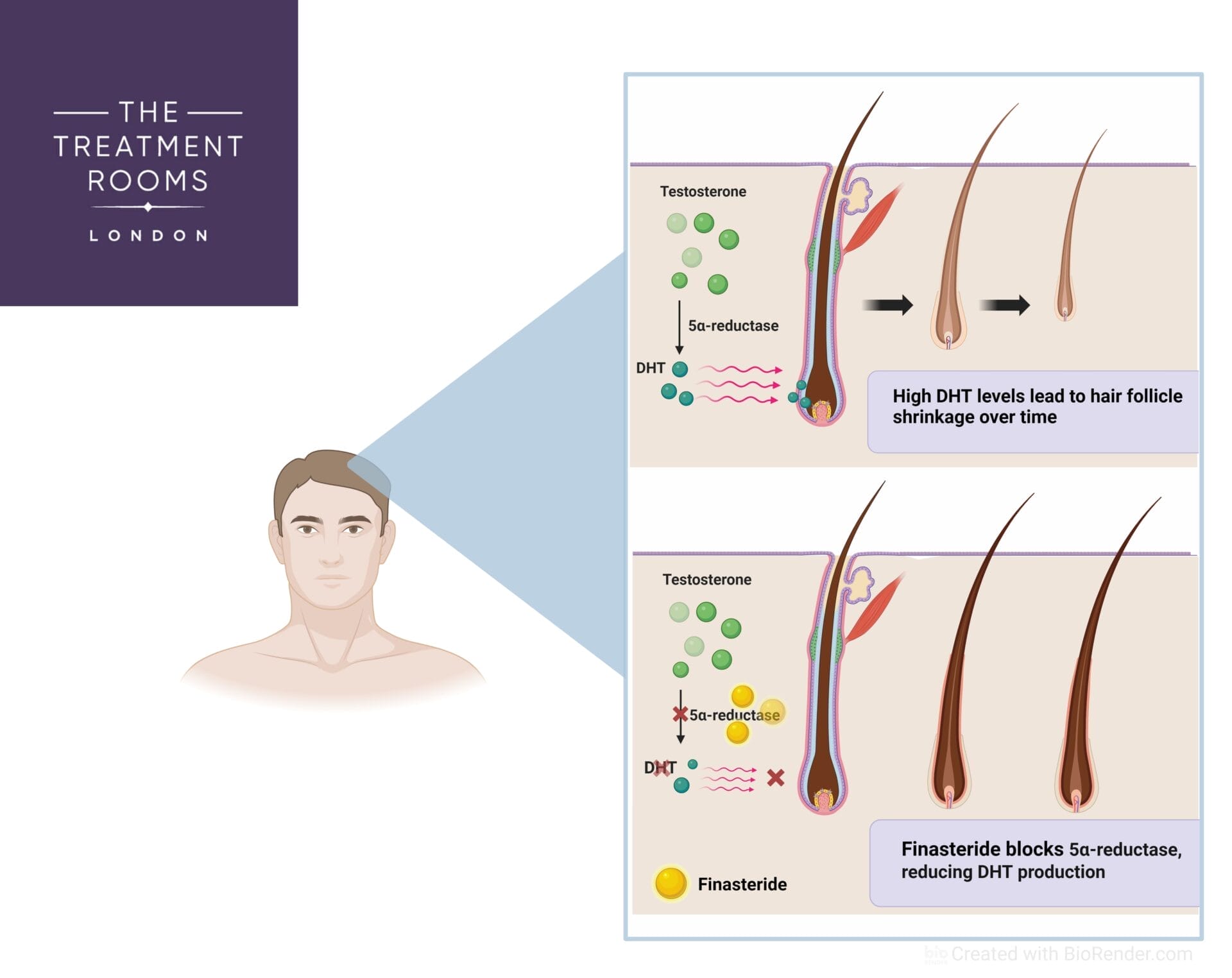
Located at the base of each strand of hair, follicles regulate hair growth. So as they begin to shrink, they produce shorter and finer strands of hair. This process, also known as miniaturisation, is caused by dihydrotestosterone damaging genetically predisposed hair roots on your scalp. The video below begins with an explanation of how this works.
Difference between normal hair loss and advancing male pattern baldness
Your hair roots go through cycles, parts of which include shedding of the hair itself. As part of the normal hair loss cycle, 50 to 100 hairs will fall out each day and lead to the regrowth of a new hair that will regrow from those roots. In relation to male pattern baldness, hair roots are affected by dihydrotestosterone resulting in:
- A significantly larger number of hairs being shed
- A reduction in the speed of hair regrowth
- Hairs that do grow appear thin, discoloured and fragile

Male pattern baldness treatment
There are a number of different approaches that someone suffering with male pattern baldness can look to utilise. These fall into the categories of non-surgical hair loss treatments and surgical hair transplants.
Non surgical hair loss treatments
Non surgical hair treatments include hair loss medications such as Finasteride and Minoxidil.
Both medications have been proven effective for hair loss. Medical professionals usually prescribe finasteride to those who are looking to prevent further hair loss.
Minoxidil is prescribed to those who have already lost quite a bit of hair and are looking to stimulate hair growth and the thickness of the hair.
Surgical hair loss treatment
Beyond hair loss medication, a very popular option is that of hair transplant surgery. One of the most popular hair transplant procedures is that of an FUE (Follicular Unit Excision) hair transplant.
An FUE hair transplant involves the surgeon extracting hair follicles from donor areas on the scalp using specialist equipment that punctures the scalp and removes individual hair follicles. The technique leaves scars less than a millimetre in diameter on the scalp. This scarring is not noticeable once your hair surrounding these scars has partially regrown. The removed hair follicles are then transplanted to the area of hair loss.
FUE hair transplants are becoming increasingly more popular due to limited scarring and the time that it takes to heal, generally less than 2 weeks.
How to stop male pattern baldness?
First things first, there is no known cure for male pattern baldness. There are, however, things that you can do to slow or halt the process of male pattern baldness. Alongside the medical therapies above, you can also incorporate some lifestyle changes.
Your hair is a living organ. It requires a good blood supply, oxygen, nutrients and vitamins for vitality. A healthy diet is therefore essential; you can even supplement your diet with B-vitamins, biotin, zinc and selenium, which have been shown to improve hair growth.
Avoid active damage to your hair:
- Protect it from sun damage using a hat
- Try not to use ‘heavy’ products on your hair that are potentially toxic
- Avoid excessive heat from hairdryers and straighteners
Lifestyle factors also play an essential role in hair loss, with smoking and stress being well-known contributors to the balding process.
For more information on male hair loss please get in touch with one of our qualified hair transplant surgeons at The Treatment Rooms London. We offer an initial consultation, an unparalleled process, and round-the-clock support to get you the help you need.
If you would like a health check for your hair or to visit our hair transplant clinic, book a consultation with The Treatment Rooms London today.
Share:
Authored by

Dr Roshan Vara
Dr. Roshan Vara is a renowned hair transplant surgeon in London and the Co-Founder of our award winning hair transplant clinic, The Treatment Rooms London.He has over 10 years of experience in hair transplant surgery and is recognised for delivering natural-looking results through ethical, patient-centred care. He is a Full Medical Member of BAHRS and an Associate Member of ISHRS, reflecting his commitment to the highest standards in modern hair restoration.
Reviewed by

Dr Dilan Fernando
Dr. Dilan Fernando is regarded as one of the best hair transplant surgeons in London and Co-Founder of The Treatment Rooms London. He has over 10 years of experience in hair transplant surgery and is known for his meticulous technique and commitment to ethical practice. He served on the Executive Committee of BAHRS from 2020 to 2024, helping to shape industry standards for patient safety and quality of care. Dr. Fernando personally performs each surgery, ensuring natural results built on trust and experience.
Book a Consultation
Related Blogs

Why Winter Hair Loss Happens and All You Need to Know
February 6, 2026
Key Takeaways As temperatures drop and indoor heating kicks in, many people notice their hair feels drier,…

Can You Take Finasteride With Minoxidil For Hair Loss?
February 5, 2026
Key Takeaways Consistency Matters: Stopping treatment often leads to a recurrence of hair loss; ongoing medical guidance…
Does Finasteride Cause Erectile Dysfunction?
February 3, 2026
Key Takeaways Finasteride can cause erectile dysfunction in some men, but it isn’t common. Most men who…
What is a Hair Transplant? How it Works, Success Rate & What to Expect
February 2, 2026
Key Takeaways Cost: Varies from £3,000 to £10,000, depending on the number of grafts and the technique….
What Causes Hair Loss During Menopause?
February 2, 2026
Key Takeaways Many women notice increased hair shedding and thinning during menopause. This happens because hormonal changes…

Can a Norwood 7 Get a Hair Transplant? All You Need to Know
February 2, 2026
Key Takeaways Yes, someone with Norwood 7 hair loss may be able to have a hair transplant,…

The Healthy Hair Diet: What to Eat, Drink and Avoid
February 1, 2026
Key Takeaways Strong, shiny hair is an indicator of good health. Although genetics, hormones, and age also…

Taking Biotin Supplements For Hair Loss & Thinning
January 29, 2026
Key Takeaways What is Biotin? Biotin, also known as Vitamin B7, is a water-soluble vitamin that supports…
Can You Take Finasteride 3 Times A Week?
January 28, 2026
Key Takeaways Finasteride is one of the most researched and widely prescribed treatments for male pattern hair…