

Key Takeaways
- The role of diet: A healthy diet can help support hair growth and even slow hair loss. Hair follicles rely on a steady supply of nutrients to stay in their normal growth cycle. When the body is under stress or lacking key vitamins and minerals, increased shedding can occur.
- When nutrition helps: For people with true deficiencies, improving nutrition may help reduce hair loss and restore normal growth over time.
- Mediterranean diet benefits: Vegetables, fruits, whole grains, legumes, nuts, olive oil, and fish provide protein, iron, zinc, omega-3 fatty acids, and antioxidants while reducing scalp inflammation.
- Limit certain foods and habits: Highly processed foods, excessive alcohol, high-mercury fish, crash diets, and smoking may worsen hair loss.
- A note on supplements: Use only when a deficiency is confirmed. Taking high doses of nutrient supplements “just in case” rarely improves hair growth and may cause harm instead.
- When to seek help: If hair loss feels sudden, severe, or worrying, speak to a medical professional to identify the cause and choose the right next step.
Strong, shiny hair is often associated with good overall health and adequate nutrition, as hair follicles depend on a steady supply of nutrients to function optimally. Although genetics, hormones, and age also impact the integrity of your hair, nutrition remains one of the most modifiable factors affecting hair growth and hair loss.
Your hair is considered “non-essential” by the body. During periods of stress or under-nutrition, nutrients are directed to vital organs first. Hair growth slows as a result of this process, which is why hair shedding is often one of the first visible signs of a nutritional imbalance.1
How Diet Affects Hair Health
Hair grows from tiny structures in the scalp called hair follicles. Hair follicles are highly active and need a constant supply of nutrients to grow properly.
When key vitamins or minerals are lacking, the body prioritises essential organs such as the heart, kidneys and brain. Hair, which is not essential for survival, may shift into a resting phase during these times, triggering telogen effluvium, a form of temporary hair shedding caused by physical stress, illness, or nutrient deficiency.
This process, however, is very different from androgenetic alopecia (male or female pattern hair loss), which is driven by genetics and the hormone DHT (dihydrotestosterone).
Key Nutrients for Healthy Hair
Below are some nutrients that play an important role in normal hair follicle function.2 These molecules cannot provide “miracle cures” for hair loss, but deficiencies that are corrected can aid the hair growth cycle.
1. Protein
Hair is made up of keratin, a structural protein found similarly in nails and skin. Without enough protein in the diet, the body may slow hair production.3
Adults need about 0.8-1g of protein per kg of body mass per day. Low intake may lead to diffuse thinning and fragile hair strands.
2. Vitamins and Minerals
The vitamin and mineral deficiencies most often linked to hair shedding include iron (particularly in women between puberty and menopause), vitamin D, zinc, vitamin B12, and folate, with vitamin C also supporting iron absorption and collagen production.4
Low levels can lead to hair thinning, slowed growth, and increased shedding by disrupting several vital functions, including oxygen delivery to hair follicles, stimulation of new hair growth, and synthesis of essential proteins.
3. Omega-3 Fatty Acids
These support scalp skin health and reduce inflammation. They do not directly grow hair but may improve the scalp environment.
The Hair Growth Grocery List: Essential Nutrients
To provide a more structured overview, we have categorised the specific nutrients that act as “fuel” for the hair growth cycle.
| Nutrient | Effect on Hair | Sources |
| Protein | The building block of hair | Lean meats, fish, poultry, beans, legumes |
| Omega-3 Fatty Acids | Nourishes and hydrates the scalp | Fatty fish such as salmon, walnuts and flaxseeds |
| Iron | Supports the hair growth cycle | Spinach, lentils, red meat |
| Vitamin A | Moisturises the scalp | Sweet potatoes, carrots, dark leafy greens |
| Biotin (Vitamin B7) | Supports keratin production, a key protein for hair | Eggs, almonds, cauliflower, cheese |
| Folic Acid (Vitamin B9) | Vital for new cell creation and hair growth | Leafy greens, citrus fruits, beans, fortified cereals |
| Vitamin C | Enhances iron absorption and is vital for collagen production | Citrus fruits, kale, strawberries, bell pepper, and tomatoes |
| Vitamin E | Protects hair from oxidative stress | Almonds, sunflower seeds, spinach, avocados |
| Zinc | Essential for hair tissue growth | Oysters, beef, pumpkin seeds |
| Selenium | Combats oxidative stress on hair follicles, preventing hair loss | Brazil nuts, seafood, meats |
| Silica | Brazil nuts, seafood, and meats | Bananas, leafy greens, rice, oats |
“Nutrition is incredibly important for hair growth. It is the foundation for a healthy body, mind and hair follicle. It is important to address any nutritional deficiencies or stabilise health conditions before considering hair transplant surgery, as results may fail without a healthy baseline. Medications that boost hair growth and stabilise the scalp are also key to combating genetic hair loss.” Says Dr Puroshini Pather, Hair Transplant Surgeon at the Treatment Rooms London.
She says further, “In the end, for the best advice, it is important to consult with your GP as well as hair specialists to determine the exact causes of your hair loss and the safest steps forward in your hair care journey.“
Is the Mediterranean Diet Good for Hair?
Yes. The Mediterranean diet is consistently linked to better hair and scalp health.
It focuses on vegetables, fruits, whole grains, legumes, nuts, olive oil, and regular fish intake. This naturally provides many of the nutrients required for normal hair follicle function, including protein, iron, zinc, omega-3 fatty acids, and antioxidant vitamins.6
The Mediterranean diet is anti-inflammatory, which may help reduce scalp irritation and support healthy hair follicles.
A 2018 study found that men who ate fresh herbs and raw vegetables at least three times a week had a lower risk of Androgenetic alopecia, likely due to polyphenols that protect follicles from oxidative stress.7
In practical terms, the Mediterranean diet is not a treatment for hair loss, but it is one of the most sustainable ways to support long-term hair and scalp health.
Foods and Habits to Avoid for Healthy Hair
Certain foods and habits can negatively influence hair growth cycle. These factors act indirectly by promoting inflammation, disrupting hormonal balance, or placing the body under metabolic stress, all of which slow hair growth, increase shedding, or weaken hair.
Foods to Limit
- Highly processed and sugary foods: Sweets, pastries, fizzy drinks, fast food — can trigger inflammation and insulin spikes.
- Low-protein or very restrictive diets can deprive hair follicles of building blocks for growth.
- High-mercury fish (in excess): Swordfish, mackerel, and some tuna. High mercury levels can adversely affect hair health with studies linking it to sudden-onset hair shedding or alopecia.
- Excessive alcohol impairs zinc and vitamin B absorption, which are essential nutrients for hair growth.
- Excessive vitamin A supplementation can disrupt hair follicle function and lead to rapid, diffuse hair shedding.
Habits That Affect Hair Health
- Smoking: Reduces nutrient delivery to follicles.8
- Crash dieting or rapid weight loss: Sudden calorie drops can temporarily halt hair growth.9
Avoiding these foods and habits creates a stronger foundation for hair growth alongside a nutrient-rich diet.
A Simple Recipe for Healthy Hair
Grilled salmon with avocado, spinach, tomatoes, walnuts, and lemon-olive oil dressing.
Plant-Based Alternative
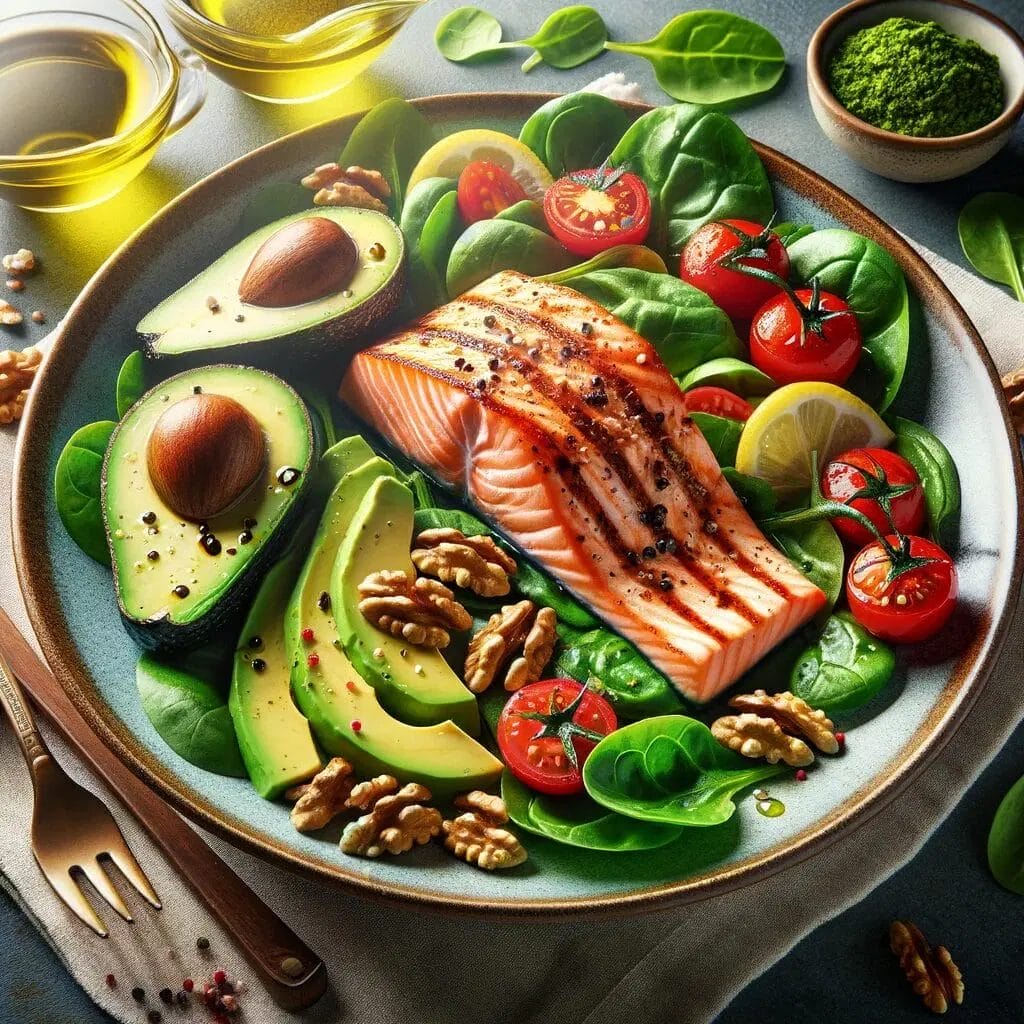
Grilled tofu or tempeh marinated in flaxseed oil, lemon, and spices. Serve with the same salad base.
Do Hair Supplements Really Work, and When?
Supplements that stimulate hair growth, such as iron, B12, vitamin D, or zinc, only help when there is a deficiency or when certain medical conditions affect hair growth.
Hence, these supplements should only be used in cases of confirmed deficiency. It is essential to balance your lab findings with the dose and to follow a physician’s recommendations.
You can read our article on hair loss supplements.
Regardless, the best and most natural method to achieve good hair growth is to first supplement through diet.
When To See A Doctor
If you are struggling with an itchy scalp, dandruff, or changes in hair texture, we recommend seeing your doctor or a Trichologist (a specialist in scalp health).10 They will be able to assess the health of your body, skin and hair.
If your hair loss is permanent or genetic, such as a thinning crown or a receding hairline, this is a structural issue that diet cannot reverse.
In these cases, discussing treatment options with a healthcare provider becomes even more essential. Beneficial options may include medications such as Minoxidil or Finasteride, or surgical procedures such as hair transplant surgery.
Conclusion
A healthy diet is the basis of healthy hair. The best evidence-based solution is not to seek miracle supplements but to return to balance and consistency.
Add protein to all meals, bulk up on veggies and healthy fats, hydrate, take care of your body, and supplement only after testing for deficiencies.
Hair changes take time, and improvements in hair strength and scalp health are usually seen over several months. With consistent nourishment, most individuals will notice improvements in scalp health, hair strength, and lustre over time.
References
1. Goldberg LJ, Lenzy Y. Nutrition and hair [Internet]. Clin Dermatol. 2010;28(4):412-419 [cited 2025 Oct 23]. Available from: https://www.sciencedirect.com/science/article/abs/pii/S0738081X21000729.
2. Raman R. The 13 Best Foods for Hair Growth [Internet]. Healthline; 2024 Feb 5 [cited 2025 Oct 23]. Available from: https://www.healthline.com/nutrition/foods-for-hair-growth
3. Trüeb RM. “Let Food be Thy Medicine”: Value of Nutritional Treatment for Hair Loss. Int J Trichology. 2021 Nov-Dec;13(6):1–3. doi:10.4103/ijt.ijt_124_20. PMID: 34934293. PMCID: PMC8647708.
4. Almohanna HM, Ahmed AA, Tsatalis JP, Tosti A. The Role of Vitamins and Minerals in Hair Loss: A Review [Internet]. Dermatol Ther (Heidelb). 2018 Dec 13;9(1):51–70 [cited 2025 Oct 23]. Available from: https://www.ncbi.nlm.nih.gov/pmc/articles/PMC6380979/
5. Araújo LA, Addor F, Maia Campos PMBGC. Use of silicon for skin and hair care: an approach of chemical forms available and efficacy. An Bras Dermatol. 2016 May-Jun;91(3):331–335. doi:10.1590/abd1806-4841.20163986. Available from: https://pmc.ncbi.nlm.nih.gov/articles/PMC4938278/
6. Naureen Z, Dhuli K, Donato K, Aquilanti B, Velluti V, Matera G, Iaconelli A, Bertelli M. Foods of the Mediterranean diet: tomato, olives, chili pepper, wheat flour and wheat germ. J Prev Med Hyg [Internet]. 2022 Oct 17 [cited 2025 Oct 23];63(suppl. 3):E4-E11. Available from: https://www.ncbi.nlm.nih.gov/pmc/articles/PMC9710402/
7. Fortes C, Mastroeni S, Mannooranparampil T, Abeni D, Panebianco A. Mediterranean diet: fresh herbs and fresh vegetables decrease the risk of androgenetic alopecia in males. Arch Dermatol Res. 2018 Jan;310(1):71–76. doi:10.1007/s00403-017-1799-z. PMID: 29181579.
8. Babadjouni R, Mesinkovska NA, Pouldar Foulad D, Hedayati B, Evron E. The effects of smoking on hair loss and premature graying: a systematic review. Dermatol Pract Concept. 2021 Jul 1;11(3):e2021083. Available from: https://pmc.ncbi.nlm.nih.gov/articles/PMC8280411/
9. Goette DK, Odom RB. Alopecia in crash dieters. JAMA. 1976 Jun 14;235(24):2622–3. Available from: https://pubmed.ncbi.nlm.nih.gov/946869/
10. Cleveland Clinic. Hair Loss: Causes, Treatments and Prevention Options [Internet]. Cleveland (OH): Cleveland Clinic; [cited 2025 Oct 23]. Available from: https://my.clevelandclinic.org/health/diseases/21753-hair-loss
Share:
Authored by
Dr Roshan Vara
Dr. Roshan Vara is a renowned hair transplant surgeon in London and the Co-Founder of our award winning hair transplant clinic, The Treatment Rooms London.He has over 10 years of experience in hair transplant surgery and is recognised for delivering natural-looking results through ethical, patient-centred care. He is a Full Medical Member of BAHRS and an Associate Member of ISHRS, reflecting his commitment to the highest standards in modern hair restoration.
Reviewed by
Dr Dilan Fernando
Dr. Dilan Fernando is regarded as one of the best hair transplant surgeons in London and Co-Founder of The Treatment Rooms London. He has over 10 years of experience in hair transplant surgery and is known for his meticulous technique and commitment to ethical practice. He served on the Executive Committee of BAHRS from 2020 to 2024, helping to shape industry standards for patient safety and quality of care. Dr. Fernando personally performs each surgery, ensuring natural results built on trust and experience.
Book a Consultation
Related Blogs
Jude Law Hair Transplant: Before, After, and His New Hairline
March 31, 2026
Jude Law, the British actor known for roles in The Talented Mr Ripley, Sherlock Holmes, and Fantastic…
Hair Loss In Your 20s- What You Need To Know
March 24, 2026
Key Takeaways Hair thinning or excessive hair shedding in your 20s is often due to genetics, stress,…
How Long Does a Hair Transplant Take? The Average FUE & FUT Surgery Duration Explained
March 24, 2026
Key Takeaways Are you considering a hair transplant and wondering how long the process takes? The answer…

Steve Carell Hair Transplant: Before, After, and His New Hairline
March 2, 2026
Steve Carell, best known as Michael Scott in The Office, began sparking curiosity amongst fans when his…

What Is Nutrafol and Does It Really Work for Hair Growth?
February 24, 2026
Key Takeaways Hair thinning can feel frustrating and confusing. You might notice more hair falling out in…

Peppermint oil for hair growth: Evidence, Benefits, Uses & Safety
February 24, 2026
Key Takeaways What Is Peppermint Oil? Peppermint oil, also known as Mentha piperita oil, is an essential…

Why Winter Hair Loss Happens and All You Need to Know
February 6, 2026
Key Takeaways As temperatures drop and indoor heating kicks in, many people notice their hair feels drier,…
Can You Take Finasteride With Minoxidil For Hair Loss?
February 5, 2026
Key Takeaways Consistency Matters: Stopping treatment often leads to a recurrence of hair loss; ongoing medical guidance…
Does Finasteride Cause Erectile Dysfunction?
February 3, 2026
Key Takeaways Finasteride can cause erectile dysfunction in some men, but it isn’t common. Most men who…