

Norwood 3 hair loss is a stage on the Norwood scale that shows recession to the hairline and temples. It is a stage of hair loss where significant recession to the hairline is present with an “island formation” of hair at the front.
In this article, we look at exactly what the Norwood 3 hair loss is and how it can be helped with medications and surgery.

What is the Norwood scale?
The Norwood scale is the main system used to measure and categorise the various stages of male pattern baldness.
As hair loss typically occurs in a number of distinct and common patterns, the Norwood scale helps people easily identify and understand what stage of male pattern baldness they are currently at.
There are seven stages to the Norwood scale:
- Stage 1: no notable hair loss or receding hairline.
- Stage 2: the hairline around the temples slightly recedes, also known as a mature hairline.
- Stage 3: the hairline significantly recedes around both temples, with the affected areas either completely without hair or only lightly covered.
- Stage 3 vertex: while the hairline appears the same as at stage 2, the top of the scalp (also known as the vertex or crown) displays significant loss of hair.
- Stage 4: the hairline recedes to a greater extent than in stage 3, and the vertex is sparsely covered or entirely bald. Each separate area of hair loss is separated by a strip of hair.
- Stage 5: the two separate areas of hair loss are more significant than at stage 4. The strip that separates them is thinner.
- Stage 6: the hair loss at the crown meets the hair loss at the temples. The strip of hair has now completely disappeared or is very light.
- Stage 7: the most noticeable stage of the Norwood scale, only a thin strip of hair around the head remains.

What does your hair look like on the Norwood stage 3 scale?
Stage 3 of the Norwood scale is often the first presentation we find in our patients suffering from male pattern baldness. Typically characterised by a more noticeable receding hairline, Norwood stage 3 can appear at any age.
During stage 3 of the Norwood scale, your hairline will start to develop a more pronounced ‘M’ shape when viewed from above. While the hair loss at this stage of the Norwood scale is not dramatic, it is still more noticeable, especially from the top and, to a lesser extent, from the sides.

Norwood 3 vertex
There is also a further variation within stage 3 on the Norwood scale called stage 3 vertex, also known as stage 3A. During this stage of the Norwood scale, the hair on your vertex (or crown) will begin to thin. It is also often (but not always) accompanied by hair loss around the temples.
If you suspect you are experiencing stage 3 vertex of the Norwood scale, take a photo of your hair from the top. If the M shape of your hairline is more pronounced and there is slight thinning at the crown of your head, you may be at stage 3A of the Norwood scale.
Norwood 2 vs 3
Many people find it difficult to tell the difference between Norwood stage 2 and Norwood stage 3. But while they are somewhat similar, there are some notable differences.
Stage 2 of the Norwood scale is largely characterised by a very slight recession of the hairline, particularly near the temples. This typically appears during the transition from teenagehood to adulthood and is generally not a cause of concern in terms of hair loss.

However, during stage 3 of the Norwood scale, the hairline is more noticeably receded. When viewed from above, the M shape of the hairline is more pronounced, extending deeper onto the scalp than in stage 2. Some people may also experience Norwood stage 3A.

There is no defined time limit for the time it takes to progress from Norwood 2 to Norwood 3. If you are at stage 2, you may never even proceed to stage 3. Some people may develop stage 3 during their twenties, while others may only experience it during their thirties, forties or even fifties.
The best way to tell if you are progressing from stage 2 to stage 3 of Norwood is to keep an eye on your hair. Examine your hairline to see if it’s changed at all (taking regular photos may help), and keep an eye out for any hair shedding, particularly in the shower.
How to treat hair loss at Norwood stage 3
If you are currently experiencing Norwood stage 3 hair loss, there are several ways you can treat it, both surgical and non-surgical.
Before you consider a surgical option, it may be worth considering trying a different hairstyle to help disguise or reduce the appearance of your Norwood stage 3 hair loss. Comb-overs can also help hide Norwood stage 3 baldness by pushing the fringe over the hairline or the vertex to cover any thinning or receding.
Other options for treating hair loss at Norwood stage 3 include medication:
- Minoxidil: applied to affected areas on the scalp, this topical cream is easy to use and offers proven results in managing hair loss at Norwood stage 3 — one study reported more than 45% hair regrowth after using the 5% minoxidil cream than the 2%, so choose the 5% for best results.
- Finasteride: an oral medication used to help treat hair loss, particularly at Norwood stage 3, finasteride is also effective at preventing hair loss on the vertex.
If you have tried the options above and still need further treatment, it may be worth considering a hair transplant.

Hair transplants for Norwood 3 hair loss
For people experiencing stage 3 of the Norwood scale, a follicular unit excision (FUE) hair transplant is usually the preferred solution to help restore hair and combat pattern baldness.
FUE hair transplants involved extracting individual hairs from the sides and back of the head. Once they have been removed, they are then carefully transplanted into the areas of the scalp that are thinning or balding. For more information, please read our guide on how a hair transplant works.
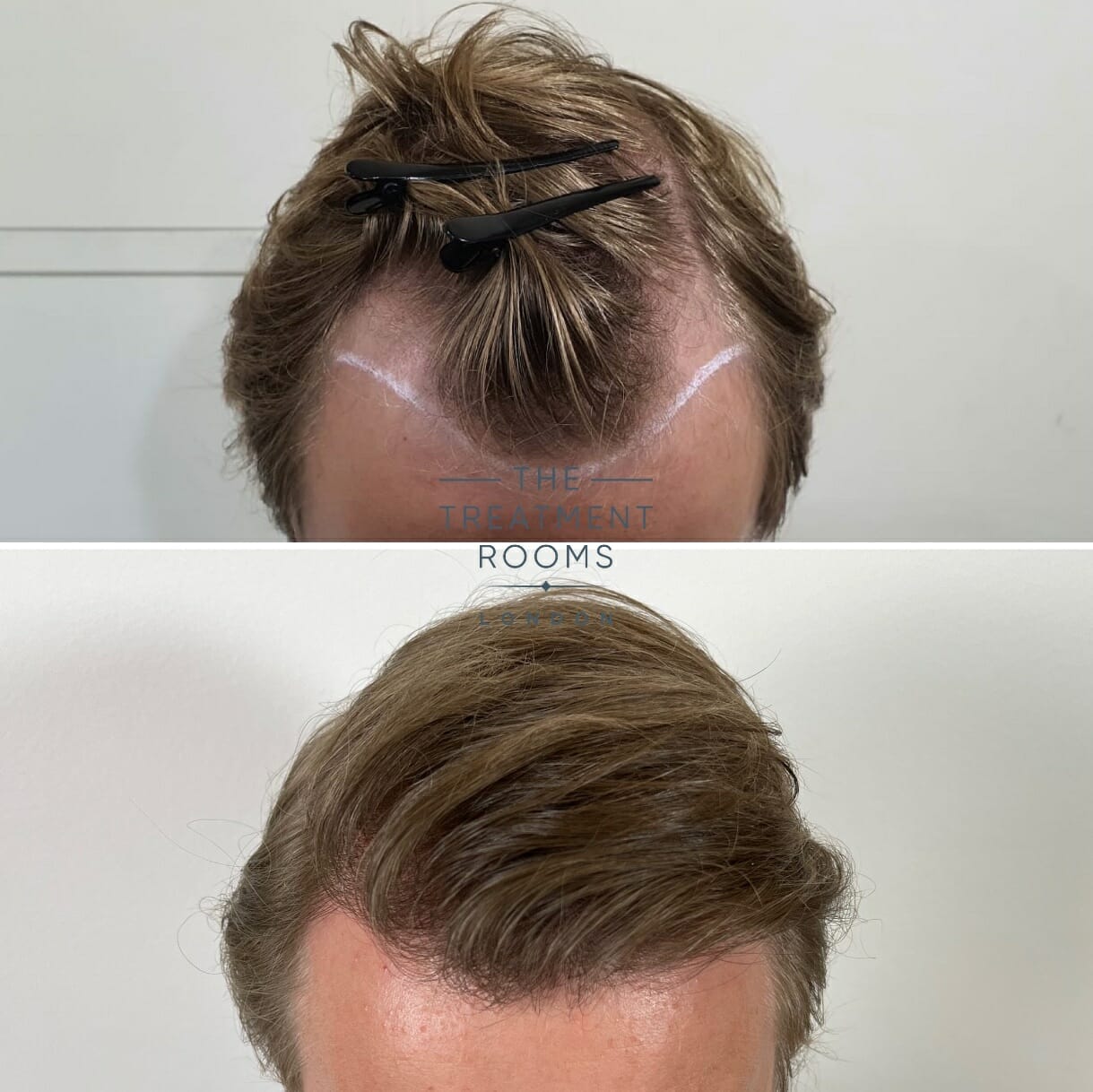
How many grafts are needed for Norwood 3 hair loss?
The number of grafts you might need for Norwood 3 hair loss can vary from person to person.
As a rule of thumb, you may need anywhere between 500 to 1,800 grafts. However, if you are also experiencing Norwood stage 3 vertex, you will require extra grafts to fix this area. For a specific crown hair transplant, you may need between 1,000 and 2,500 grafts.
These are just rough estimates — the final total can vary depending on how much hair you’ve already lost, your age, whether you suffer from Norwood stage 3 vertex, your gender assigned at birth and your hair type. Use this handy hair transplant graft calculator to determine how many grafts you will likely need for stage 3 Norwood hair loss.
Can you have an unshaven hair transplant in norwood 3 hair loss?
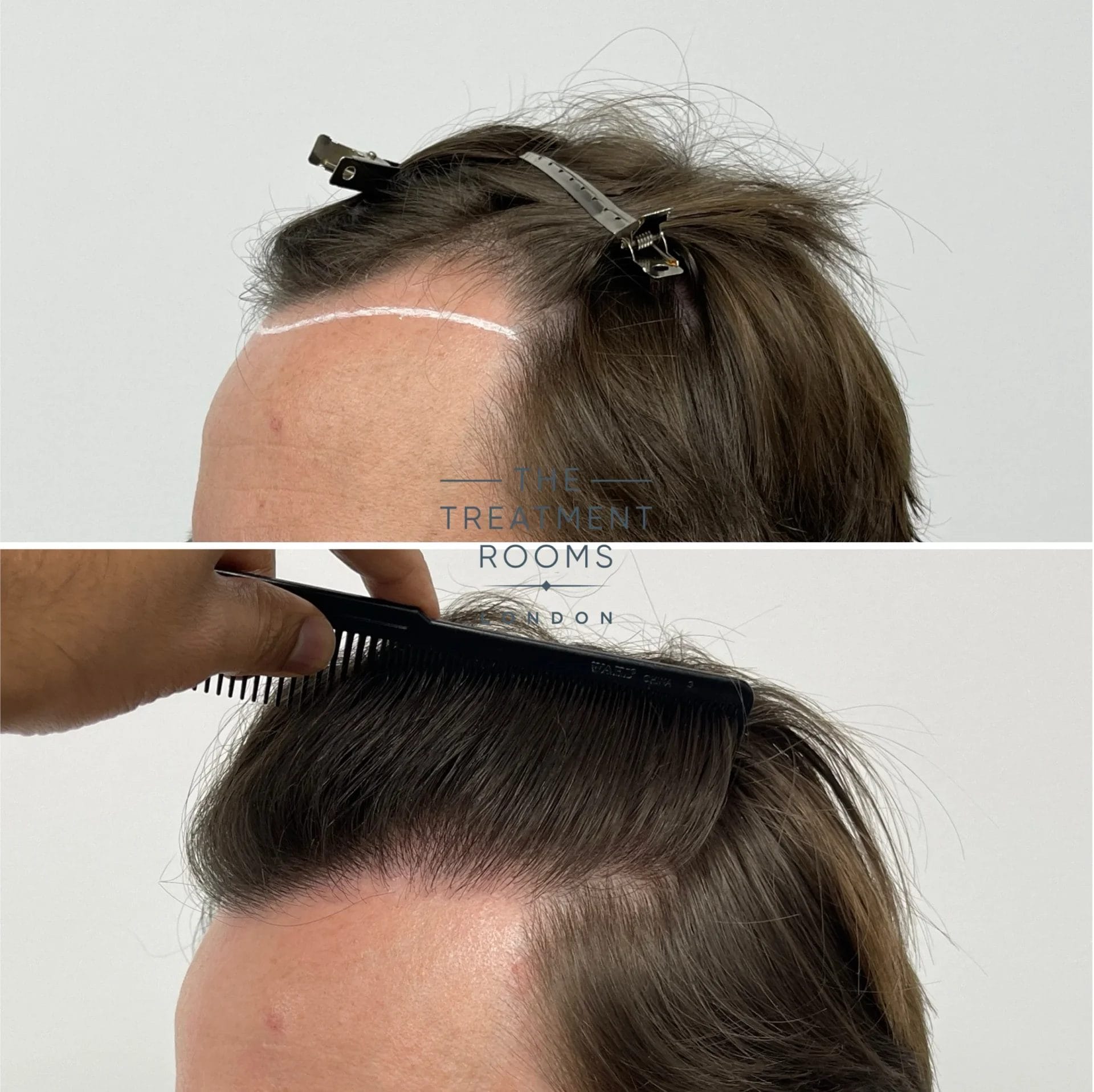
It is possible to have an unshaven hair transplant if you have norwood 3 hair loss. A subtle shave is performed into your hairline and your donor area, leaving long hair to conceal the areas that have been operated on. Below you will see an example of an unshaven hair transplant for norwood 3 hair loss.

Norwood 3 hair transplant cost
The average cost of a hair transplant for Norwood 3 hair loss is between £5000-£7000 but can increase depending on lots of influencing factors. These include:
- The number of grafts needed
- Type of technique (FUT or FUE)
- Unshaven or shaven hair transplant surgery
You can also use our hair graft calculator to estimate how many grafts you may require for your hair transplant. Every patient who enquiries into our clinic will need to be seen by a Surgeon to have an accurate plan and quotation provided to them. We take pride in being a Surgeon-led and owned clinic to ensure patients receive the highest quality care.
Conclusion
If you are thinking about having a hair transplant treatment to combat Norwood 3 hair loss, we can help. Book your hair transplant consultation with Treatment Rooms London today to talk to one of our hair loss experts about our outstanding results with minimal recovery time.
The Treatment Rooms London, excellence in FUE hair transplant surgery.
Sources
Share:
Authored by

Dr Roshan Vara
Dr. Roshan Vara is a renowned hair transplant surgeon in London and the Co-Founder of our award winning hair transplant clinic, The Treatment Rooms London.He has over 10 years of experience in hair transplant surgery and is recognised for delivering natural-looking results through ethical, patient-centred care. He is a Full Medical Member of BAHRS and an Associate Member of ISHRS, reflecting his commitment to the highest standards in modern hair restoration.
Reviewed by

Dr Dilan Fernando
Dr. Dilan Fernando is regarded as one of the best hair transplant surgeons in London and Co-Founder of The Treatment Rooms London. He has over 10 years of experience in hair transplant surgery and is known for his meticulous technique and commitment to ethical practice. He served on the Executive Committee of BAHRS from 2020 to 2024, helping to shape industry standards for patient safety and quality of care. Dr. Fernando personally performs each surgery, ensuring natural results built on trust and experience.
Book a Consultation
Related Blogs

Did Kyle Walker Have a Hair Transplant? Expert Review of His Hair Loss and Restoration
September 21, 2026
Key Takeaways: Kyle Walker is a widely known athletic superstar. He burst onto the football scene with…

Can Women Take DHT Blockers for Hair Loss? Benefits & Risks
September 20, 2026
Key takeaways In the UK, for example, finasteride and dutasteride, the main DHT blocking medications, are not…

Analysing Jimmy Carr’s Hair Transplant: Expert Review and All You Need to Know
September 20, 2026
Key takeaways As one of Britain’s best-known comedians, Jimmy Carr is no stranger to the public eye….

The Ludwig Scale & Female Pattern Hair Loss: Stages, Assessment & Treatment
September 19, 2026
Key takeaways: The Ludwig scale aids the description of how advanced your hair loss is. It is…

What is DHT & Its Role in Hair Loss?
September 17, 2026
Key Takeaways The most common cause of hair loss in men is ‘androgenetic alopecia’ or ‘male pattern…

Did Daniel Craig Have a Hair Transplant? Here is What Our Experts Think
September 16, 2026
Key Takeaways: Daniel Craig is one of the most recognisable actors of his generation: the English superstar…

Jürgen Klopp Hair Transplant: Expert Analysis of His Hair Loss and All You Need to Know
September 16, 2026
Key Takeaways Jürgen Klopp is one of football’s most celebrated managers. He made his name through his…

Elton John and His Hair Transplant Journey: Expert Analysis and All You Need to Know
September 15, 2026
Key Takeaways: Sir Elton John has had, quite simply put, a great music career to date. Since…
Minoxidil For Eyebrows – Does It Work?
September 15, 2026
Key Takeaways: Eyebrows are a hugely important feature in humans for communication, facial expression, and identity. They…