

With excess hair loss and hair thinning said to affect 80% of all men and 50% of women by the age of 701, many people are often on the lookout for potential remedies to restore their hairline.
One such product to have emerged in recent years is Stemoxydine – a topical medication thought to extend the active growth phase of hair growth cycle (anagen phase) and possibly shorten the lesser-known kenogen phase of the hair growth cycle2. This phase isn’t extensively understood, but it appears to be a period of physiological rest where the hair follicle remains inactive and empty3. However, we’re still waiting for solid scientific validation to confirm Stemoxydine’s exact mechanism of action in promoting hair health.
In this article, we’ll explore the science behind Stemoxydine, highlighting its benefits and potential side effects, and compare it with other hair-loss treatments, such as an FUE hair transplant.
How Stemoxydine works for hair loss
Stemoxydine is categorised as a prolyl-4-hydroxylase (P4H) inhibitor, which aims to promote hair regrowth by creating a low-oxygen environment within hair follicles.
After certain studies found that stem cells were able to create and preserve hair follicles more effectively in low-oxygen (hypoxic) conditions4, Stemoxydine was designed to effectively mimic this environment.
In doing so, this is said to induce the anagen phase of the hair growth cycle, helping activate any dormant follicles and increasing the overall hair density5.
However, there isn’t much scientific evidence to support these claims, especially regarding the medication’s long-term safety and overall effectiveness.
What are the benefits of using Stemoxydine for hair loss?
While a small number of studies have found that using Stemoxydine can significantly increase hair density in men when compared to a placebo4, there has been a lack of research into the medication’s long-term use.
Generally speaking, however, the reported benefits of using Stemoxydine include:
- It can increase levels of hair density2
- It can be used by both men and women
- It can be used alongside other types of hair loss treatments
- It acts differently to other hair loss treatments, like Finasteride or Minoxidil
- It provides an alternative to hormone-blocking treatments
- It helps combat thinning hair2
Before deciding to start using Stemoxydine to treat hair loss, it’s important to consult a specialist, like our team here at The Treatment Rooms London. We will be best placed to guide you on which type of hair loss treatment is right for your specific circumstances.
Does Stemoxydine have any side effects?
When used as instructed, Stemoxydine is generally considered safe to use. However, like any type of medication or hair loss treatment, some users do report some side effects, especially when applied to the scalp. These can include:
- Irritation
- Dryness
- Itching
- Redness
- Burning sensation
If you are concerned about any of these side effects, it’s crucial to speak to a hair loss specialist before starting Stemoxydine as a treatment.
How does Stemoxydine compare against other treatments?
While Stemoxydine may be an effective hair loss solution for some people, it might not be suitable for everyone.
Other types of hair loss treatments, like Minoxidil and Finasteride, can all offer equal – if not better – results, especially over the long term1.
However, these treatments again may not be suitable, depending on a wide variety of factors, such as the type of hair loss you have, your age and any other medications you are currently taking.
Stemoxydine vs. Minoxidil
As one of the most popular hair loss treatments, Minoxidil has been shown through numerous scientific studies to slow, stop and, in some cases, reverse hair loss6.
Although the exact mechanism by which Minoxidil stimulates hair growth is not fully understood, Minoxidil appears to work in a very different way to Stemoxydine to promote hair growth.
Minoxidil is a foam and is generally cheaper than Stemoxydine, which comes as a liquid. It is also FDA-approved for treating conditions like androgenetic alopecia and has been shown to grow hair much more quickly than Stemoxydine.
However, Stemoxydine is associated with fewer side effects.
Both types of treatment also target the anagen phase of the hair growth cycle; Stemoxydine shortens the preceding kenogen phase to induce anagen, whereas Minoxidil prolongs it7.
Stemoxydine vs. Finasteride
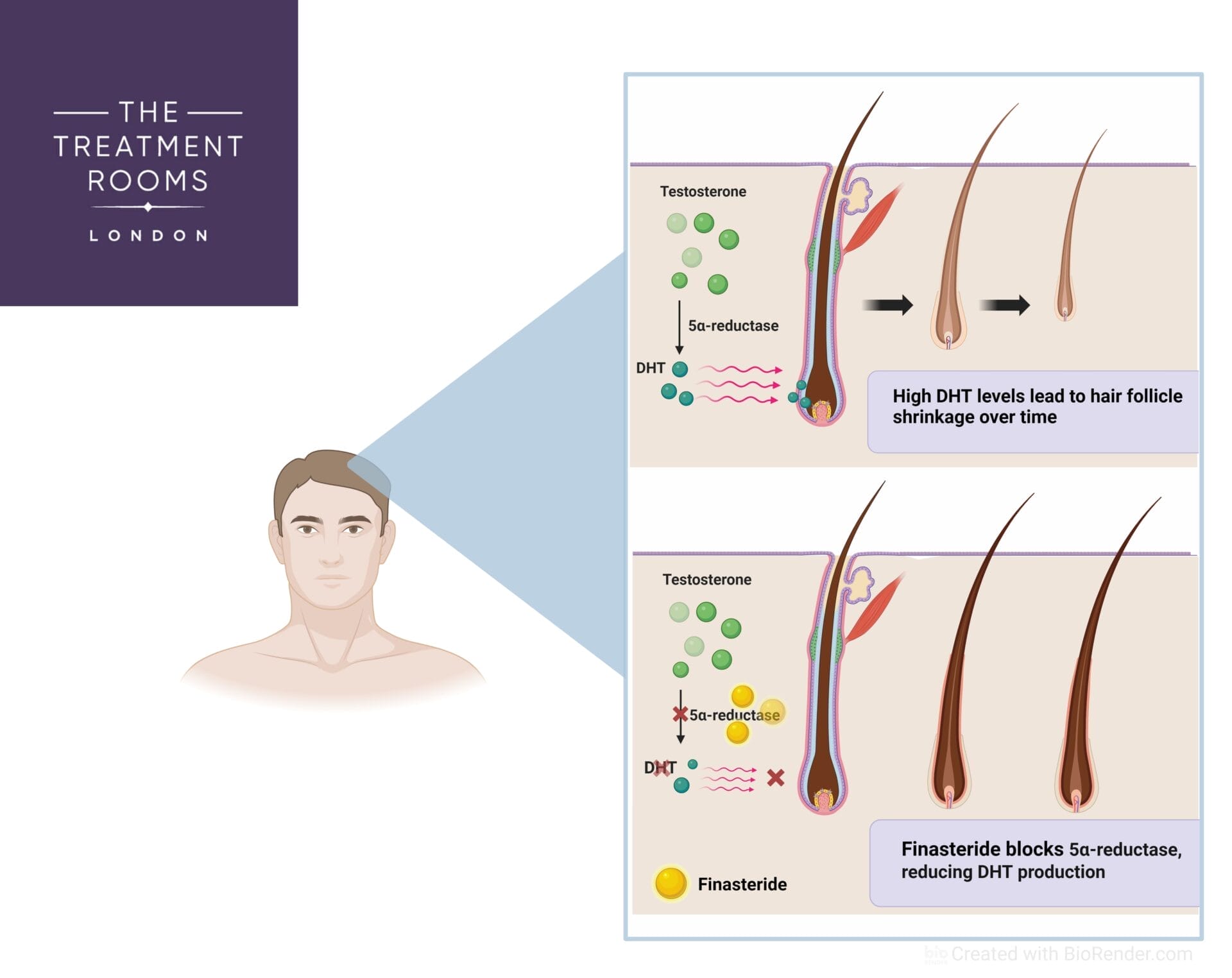
Finasteride is an oral, prescription medication commonly used to treat hair loss in men, by blocking the production of dihydrotestosterone (DHT) – a hormone known to contribute to hair loss.
Available in tablet form, Finasteride can take a few months to show results. It has also been shown through research to be safe and effective for men to use, despite its associated side effects on libido and semen quality.
Like Minoxidil, there is a lot more clinical evidence to support the use of Finasteride as a hair loss treatment than Stemoxydine.
Finasteride, for example, is FDA-approved for the treatment of male pattern baldness, having been shown to slow the progression of hair loss and increase hair growth in various studies8.
Conclusion
While the use of Stemoxydine as a hair-loss treatment may be a fascinating area of research, questions remain about its long-term use.
Early studies and user testimonials seem to suggest a wide range of benefits, but the lack of extensive scientific and clinical research poses a risk.
Therefore, we’d recommend that Stemoxydine should be approached with caution, and thought of as more of a short-term fix than a long-term solution.
Treat hair loss at The Treatment Rooms London
Here at The Treatment Rooms London, our team have a wealth of experience and expertise on the latest types of hair loss treatments. We also stay regularly up to date on the latest research and medical advances, to provide our patients with the most appropriate recommendations.
So, if you are concerned about your hair loss, why not book a consultation?
We offer a wide range of treatments and services, and would be more than happy to answer any follow-up questions you might have.
Sources
- Nestor, M. Ablon, G., Gade, A. (2021) Treatment options for androgenetic alopecia: Efficacy, side effects, compliance, financial considerations, and ethics. J Cosmet Dermatol. 20(12): 3759 – 3781. Available at: https://www.ncbi.nlm.nih.gov/pmc/articles/PMC9298335/ [Accessed 15 November 2023]
- Reygagne, P. (2014) Oral Presentations: Stemoxydine, a Hair Kenogen Phase Shortener, Leading to Increased Hair Density. Int J Trichology. 6(3): 113 – 139. Available at: https://www.ncbi.nlm.nih.gov/pmc/articles/PMC4158624/ [Accessed 15 November 2023]
- Guarrera, M. & Rebora, A. (2019) The Higher Number and Longer Duration of Kenogen Hairs Are the Main Cause of the Hair Rarefaction in Androgenetic Alopecia. Skin Appendage Disord. 5(3): 152 – 154. Available at: https://karger.com/sad/article/5/3/152/291529/The-Higher-Number-and-Longer-Duration-of-Kenogen [Accessed 15 November 2023]
- Rathman-Josserand, M., Bernard, B. & Misra, N. (2014) Hair Density Recovery: New Insights in Hair Growth Biology – L’Oreal Research: O 10: The Niche of Human Hair Follicle Stem Cells: A Specific Environment. Int J Trichology. 6(3): 113 – 139. Available at: https://www.ncbi.nlm.nih.gov/pmc/articles/PMC4158624/ [Accessed 15 November 2023]
- Park, BS., Kim, WS., Choi, JS., et al. (2010) Hair growth stimulated by conditioned medium of adipose-derived stem cells is enhanced by hypoxia: evidence of increased growth factor secretion. Biomed Res. 31(1): 27 – 34. Available at: https://pubmed.ncbi.nlm.nih.gov/20203417/ [Accessed 15 November 2023]
- Suchonwanit, P., Thammarucha, S. & Leerunyakul, K. (2019) Minoxidil and its use in hair disorders: a review. Drug Des Devel Ther. 13: 2777 – 2786. Available at: https://www.ncbi.nlm.nih.gov/pmc/articles/PMC6691938/ [Accessed 15 November 2023]
- Kwack, M., Kang, B., Kim, M., et al. (2011) Minoxidil activates β-catenin pathway in human dermal papilla cells: A possible explanation for its anagen prolongation effect. Journal of Dermatological Science. 62(3): 154 – 159. Available at: https://www.sciencedirect.com/science/article/abs/pii/S0923181111000521 [Accessed 15 November 2023]
- Samplaski, M., Lo, K., Grober, E. & Jarvi, K. (2013). Finasteride use in the male infertility population: effects on semen and hormone parameters. Fertil Steril. 100(6): 1542 – 1546. Available at: https://pubmed.ncbi.nlm.nih.gov/24012200/ [Accessed 15 November 2023]
Share:
Authored by

Dr Roshan Vara
Dr. Roshan Vara is a renowned hair transplant surgeon in London and the Co-Founder of our award winning hair transplant clinic, The Treatment Rooms London.He has over 10 years of experience in hair transplant surgery and is recognised for delivering natural-looking results through ethical, patient-centred care. He is a Full Medical Member of BAHRS and an Associate Member of ISHRS, reflecting his commitment to the highest standards in modern hair restoration.
Reviewed by

Dr Dilan Fernando
Dr. Dilan Fernando is regarded as one of the best hair transplant surgeons in London and Co-Founder of The Treatment Rooms London. He has over 10 years of experience in hair transplant surgery and is known for his meticulous technique and commitment to ethical practice. He served on the Executive Committee of BAHRS from 2020 to 2024, helping to shape industry standards for patient safety and quality of care. Dr. Fernando personally performs each surgery, ensuring natural results built on trust and experience.
Book a Consultation
Related Blogs

Jude Law Hair Transplant: Before, After, and His New Hairline
March 31, 2026
Jude Law, the British actor known for roles in The Talented Mr Ripley, Sherlock Holmes, and Fantastic…
Hair Loss In Your 20s- What You Need To Know
March 24, 2026
Key Takeaways Hair thinning or excessive hair shedding in your 20s is often due to genetics, stress,…
How Long Does a Hair Transplant Take? The Average FUE & FUT Surgery Duration Explained
March 24, 2026
Key Takeaways Are you considering a hair transplant and wondering how long the process takes? The answer…

Steve Carell Hair Transplant: Before, After, and His New Hairline
March 2, 2026
Steve Carell, best known as Michael Scott in The Office, began sparking curiosity amongst fans when his…

What Is Nutrafol and Does It Really Work for Hair Growth?
February 24, 2026
Key Takeaways Hair thinning can feel frustrating and confusing. You might notice more hair falling out in…

Peppermint oil for hair growth: Evidence, Benefits, Uses & Safety
February 24, 2026
Key Takeaways What Is Peppermint Oil? Peppermint oil, also known as Mentha piperita oil, is an essential…

Why Winter Hair Loss Happens and All You Need to Know
February 6, 2026
Key Takeaways As temperatures drop and indoor heating kicks in, many people notice their hair feels drier,…

Can You Take Finasteride With Minoxidil For Hair Loss?
February 5, 2026
Key Takeaways Consistency Matters: Stopping treatment often leads to a recurrence of hair loss; ongoing medical guidance…
Does Finasteride Cause Erectile Dysfunction?
February 3, 2026
Key Takeaways Finasteride can cause erectile dysfunction in some men, but it isn’t common. Most men who…