

Crown Hair Transplant Surgery
Crown Hair Transplant Surgery Summary
Shave type: Shaven, Unshaven or Minimally shaven
Anaesthesia- Local anaesthesia
Surgeon-Led
Duration- 6-8 hours
Recovery- 7-10 days
Results: Visible in 9-12 months
Cost: £3,000-£10,000+
Crown hair transplant surgery involves relocating hair from the back and sides of the scalp into the circular crown or vertex area. A crown hair transplant can be performed with the FUE or an FUT method and it can increase hair density where it has thinned or recreate a crown fully including the spiral where the hair spins out. The procedure can be performed using the unshaven hair transplant or fully shaven technique.
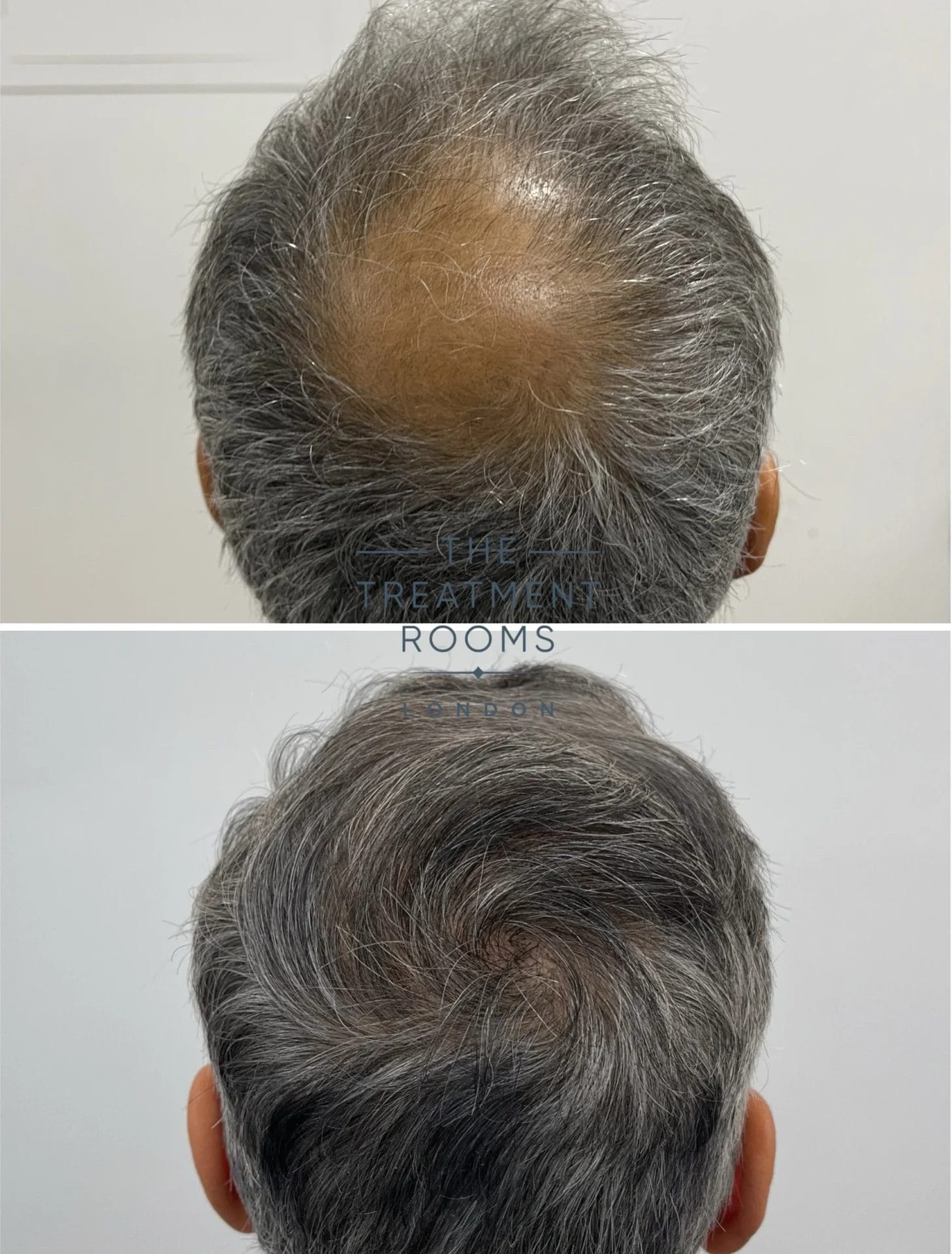
Why Does Hair Loss Happen On The Crown?
Hair loss on the crown, also known as the vertex, is a common phenomenon that affects many people, particularly men and transgender patients. It is commonly caused by male pattern baldness, also known as androgenic alopecia. This is a condition where the hair follicles on the scalp are thinned by a hormone called dihydrotestosterone (DHT), eventually leading to hair thinning. Over time, the hair on the crown area begins to fall out, leading to a bald circular area.
Hair loss in the crown can also affect women who are suffering from severe female pattern baldness.
Crown Hair Transplant Before and After
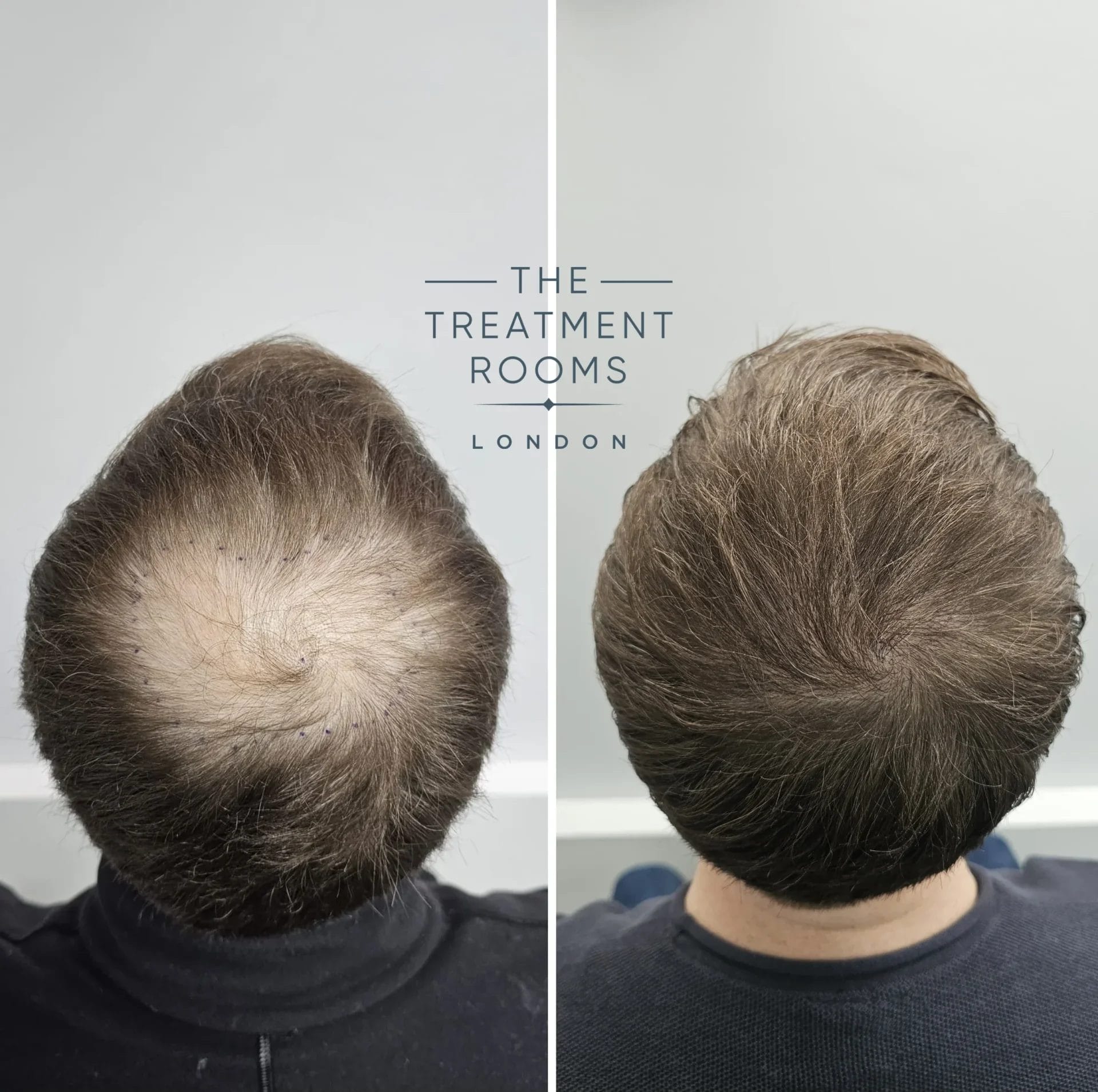


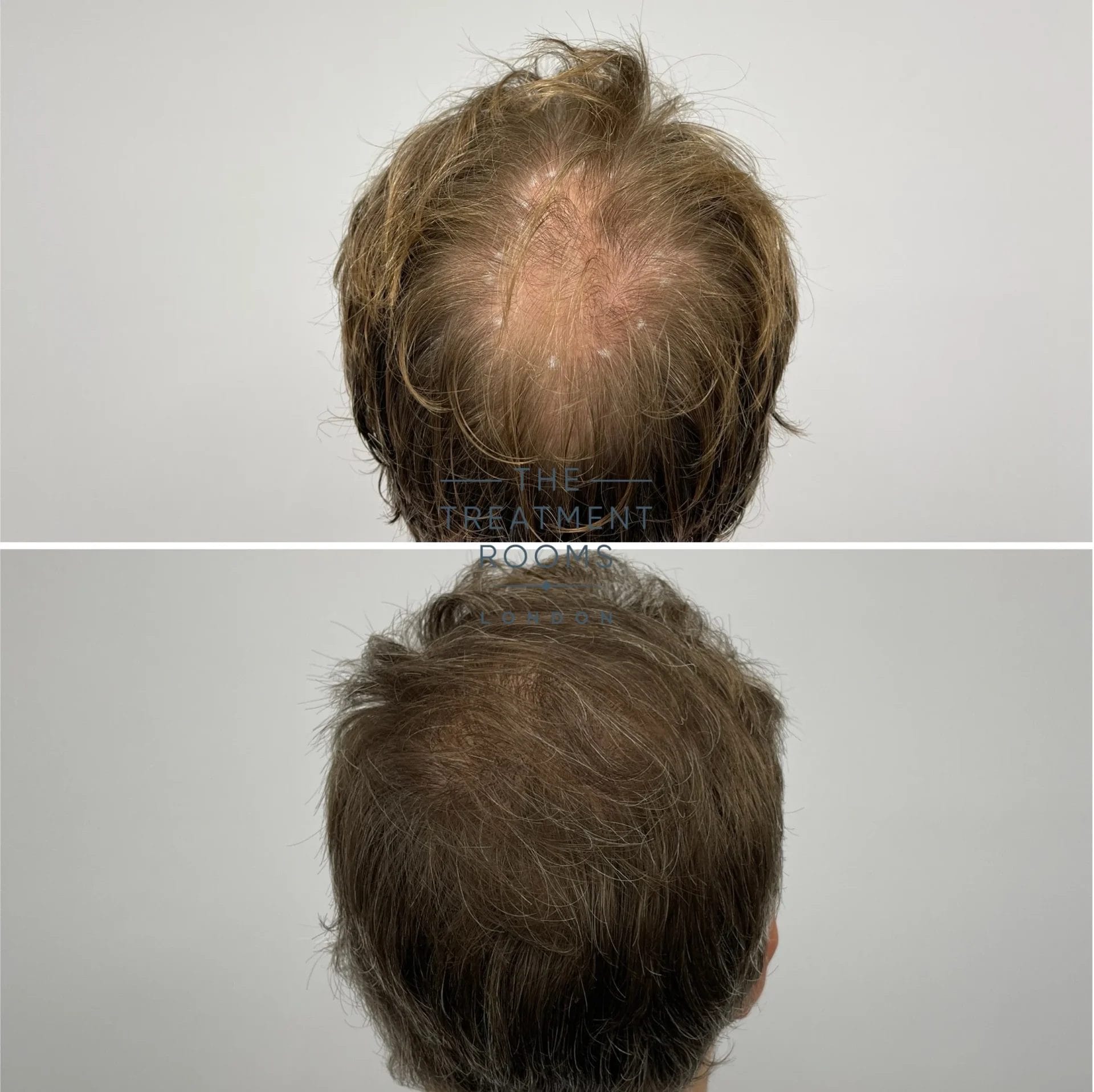
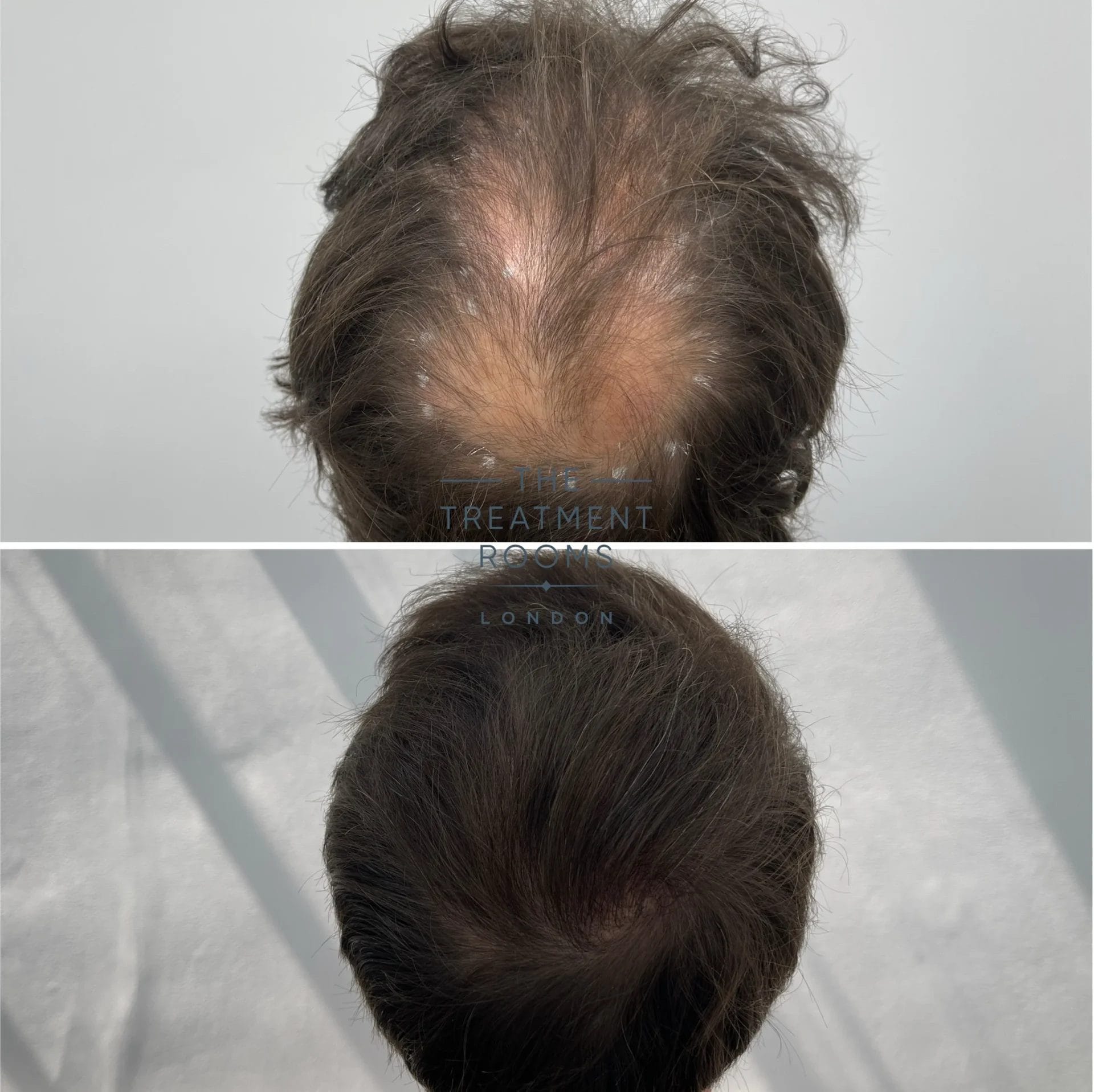
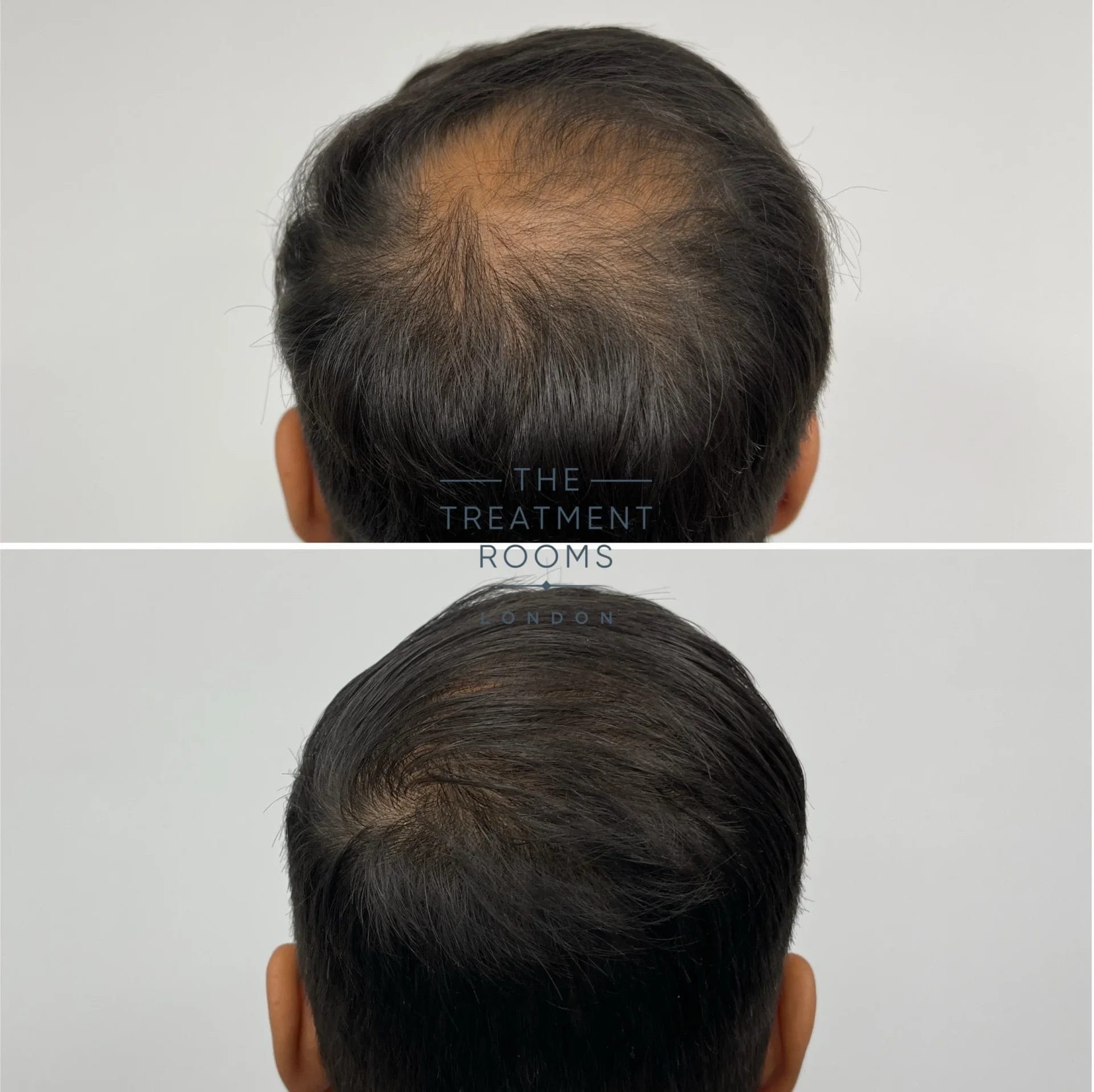

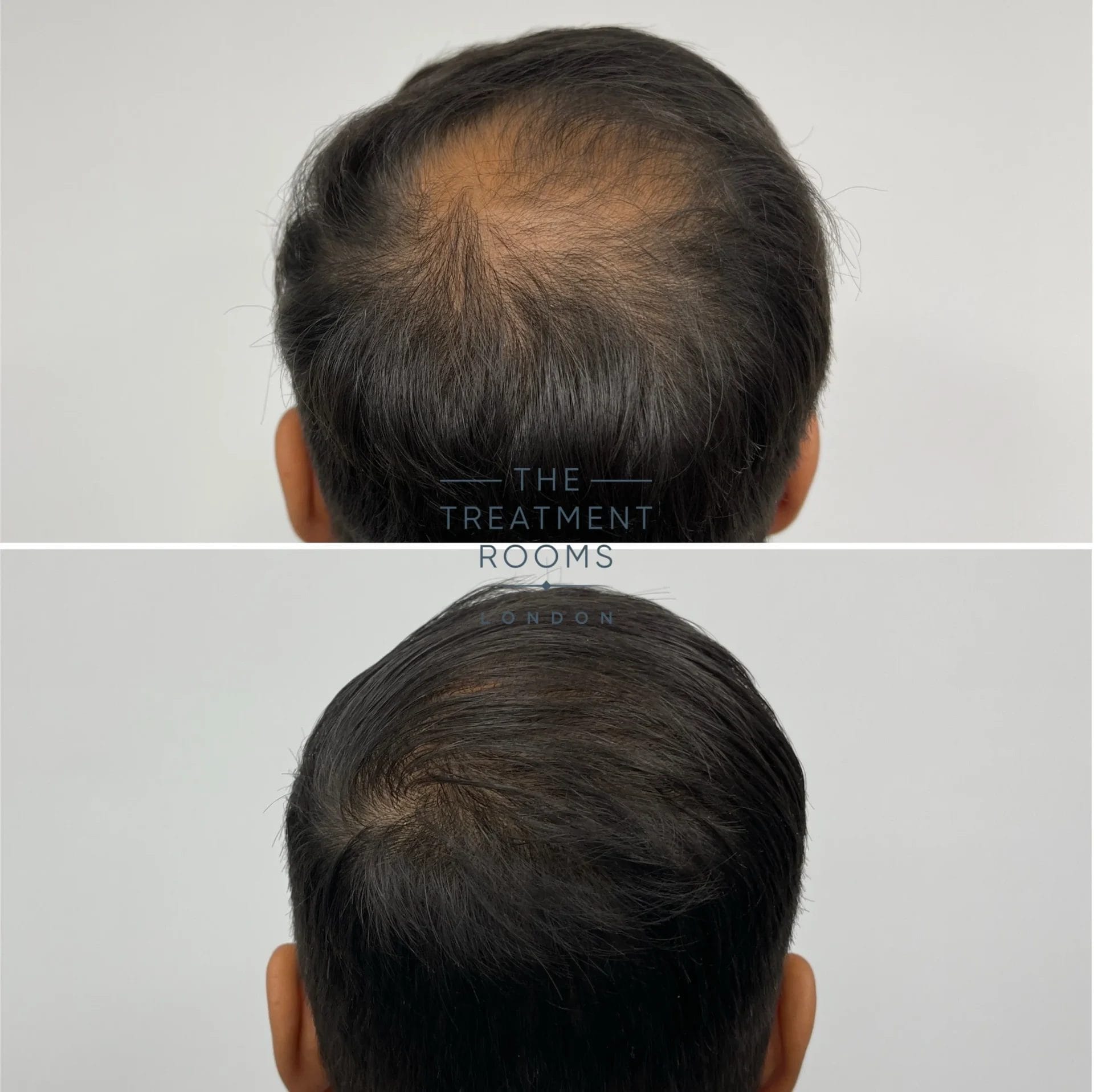
We have one of the biggest hair transplant before and after galleries in the world. You can see more of our cases and crown hair transplant results here: hair transplant before and after.
Crown Hair Transplant Procedure
A crown hair transplant procedure is usually performed using the FUE (Follicular Unit Extraction) or FUT (Follicular Unit Transplant) methods, which involves extracting hair follicles from the donor area and implanting them into the recipient area. The entire procedure can take several hours, depending on the number of hair grafts needed. A crown hair transplant should give a result that lasts 10- 20 years or longer. Below, our Co-founder and hair transplant surgeon, Dr Vara, explains how he plans a crown hair transplant.
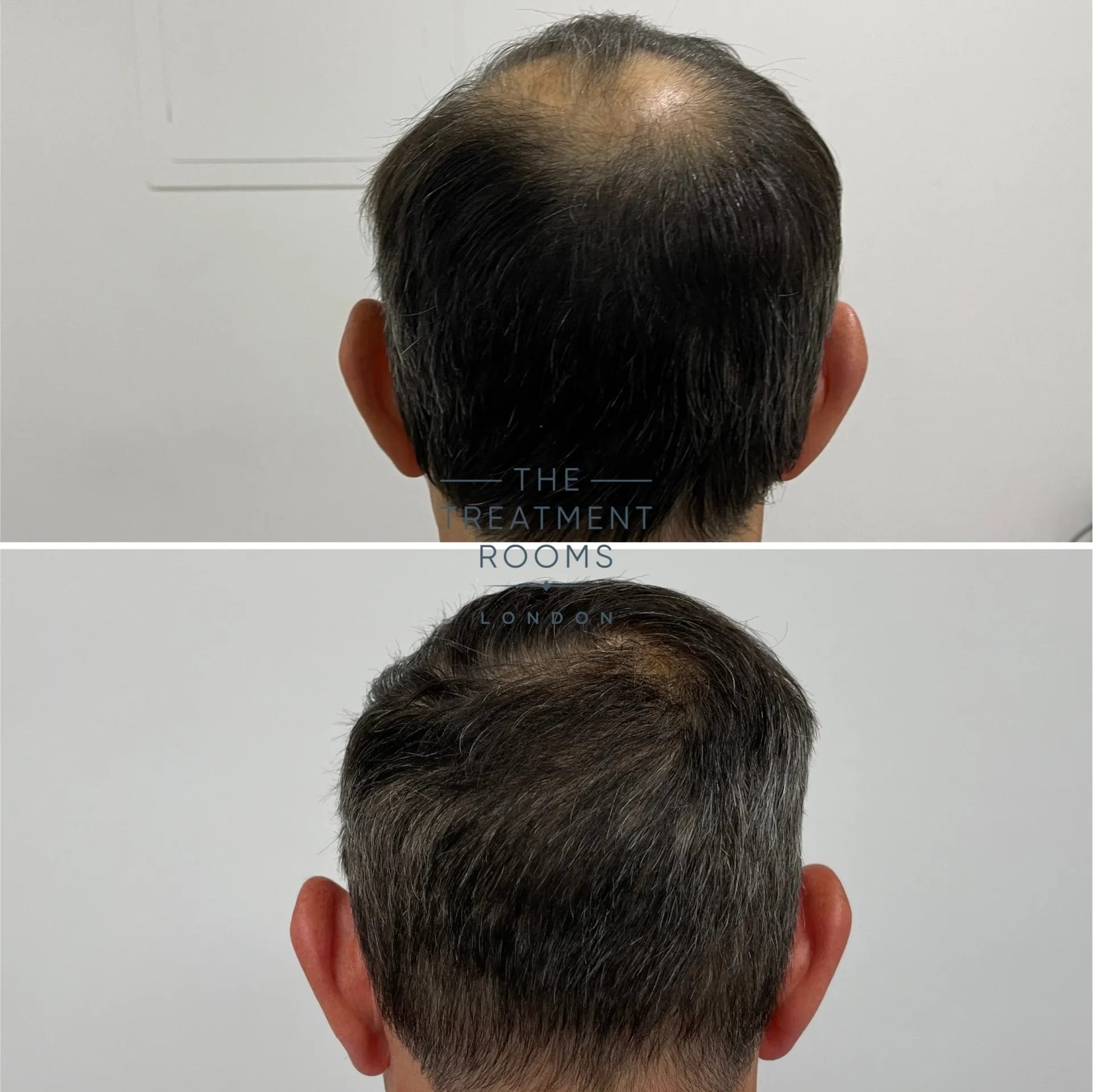
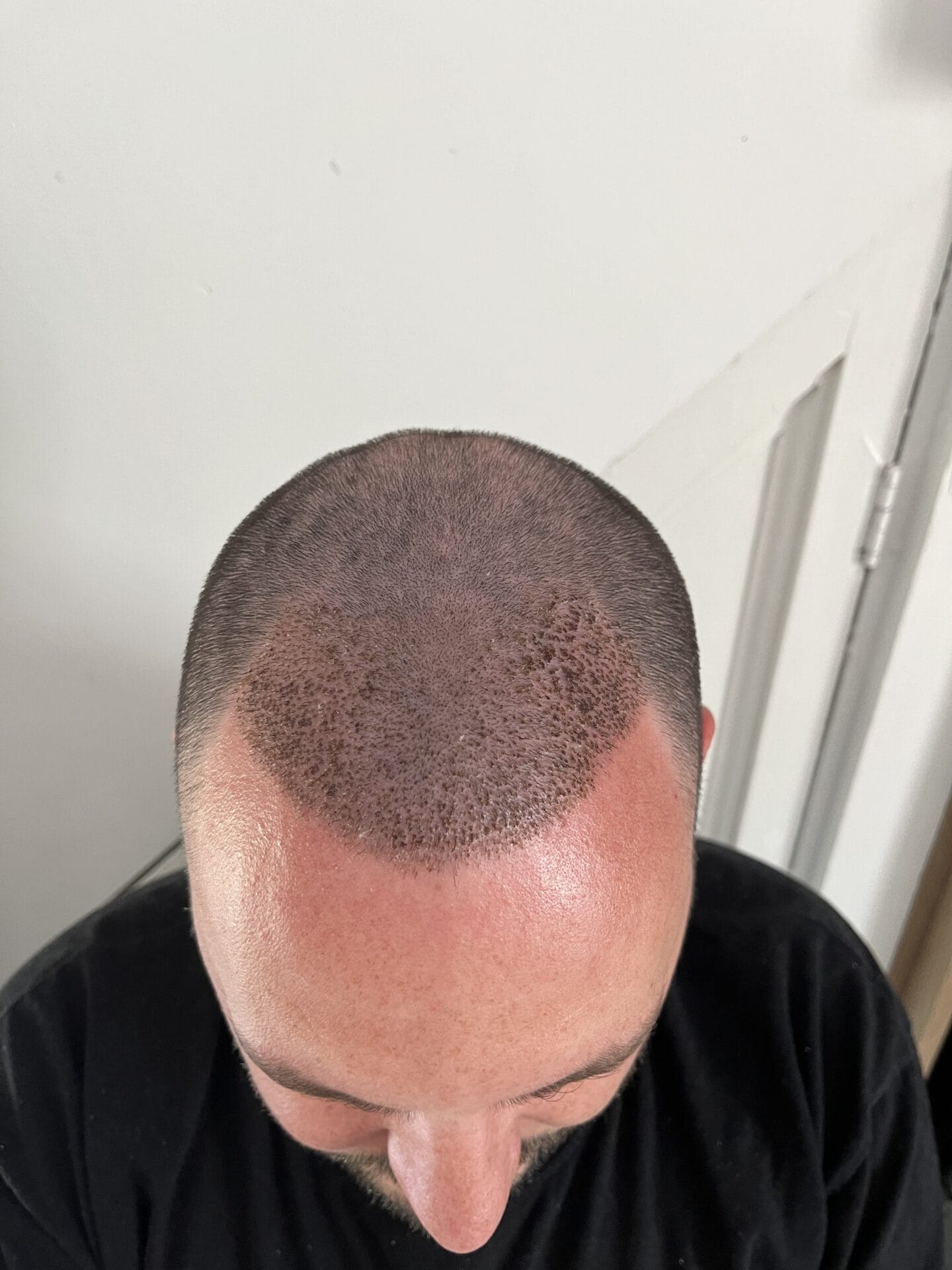
BR's Crown transplant journey
Type of Surgery : FUE hair transplant
Hair Loss Level : Crown
Number of Grafts : 1877
"I have just returned from a 12 months follow-up consultation with Dr Vara and am extremely pleased with the outcome of the crown FUE hair transplant surgery. The entire process (the initial consultation, the day of surgery, and post-operative follow-ups) have been extremely professional. I felt looked after, all the steps were clearly explained in advance and any question I had was answered. So, I would highly recommend Dr Vara and this clinic for such a procedure."
Crown hair transplant surgery at The Treatment Rooms London
All patients who enquire at The Treatment Rooms London are seen by their dedicated Surgeon. This 1-1 care ensures patients receive accurate surgical advice around their hair loss. Because procedures in the crown require a greater volume of hair, we will need to carefully plan your operation, and we will take the following points into consideration when planning your procedure:
- How much hair do you have in your donor area to facilitate surgery
- Whether you have a single or a double spiral in your crown
- Whether you can have an unshaven or shaven crown hair transplant
- The approximate number of grafts required to give you the desired coverage
- If it is a lengthy procedure should you and your surgeon consider splitting the operation over 2 sessions
This level of planning is discussed by our Co-founder and hair transplant surgeon, Dr Fernando, in the video below.
Crown hair transplant cost
The cost of a crown hair transplant depends on the size of your crown. It can range from £4000 to £10,000 and you may require 2 sessions of surgery in the crown to grow adequate coverage.
The cost will also be determined by the number of grafts you require for surgery, your hair type and whether you want to opt for a minimally shaven or unshaven hair transplant. You can calculate the approximate number of grafts you require for your surgery using our hair transplant graft calculator.

The Treatment Rooms London Reviews
Crown Hair Transplant FAQs
The main 2 techniques of hair transplant surgery are FUE and FUT. Choosing the right hair transplant technique requires a balanced discussion with your hair transplant Surgeon. For small to medium sized crowns, FUE hair transplant surgery may be the best option for patients. For large crowns or for patients who don't want too much hair to be shaved, an FUT hair transplant for the crown may be the preferred procedural choice. However, FUT hair transplant surgery tends to have a longer recovery time than FUE hair transplant surgery.
FUE (Follicular Unit Extraction) is a popular method for a crown hair transplant. The benefits of FUE include:
- Minimally invasive procedure: FUE is a comfortable procedure that requires no stitches.
- No linear scar: Unlike the FUT hair transplant method, FUE does not leave a linear scar on the back of the head.
- Quick recovery time: FUE allows for a quick recovery time, with most patients able to return to their normal activities within a 5-7 days.
FUT (Follicular Unit Transplant) is also a good method for large procedures in the crown. The benefits of FUT include:
- The ability to transplant a large area of crown hair loss.
- Sometimes patients who have large crowns require 2 sessions of FUE hair transplant surgery to cover the crown. This can sometimes be performed with a single day of FUT hair transplant surgery
Authored by
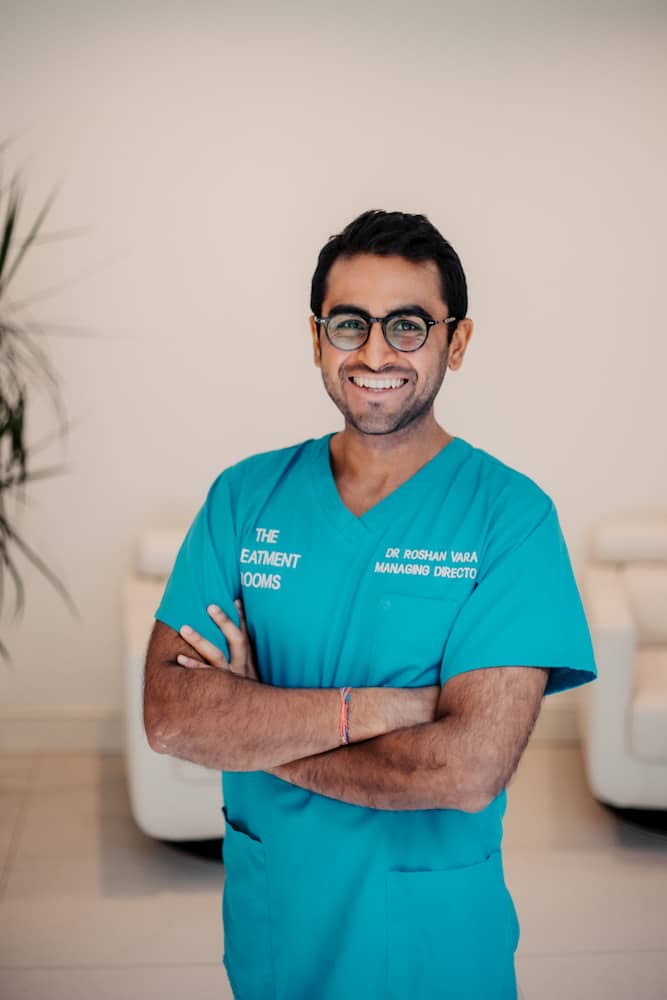
Dr Roshan Vara
Dr. Roshan Vara is a renowned hair transplant surgeon in London and the Co-Founder of our award winning hair transplant clinic, The Treatment Rooms London.He has over 10 years of experience in hair transplant surgery and is recognised for delivering natural-looking results through ethical, patient-centred care. He is a Full Medical Member of BAHRS and an Associate Member of ISHRS, reflecting his commitment to the highest standards in modern hair restoration.
Reviewed by

Dr Dilan Fernando
Dr. Dilan Fernando is regarded as one of the best hair transplant surgeons in London and Co-Founder of The Treatment Rooms London. He has over 10 years of experience in hair transplant surgery and is known for his meticulous technique and commitment to ethical practice. He served on the Executive Committee of BAHRS from 2020 to 2024, helping to shape industry standards for patient safety and quality of care. Dr. Fernando personally performs each surgery, ensuring natural results built on trust and experience.
Latest News
When Do Scabs Fall Off After Having a Hair Transplant?
October 17, 2026
Key takeaways: Scabs will form immediately after having a hair transplant and should wash away after 7-10…

What Happens If You Stop Using Minoxidil
October 13, 2026
Key Takeaways: If you’ve been consistently applying minoxidil to support your hair growth and have been doing…

Hair Transplant After 7 Days: What To Expect
October 9, 2026
Key takeaways: 7 days after your hair transplant, you can expect to see the scabs in your…