

Key Takeaways:
- What can I eat on the day of the operation? Your surgeon will guide you on the day of the operation about what to expect after it is completed.
- What should I eat first after the procedure? It may be possible that you feel nauseous after the procedure, so start with a light snack afterwards if you feel able.
- What type of foods help recovery? As usual, eating balanced meals containing all essential food groups and vitamins and minerals is advisable. Prioritise foods containing protein, fruits, vegetables and wholegrain carbohydrates.
- Should I take supplements? Avoid taking high-dose supplements without having confirmed any underlying deficiency.
- Can I take alcohol or caffeine? Ask your clinic about alcohol, caffeine or any other dietary restrictions relevant to your circumstances.
After a hair transplant, you can resume your usual diet as soon as you feel up to it. As it is typically a one-day procedure using local anaesthetic, there are not many restrictions on foods or drinks you can have before and after the procedure.
A healthy and balanced diet supports normal wound healing and recovery. No particular food has been proven to help transplanted grafts grow faster.
Why Does Nutrition Matter After a Hair Transplant?
Nutrition is important after a hair transplant as food is the main source of the energy, protein, and micronutrients needed to build new tissue and recover well. Not having enough of what your body needs may slow healing.2
What Should You Eat Immediately After a Hair Transplant?
Immediately after a hair transplant, you can resume your meals as normal.
You may feel nauseous after the procedure. In that case, it is best to eat a lighter snack or meal at first.
It is important to eat a healthy, balanced diet, in particular, making sure you are getting enough protein and eating enough vitamin and micronutrient-rich foods such as fruits and vegetables.3
What should you eat on the day of surgery?
On the day of the surgery, there are no absolute restrictions on what you should eat. At The Treatment Rooms London, we provide all our patients with a healthy lunch.
Your catering requirements will be discussed in your pre-operative appointment. As the procedure is carried out under local anaesthetic, the medications that are given to you are less likely to make you feel nauseated.
In the morning before the procedure, it is best not to overeat; however, a light meal is preferable.
Avoid heavy, greasy foods, those that are packed with excess salt or sugar, or foods that are spicy. These may upset your stomach and make it difficult to relax during the procedure.
What should you eat during the first 24–48 hours?
Eating in the first 24-48 hours should follow a balanced pattern. A great visual guide to the proportion of each food you should be eating over a day is the Eatwell Guide from the NHS7.
It doesn’t have to be for each meal, but if your meal proportions resemble that of the guide over a day, then you are on the right track. This involves roughly ⅓ fruits and vegetables, ⅓ carbohydrates, ⅓ majority protein with minimal amounts of dairy, oils and spreads.3

Which Nutrients Support Normal Healing?
It is important to obtain certain nutrients in the right amounts for optimal bodily functioning and scalp healing.
Protein
Protein helps wound healing as it is used to rebuild and repair tissues. It is also from this protein that a lot of structures, such as skin and hair, are made. Having enough protein is like having the correct building blocks required to help your wounds heal faster.
You need enough to meet your nutritional requirements. There is little evidence that taking excess protein will help provide any additional benefit.2
Protein can be found in foods such as beans, lentils, tofu, as well as eggs, fish and meat.
Vitamin C and zinc
Vitamin C and zinc are essential micronutrients that support the immune system and provide antioxidant protection. Zinc also may have a role in wound healing.4,5
Iron, vitamin D, vitamin B12 and folate
If you have an underlying deficiency of Iron, vitamin B12, or folate, supplementation may be beneficial. Taking extra nutrients when you are not deficient is unlikely to improve transplant results.
What Should You Drink After a Hair Transplant?
How much water should you drink?
Keeping your body hydrated is an important part of normal functioning. Aim to maintain your normal hydration. Recommended intake is roughly 3 litres a day for men and 2.2 litres a day for women.6,8
Can you drink coffee or other caffeinated drinks?
Coffee and caffeinated drinks such as tea and energy drinks are best avoided on the day of the surgery. This is because they can increase your heart rate and blood pressure, something which may slightly increase bleeding during the operation, which can make it harder for the surgeon to see, especially when involving such tiny structures in hair follicles.
“Patients can return to eating and drinking what they would like the day after their hair transplant. On the day of the procedure, we recommend they have a light breakfast to ensure they line their stomach for the medications we give to them in the morning. We cater for all our patients and ensure they have a lunch that is balanced in protein, carbohydrates and fruit. After the procedure, patients should avoid having anything too chewy or spicy for the first night to ensure the transplanted grafts aren’t being irritated.
After the first day, patients should be able to go back to normal food and drink intake. Some of my patients may be dieting, but I explain to them that it is important they don’t calorie restrict in the first 1-2 weeks as this can impair their healing. “
Dr Roshan Vara, Director and Hair Transplant Surgeon, The Treatment Rooms London
After the surgery is complete, it is perfectly reasonable to start drinking coffee again in moderation.
When can you drink alcohol?
Alcohol can contribute to dehydration and poor sleep. It may also interact with certain medications you may be prescribed. Overall, if you can, it is best to avoid alcohol in the early recovery period.
Are There Foods to Avoid After a Hair Transplant?
The foods to avoid are those which are commonly known to be unhealthy for our body. These include:
- Very salty food
- Highly processed foods
- Foods with too much sugar
- Greasy, heavy meals such as takeaways
It is also a good idea to avoid strict diets with severe calorie restriction. If you wish to continue on a strict diet, seek advice from a dietitian to make sure your particular diet is able to meet your nutritional requirements and optimal calorie intake for healing.
Should You Take Supplements After a Hair Transplant?
Most patients do not need to start taking supplements after a hair transplant. Adequate nutrition will help support normal healing. There is no particular supplement that has been proven to speed up transplanted hair growth or recovery.
“Many of my patients may choose to take some supplements to increase their hair growth after their hair transplant procedure. Most commonly they will take Zinc, Selenium, Omega 3, Vitamin D and Biotin. These have some evidence for increasing hair growth and thickness.”
Dr Roshan Vara, Director and Hair Transplant Surgeon, The Treatment Rooms London
Can supplements interact with surgery or medication?
You should provide your clinic with a list of vitamins, minerals, and supplements you use before the operation. They will be able to guide you on further use or discontinuation.
Post-Transplant Eating Timeline
| Recovery stage | Dietary focus |
| Day of surgery | Follow your clinic instructions; drink fluids and eat a light meal as tolerated |
| First 24–48 hours | Regular hydration and return to your usual balanced diet; follow individualised medication and alcohol instructions |
| Longer-term | Maintain a balanced, varied diet. Seek professional advice about any suspected or confirmed nutritional deficiency |
This is a general guide. Follow your surgeon and clinic-provided instructions which are likely to be more specific to your individual post-transplant care.
When Should You Contact Your Clinic or a Medical Professional?
It is normal to experience some minor discomfort as you recover. However, It’s important to know when things are not going so well, and you should seek further advice. Please reach out to your operating clinic or a medical professional if you experience any of the following:
- Persistent vomiting or an inability to keep fluids down.
- Symptoms of dehydration.
- Unexpected or worsening swelling.
- A suspected reaction to any medications or supplements.
- Increasing pain, redness, discharge, fever, or any other signs of infection.1
Conclusion
You can return to your normal balanced diet as soon as you feel able to. This is likely to be straight away. While what you eat is important to support normal recovery, there is no recommended diet, so long as you are getting the right nutrients in the right amounts in your diet. Which sources you use to get that nutrition is your personal choice.
Ask your hair transplant clinic about your particular lifestyle regarding diet, alcohol, caffeine, medicines and supplements. They will be able to provide tailored advice for your individual circumstances.
References
- National Health Service. Hair transplant [Internet]. London: NHS; [cited 2026 Jul 27]. Available from: https://www.nhs.uk/tests-and-treatments/cosmetic-procedures/cosmetic-surgery/hair-transplant/
- Weimann A, Bezmarevic M, Braga M, Correia MITD, Funk-Debleds P, Gianotti L, et al. ESPEN guideline on clinical nutrition in surgery—Update 2025. Clin Nutr. 2025;53:222-261. doi:10.1016/j.clnu.2025.08.029.
- National Health Service. The Eatwell Guide [Internet]. London: NHS; 2022 Nov 29 [cited 2026 Jul 28]. Available from: https://www.nhs.uk/live-well/eat-well/food-guidelines-and-food-labels/the-eatwell-guide/
- Bechara N, Flood VM, Gunton JE. A systematic review on the role of vitamin C in tissue healing. Antioxidants (Basel). 2022;11(8):1605. doi:10.3390/antiox11081605.
- Arribas López E, Zand N, Ojo O, Kochhar T. Systematic review and meta-analysis of the effect of zinc on wound healing. BMJ Nutr Prev Health. 2025;8(1):e000952. doi:10.1136/bmjnph-2024-000952.
- National Academies of Sciences, Engineering, and Medicine. 2005. Dietary Reference Intakes for Water, Potassium, Sodium, Chloride, and Sulfate. Washington, DC: The National Academies Press. https://doi.org/10.17226/10925.
- NHS. The Eatwell Guide [Internet]. London: NHS; [cited 2026 Aug 7]. Available from: https://www.nhs.uk/live-well/eat-well/food-guidelines-and-food-labels/the-eatwell-guide/
- NHS. Water, drinks and hydration [Internet]. London: NHS; [cited 2026 Aug 7]. Available from: https://www.nhs.uk/live-well/eat-well/food-guidelines-and-food-labels/water-drinks-nutrition/
Share:
Authored by
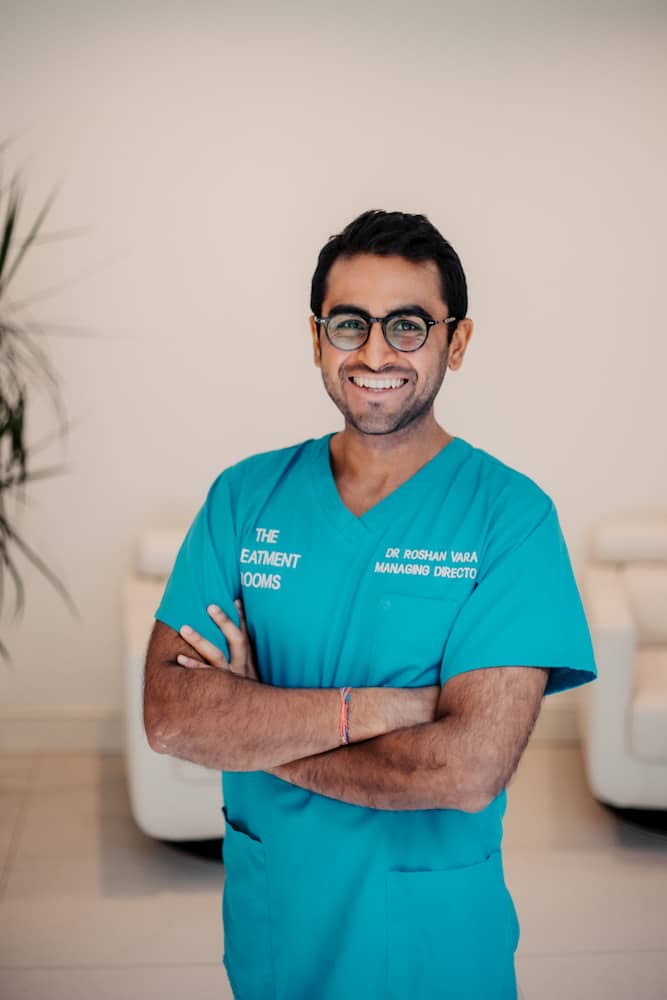
Dr Roshan Vara
Dr. Roshan Vara is a renowned hair transplant surgeon in London and the Co-Founder of our award winning hair transplant clinic, The Treatment Rooms London.He has over 10 years of experience in hair transplant surgery and is recognised for delivering natural-looking results through ethical, patient-centred care. He is a Full Medical Member of BAHRS and an Associate Member of ISHRS, reflecting his commitment to the highest standards in modern hair restoration.
Reviewed by

Dr Dilan Fernando
Dr. Dilan Fernando is regarded as one of the best hair transplant surgeons in London and Co-Founder of The Treatment Rooms London. He has over 10 years of experience in hair transplant surgery and is known for his meticulous technique and commitment to ethical practice. He served on the Executive Committee of BAHRS from 2020 to 2024, helping to shape industry standards for patient safety and quality of care. Dr. Fernando personally performs each surgery, ensuring natural results built on trust and experience.
Book a Consultation
Related Blogs
What Is A Hair Graft In A Hair Transplant?
October 7, 2026
Key takeaways: What is a Hair Graft in a Hair Transplant? Hair loss can be a distressing…

Widow’s Peak Hair Transplant for Women: Everything You Need to Know
October 6, 2026
Key takeaways: There is no absolute definition of a widow’s peak in women. It is often based…

Has Steve Carell Had a Hair Transplant? What the Evidence Really Shows
October 6, 2026
Key Takeaways Steve Carell is arguably one of the most liked and versatile actors of his generation….
When Can You Drink Alcohol After Your Hair Transplant?
October 6, 2026
Key takeaways: It’s common for our patients to ask us when it is okay to resume drinking…

Has Donald Trump Had a Hair Transplant? Expert Review and What the Evidence Shows
October 6, 2026
Key Takeaways Donald Trump’s hair is one of the most talked about aspects of his appearance; from…
Wayne Rooney Hair Transplant: Expert Analysis of His Hair Loss and Restoration
October 5, 2026
Key takeaways: Wayne Rooney is widely regarded as one of the greatest football talents from England. He…

Understanding Prince Harry’s Hair Loss: Causes and Treatment Options
October 3, 2026
Key Takeaways: Prince Harry, the Duke of Sussex, has lived most of his life in the public…

How Long Does Swelling Last After Having a Hair Transplant?
October 2, 2026
Key takeaways: It is natural to experience some swelling after having a hair transplant, and it is…

Male To Female (MTF) HRT Hair Regrowth
September 28, 2026
Key takeaways: Hair loss can have a negative impact on your well-being, and it can affect any…