

Key Takeaways
- Caffeine shampoo stimulates hair follicle activity and supports scalp health. Some early research suggests caffeine may support hair follicle activity, but evidence in real-world use is limited.
- Caffeine shampoo may help improve scalp condition and reduce mild shedding, but it does not treat the root cause of hair loss.
- Hair loss is often driven by hormones like DHT, which shampoo alone cannot stop.
- If your hair loss is ongoing or worsening, you will need treatments that target the follicle or hormones directly, not just scalp-level products like shampoo.
Caffeine, best known for kickstarting your morning, has also been demonstrated in lab trials to increase hair follicle activity and minimise hair loss shedding in people with genetic hair loss.1
For many, the search for an affordable solution leads them to over-the-counter products like caffeine shampoo. Now brands have marketed caffeine shampoo as the easy step for people experiencing early hair thinning.
In this article, we examine the science behind caffeine shampoo and compare it with common, scientifically proven treatments to help your hair grow.
What is caffeine shampoo?
Caffeine shampoo is a hair care product that delivers caffeine directly to the scalp. It is often marketed as a solution for hair loss because it may help stimulate blood flow, support hair follicle activity, and counteract the effects of DHT (dihydrotestosterone) and pattern hair loss in both men and women.
The idea of using caffeine in hair care gained popularity around 2010, when brands like Alpecin began promoting caffeine-based shampoos to combat hair loss.
Since then, a wide range of products, including UltraX Labs Hair Surge, PURA D’OR, TruePure, and others, have entered the market. Now, most people battling hair loss see caffeine shampoo as an accessible option for treating hair thinning.
In addition, caffeine shampoos contain other ingredients intended to improve scalp and hair health, such as biotin, castor oil, zinc, plant extracts, and conditioning agents.
While these ingredients may enhance the overall condition and appearance of your hair, they do not address the underlying hormonal or genetic causes of hair loss.
Does Caffeine Shampoo Work for Hair Loss?
Consistent use of caffeine shampoo may support hair density and reduce shedding, but it cannot restore hair in areas where follicles have already stopped producing hair.
Some early laboratory studies by Fischer et al.3 found that caffeine could stimulate hair follicle growth and counteract the suppressive effects of testosterone on follicles in vitro.
This suggests caffeine may help reduce premature shedding and support thicker, healthier-looking hair over time. However, these findings came from lab-based cell cultures, not from people using shampoo in real life
As a result, while caffeine shampoo may support the scalp environment and contribute to slight improvements in hair quality or reduced shedding, there is no strong clinical evidence that it can regrow hair or significantly slow genetic hair loss on its own.
4 Benefits of Caffeine Shampoo
Caffeine shampoo still plays a role in enhancing the scalp environment. Here’s how it supports stronger, fuller hair:
- Fights DHT, the Hair-Thinning Hormone
Early laboratory research suggests that caffeine may help reduce some of dihydrotestosterone (DHT) ‘s effects on follicles.3 Caffeine helps block the effects of dihydrotestosterone (DHT), a significant cause of hair follicle miniaturisation in both men and women.
- Strengthens and Protects Hair Follicles
As an antioxidant, caffeine helps repair damage and protect hair strands from environmental stressors. This contributes to healthier, more resilient hair over time.
- Feeds Hair Follicles with Nutrients
Enhanced circulation helps deliver the building blocks of keratin, the protein responsible for strong, structured hair, directly to the root, energising the follicle.
- Improves Hair Density and Texture
Over time, regular use of caffeine shampoo can make hair appear thicker, shinier, and more elastic. By stimulating the follicles, it supports denser, healthier-looking growth.
How to Use Caffeine Shampoo
To get the best effect from a caffeine shampoo, one must use it so that the active ingredient has enough contact time with the scalp.
Mode of application:
- Wet the hair thoroughly with warm water
- Apply a sufficient amount of caffeine shampoo directly to the scalp (not just the hair strands)
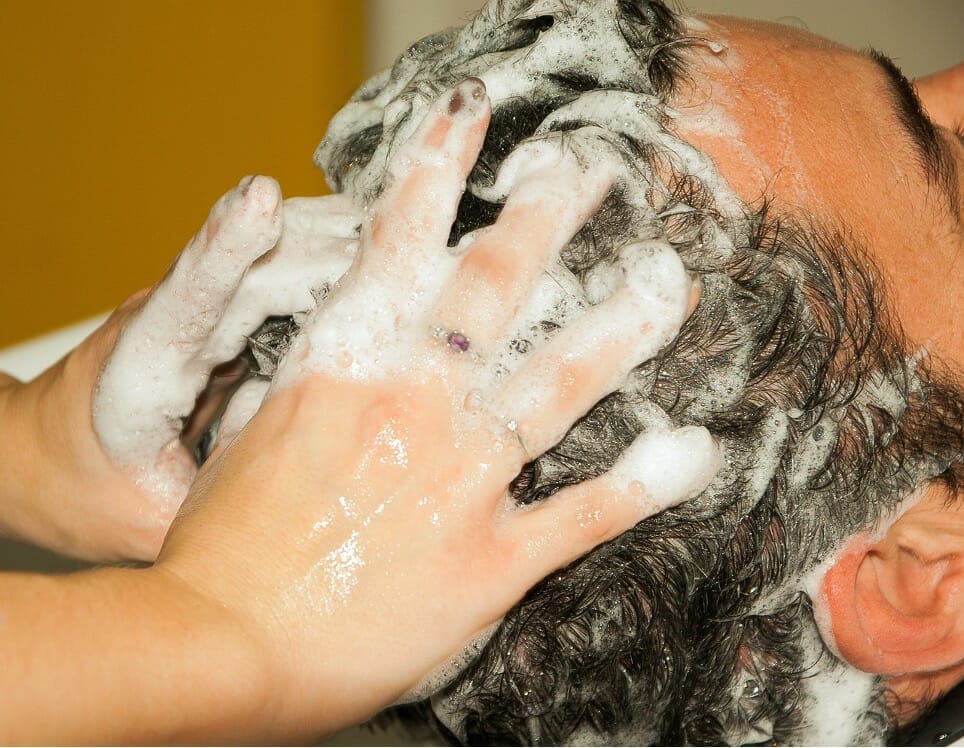
- Massage gently for 1–2 minutes to help distribute the product and stimulate the scalp
- Leave the shampoo on the scalp for 2–5 minutes to allow limited caffeine absorption
- Rinse thoroughly with water
- Repeat use 2–3 times per week as directed by the product instructions
This method is important because caffeine shampoos are rinse-off products. Yet consistent application is needed for any potential scalp-level effects.
What are the side effects of caffeine shampoo?
Caffeine shampoos are generally considered safe for most people, with mild, manageable side effects.
The possible caffeine shampoo side effects are:
- Scalp irritation
Other users may experience itchiness, dry skin, or even redness, especially when the shampoo contains harsh chemicals such as Sodium Lauryl Sulfate (SLS).4 Sensitive scalps may benefit from sulfate-free formulas.
- Allergic reactions
Although it is not common, allergic reactions may occur if you have sensitivity to caffeine or other additives, or if you are sensitive to the formula itself. Some symptoms include redness, flaking, and tenderness after use.
- Discolouration or change of texture of hair
Some formulations lead to a slight distortion in hair colour or texture (primarily in colour-treated or light hair). This is mostly cosmetic and short-term.
- Poor performance due to overuse
Overuse of caffeine shampoo can render it less effective or strip the scalp of its natural oils. Most brands recommend using 2-3 times/week for the best outcomes.
Caffeine Shampoo Alternatives for Hair Growth
Caffeine shampoo is commonly promoted for hair loss, but its effects are mostly limited to the scalp surface. In reality, most types of hair loss are driven by biological factors such as sensitivity to DHT (dihydrotestosterone), genetics, hormonal changes, or medical conditions. As a result, shampoo alone cannot address the root cause of ongoing hair thinning or pattern hair loss.
People experiencing hair loss need treatments that act directly on hair follicles or on the hormones causing the hair loss. These treatments go beyond scalp care to slow hair loss, preserve existing hair, and support regrowth. Below are the most widely used and clinically supported alternatives to caffeine shampoo.
- Minoxidil
Minoxidil is a clinically proven treatment that helps improve blood flow to the scalp and prolong the hair growth (anagen) phase. It can, over time with consistent use, slow shedding and promote thicker hair. It is available in topical and oral forms and is widely used for both men and women.
- Finasteride
Finasteride is an oral medication that reduces levels of DHT, the hormone responsible for follicle miniaturisation in pattern hair loss. Targeting the root cause can slow or stop progression in many patients. It is most commonly prescribed for men with androgenetic alopecia.
- Combination of Minoxidil and Finasteride
Using minoxidil and finasteride together addresses both the cause and the effect of hair loss. Finasteride reduces DHT levels, while minoxidil stimulates hair growth and increases density. This combination is often considered the most effective non-surgical approach for ongoing hair loss.
- Supplements
Supplements can support hair health if there is an underlying nutritional deficiency, such as low iron or vitamin D. They are not effective for genetic hair loss unless a deficiency is present. Overuse without medical need is unlikely to provide meaningful results.
- PRP Therapy (Platelet-Rich Plasma)
PRP therapy involves injecting concentrated platelets from your own blood into the scalp to stimulate hair follicles. It may improve hair thickness and density over multiple sessions. Results vary, and it is typically used alongside other treatments.
- Laser Hair Therapy (LLLT)
Low-level laser therapy uses light energy to stimulate cellular activity within hair follicles. It may help improve hair density and slow thinning with consistent use. Results are gradual and vary between individuals.
- Hair Transplant Surgery
Hair transplant surgery involves relocating healthy hair follicles to thinning or bald areas. It provides a long-term, often permanent solution for advanced hair loss. This option is typically considered when other treatments are no longer effective.
“While caffeine shampoo may support scalp health and help reduce mild shedding, it should never be used as a sole treatment for hair loss. It is used consistently alongside evidence-based therapies like finasteride, minoxidil, PRP therapy, or after a transplant, it can play a supportive role, but it is not a standalone solution.” Dr Roshan Vara, Hair Transplant Surgeon, Treatment Rooms London.
Conclusion
Caffeine shampoo may support scalp health and slightly reduce shedding, but it does not address the underlying causes of hair loss, such as DHT sensitivity, genetics, or hormonal changes.
Caffeine shampoo works best as a supportive product alongside clinically proven treatments.
If you are unsure about the cause of your hair loss or the most effective treatment for your situation, consider consulting a specialist clinic such as Treatment Rooms London. A professional assessment can help identify the underlying issue and guide you toward a personalised treatment plan that delivers more reliable results.
References
1. Szendzielorz E, Spiewak R. Caffeine as an active ingredient in cosmetic preparations against hair loss: a systematic review of available clinical evidence. Healthcare (Basel). 2025 Feb 12;13(4):395. doi:10.3390/healthcare13040395. Available from: https://pubmed.ncbi.nlm.nih.gov/39997270/
2. NHS. Hair loss [Internet]. London: National Health Service; 2024 Jan 24 [cited 2026 Apr 18]. Available from: https://www.nhs.uk/conditions/hair-loss/
3. Fischer TW, Hipler UC, Elsner P. Effect of caffeine and testosterone on the proliferation of human hair follicles in vitro. Int J Dermatol. 2007;46(1):27–35. Available from: https://onlinelibrary.wiley.com/doi/10.1111/j.1365-4632.2007.03119.x
4. Lohrey J. Sodium lauryl sulfate & hair loss [Internet]. LEAFtv; 2018 Nov 28 [cited 2026 Apr 18]. Available from: https://www.leaf.tv/5764964/sodium-lauryl-sulfate-hair-loss/
5. Advertising Standards Authority. Dr Kurt Wolff GmbH—Co KG (Alpecin) ruling. ASA; 2017. Available from: https://www.asa.org.uk/rulings/dr-kurt-wolff-gmbh—co-kg-a17-387365.html
6. Otberg N, Teichmann A, Rasuljev U, Sinkgraven R, Sterry W, Lademann J. Follicular penetration of topically applied caffeine via a shampoo formulation. Skin Pharmacol Physiol. 2007;20(4):195–198. Available from: https://pubmed.ncbi.nlm.nih.gov/17396054/
7. Patient.info. Does caffeine shampoo work for hair loss? Available from: https://patient.info/news-and-features/does-caffeine-shampoo-work-for-hair-loss
8. Busch L, Klein AL, Schwartz JR, Pearson K, Richter H, Schanzer S, et al. Follicular delivery of caffeine from a shampoo for hair retention. Cosmetics. 2023;10(4):104. Available from: https://www.mdpi.com/2079-9284/10/4/104
Share:
Authored by

Dr Roshan Vara
Dr. Roshan Vara is a renowned hair transplant surgeon in London and the Co-Founder of our award winning hair transplant clinic, The Treatment Rooms London.He has over 10 years of experience in hair transplant surgery and is recognised for delivering natural-looking results through ethical, patient-centred care. He is a Full Medical Member of BAHRS and an Associate Member of ISHRS, reflecting his commitment to the highest standards in modern hair restoration.
Reviewed by

Dr Dilan Fernando
Dr. Dilan Fernando is regarded as one of the best hair transplant surgeons in London and Co-Founder of The Treatment Rooms London. He has over 10 years of experience in hair transplant surgery and is known for his meticulous technique and commitment to ethical practice. He served on the Executive Committee of BAHRS from 2020 to 2024, helping to shape industry standards for patient safety and quality of care. Dr. Fernando personally performs each surgery, ensuring natural results built on trust and experience.
Book a Consultation
Related Blogs
What Is A Hair Graft In A Hair Transplant?
October 7, 2026
Key takeaways: What is a Hair Graft in a Hair Transplant? Hair loss can be a distressing…

Widow’s Peak Hair Transplant for Women: Everything You Need to Know
October 6, 2026
Key takeaways: There is no absolute definition of a widow’s peak in women. It is often based…

Has Steve Carell Had a Hair Transplant? What the Evidence Really Shows
October 6, 2026
Key Takeaways Steve Carell is arguably one of the most liked and versatile actors of his generation….
When Can You Drink Alcohol After Your Hair Transplant?
October 6, 2026
Key takeaways: It’s common for our patients to ask us when it is okay to resume drinking…

Has Donald Trump Had a Hair Transplant? Expert Review and What the Evidence Shows
October 6, 2026
Key Takeaways Donald Trump’s hair is one of the most talked about aspects of his appearance; from…

Wayne Rooney Hair Transplant: Expert Analysis of His Hair Loss and Restoration
October 5, 2026
Key takeaways: Wayne Rooney is widely regarded as one of the greatest football talents from England. He…

Understanding Prince Harry’s Hair Loss: Causes and Treatment Options
October 3, 2026
Key Takeaways: Prince Harry, the Duke of Sussex, has lived most of his life in the public…

How Long Does Swelling Last After Having a Hair Transplant?
October 2, 2026
Key takeaways: It is natural to experience some swelling after having a hair transplant, and it is…

Male To Female (MTF) HRT Hair Regrowth
September 28, 2026
Key takeaways: Hair loss can have a negative impact on your well-being, and it can affect any…