

Key Takeaways
- A vegan or vegetarian diet is not the direct cause of hair loss, but rather a failure to maintain a balanced diet. A poorly plant-based diet can lead to nutritional deficiencies, thereby disrupting the hair growth cycle.
- The most common type of hair loss linked to dietary imbalance is telogen effluvium (TE), a temporary condition in which more hair follicles than usual enter the resting phase, leading to diffuse shedding across the scalp.
- Key nutrients essential for hair health include protein, iron, vitamin B12, zinc, iodine, vitamin D, and omega-3 fatty acids. Deficiencies in these nutrients can trigger hair loss.
- Among these, iron and vitamin B12 deficiencies are particularly important, as they directly affect oxygen delivery and red blood cell production, both of which are critical for healthy hair growth.
In most cases, diet-related hair loss is reversible. However, persistent, patterned, or unexplained hair loss should be medically assessed to rule out other causes.
Diet is one of the key factors that can influence the hair growth cycle. When the body lacks essential nutrients, it may respond by shifting more hair follicles into a resting phase, leading to increased shedding, as seen most commonly seen in telogen effluvium.
A vegan or vegetarian diet does not cause hair loss. However, these vegan diets can increase the risk of nutritional deficiencies, particularly iron, vitamin B12, zinc, and protein. When these nutrients fall below optimal levels, the hair growth cycle can be disrupted, leading to increased shedding rather than permanent hair loss.
Importantly, this type of hair loss is usually temporary and reversible once the underlying deficiency is corrected.
Common Reasons Vegans Lose Hair
Hair loss in individuals following a vegan or vegetarian diet is not caused by the dietary pattern itself but by the nutritional consequences that can arise when the diet is not properly balanced.
Hair follicles are among the most metabolically active structures in the body. They constantly undergo growth and renewal, which requires a steady supply of protein, iron, vitamins, and trace minerals.

When nutritional intake becomes insufficient, the body prioritises sending nutrients to only essential organs such as the brain, heart, and liver. As a result, non-essential functions like hair production suffer.
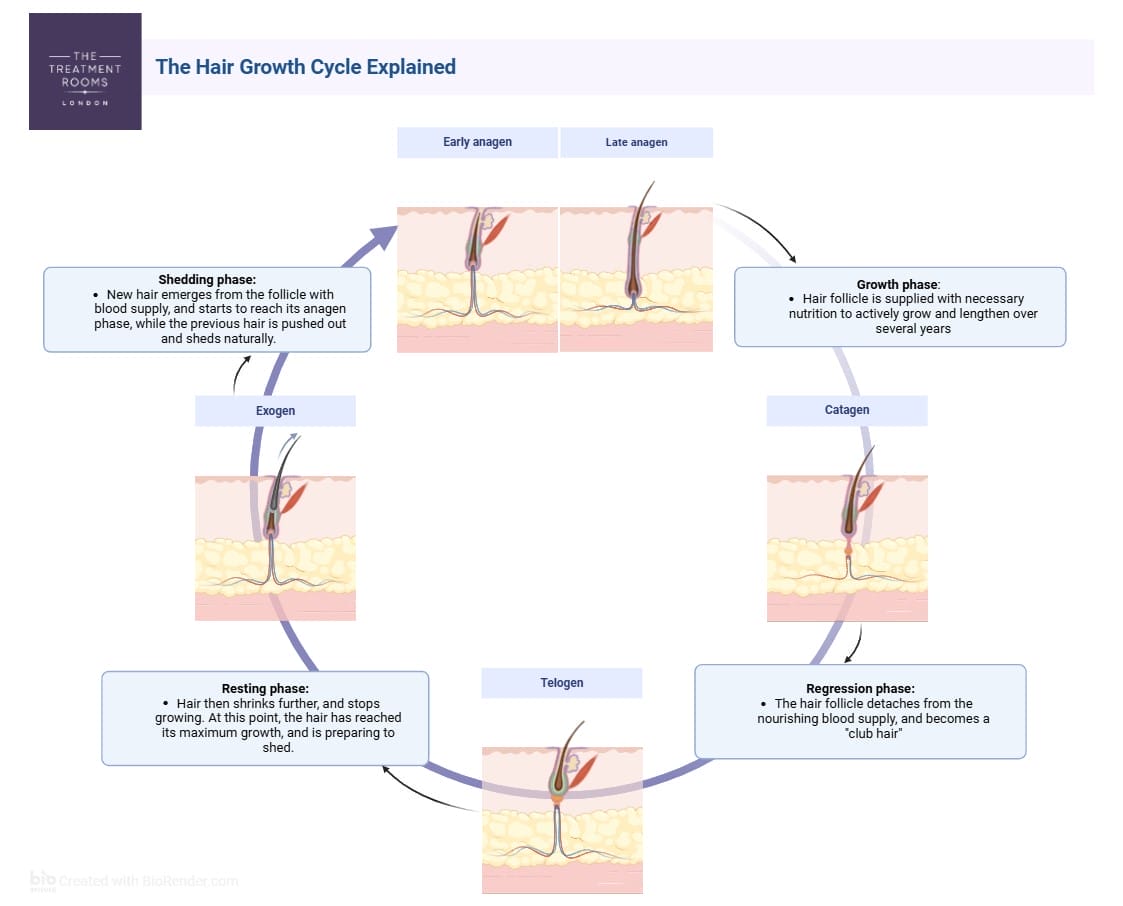
This physiological adaptation directly affects the hair growth cycle. A higher proportion of hair follicles prematurely shifts from the active growth (anagen) phase into the resting (telogen) phase. When this happens across the scalp, it leads to telogen effluvium (TE), the most common form of diet-related hair shedding.
What Type of Hair Loss Does a Vegan Diet Cause? Telogen Effluvium Explained
Telogen effluvium is a type of hair loss that happens when more hairs than usual enter the resting (shedding) phase of the hair cycle. Hair grows in three stages: the anagen (growth) phase, where hair is actively growing; the catagen (transition) phase, where growth slows down; and the telogen (resting) phase, where the hair eventually sheds and is replaced by new hair.
At any given time, most hairs are in the growing phase, while only a small number are in the resting phase. In telogen effluvium, this balance is disrupted, and a larger number of hairs move into the resting phase too early, leading to noticeable, widespread shedding across the scalp.
This can happen when the body is under stress, including from not getting enough key nutrients. In response, the body conserves energy by pushing hair follicles into the resting phase sooner than normal. Because of this delay in the hair cycle, shedding does not happen immediately.
It usually begins about 2–4 months after the trigger. People often notice more hair falling out during washing or brushing, thinning across the entire scalp rather than in patches, and an overall reduction in hair volume, while the scalp itself usually looks normal.
This pattern is different from genetic hair loss (androgenetic alopecia), which tends to affect specific areas like the hairline or crown and gradually worsens over time.
Telogen effluvium, on the other hand, is usually temporary and can improve once the underlying cause is identified and corrected.
What Nutrients Matter Most for Hair Growth on a Vegan Diet
A vegan or vegetarian diet can also support healthy hair growth, only if it provides the key nutrients your body needs to keep hair follicles active and functioning well. These nutrients help with keratin production and maintain the normal hair growth cycle.
Hair loss on a plant-based diet is not caused by the diet itself. It usually happens when certain nutrients are missing or too low, leading to imbalances that affect how hair grows.
The most important nutrients for hair health include iron, vitamin B12, protein, zinc, vitamin D, iodine, and omega-3 fatty acids. When levels of these nutrients are low, the hair growth cycle can be disrupted, sometimes leading to increased hair loss.
The good news is that these deficiencies can often be corrected. With proper meal planning, many of these nutrients can be obtained from plant-based foods, while others, such as vitamin B12 and sometimes vitamin D, are usually best replaced through supplements.
- Iron
Iron is essential for hair growth because it helps haemoglobin carry oxygen to the hair follicle, which is needed for active cell growth in the hair bulb. Low iron levels are a common cause of hair shedding, especially in women.
Plant-based diets increase the risk of iron deficiency because they contain non-haem iron, which is less easily absorbed than the haem iron found in animal foods. Even if intake seems adequate, the amount absorbed may not be enough.
To improve absorption, iron-rich plant foods like
- lentils,
- chickpeas,
- cooked spinach, and
- fortified cereals
should ideally be consumed alongside vitamin C-rich foods like citrus fruits, bell peppers, or strawberries. This combination can significantly enhance iron absorption and help protect against vitamin deficiency-related shedding
- Vitamin B12
Vitamin B12 is an essential nutrient for healthy hair growth and is one of the most commonly lacking nutrients in vegan diets. It plays an important role in the production of new cells and red blood cells, which help carry oxygen and nutrients to the hair follicles.
Because hair follicles rely on a constant supply of these nutrients to grow, low levels of vitamin B12 can affect the normal hair growth cycle. This may lead to increased hair shedding and general thinning, and in some cases, it has also been linked to early premature greying of the hair.
Vegans are particularly at risk of deficiency since vitamin B12 is found mainly in animal-based foods. Although vegetarians may obtain small amounts from dairy or eggs, intake is often not consistent or sufficient.
For this reason, the National Health Service (NHS) recommends that individuals following a vegan diet take regular vitamin B12 supplements or consume foods that have been fortified with B12.2
Vegan-friendly sources of B12 include:
- Fortified plant milks
- Fortified breakfast cereals
- Nutritional yeast
- Oral B12 supplements (often necessary rather than optional)
- Zinc
Zinc is a trace mineral involved in numerous aspects of hair biology, including hair follicle repair, immune regulation, and keratin synthesis. It plays a key role in maintaining the structural integrity of the hair shaft and supporting normal follicle cycling.
While zinc is present in plant-based foods such as
- pumpkin seeds,
- chickpeas,
- lentils, and
- whole grains,
Absorption is reduced by compounds called phytates, which bind to zinc and limit its bioavailability. As a result, vegetarians and vegans may require a higher dietary intake to meet physiological needs.
- Protein
Protein is often overlooked in discussions about hair loss, yet it is fundamental. Hair is composed primarily of keratin, a structural protein, and adequate protein intake is essential for maintaining hair strength, thickness, and growth.
Unlike vitamins or minerals, protein is a macronutrient, meaning it must be consumed in sufficient quantities daily. When intake is inadequate, the body may conserve protein for essential functions, pushing hair follicles into the resting phase and triggering shedding.
Plant-based diets can provide adequate protein, but they require more intentional meal planning. Many plant proteins are not “complete”, meaning they do not contain all essential amino acids in optimal proportions. This is particularly relevant for lysine, an amino acid that also supports iron absorption and hair structure.
Good plant-based protein sources include:
- Lentils and chickpeas
- Tofu and tempeh
- Quinoa
- Edamame
- Seitan
Combining different protein sources across the day (e.g., legumes with grains) helps ensure a complete amino acid profile.
- Vitamin D
Vitamin D plays a role in regulating the hair cycle by acting through vitamin D receptors in hair follicle stem cells. Emerging evidence suggests that low vitamin D levels may be associated with a shortened anagen (growth) phase and have been observed in individuals with both telogen effluvium and alopecia areata1
People following plant-based diets may be at higher risk of vitamin D deficiency because the main food sources of vitamin D, such as oily fish and eggs, are limited or not included. Although the body can produce vitamin D from sunlight, this is often not enough, especially during the winter months or in regions with reduced sun exposure.
Guidance from the National Health Service recommends that adults consider a 10 microgram (400 IU) daily supplement during autumn and winter, and year-round for those with limited sun exposure2
- Biotin (Vitamin B7)
Biotin is frequently marketed as a “hair growth vitamin,” but the clinical reality is more nuanced.
Biotin plays a role in keratin production, and true deficiency can lead to hair thinning, brittle hair, and skin changes. However, biotin deficiency is rare in individuals consuming a reasonably varied diet.
While plant-based sources such as
- Nuts,
- seeds,
- sweet potatoes,
- Avocados contain biotin; most people already meet their requirements through diet alone.
Crucially, there is limited evidence that biotin supplementation improves hair growth in individuals who are not deficient. This is an important distinction, as many over-the-counter supplements are marketed aggressively without strong clinical backing.
Another important consideration is safety: high-dose biotin supplements can interfere with blood tests, including thyroid function tests and cardiac markers. Patients should always inform their GP if they are taking biotin supplements.
- Omega-3 Fatty Acids
Omega-3 fats help keep the scalp healthy by reducing inflammation and supporting normal hair growth. Some studies suggest they may help improve hair thickness and reduce shedding, although more research is still needed.5
In plant-based diets, omega-3 mainly comes from foods like
- flaxseeds,
- chia seeds,
- walnuts.
However, the form found in these foods is not the type the body uses most easily, so only a small amount is effectively converted into the active form.
Because of this, individuals following a vegan diet may benefit from algae-based omega-3 supplements, which provide the active form directly. Examples commonly available in UK stores include products from Holland & Barrett, as well as brands such as Nordic Naturals (Algae Omega) and Opti3. These supplements are derived from microalgae, which are the source of the omega-3 found in fish.
- Iodine
Iodine is one of the most overlooked nutrients in vegan and vegetarian diets, yet it plays a critical role in thyroid hormone production. Thyroid dysfunction, particularly hypothyroidism, is a well-established cause of hair thinning and shedding.3
Plant-based diets can be low in iodine because the main dietary sources are dairy products (such as milk, yoghurt, and cheese) and fish, and in many regions, iodised salt is not widely used.
Although seaweed contains iodine, levels are highly variable and can sometimes be excessive, making it an unreliable source.
Guidance from the British Dietetic Association suggests that vegetarians and vegans consider iodine-fortified foods or supplements to ensure adequate intake.4
How Can You Prevent Vegan Hair Loss?: Will my Hair Grow Back
In most cases, hair loss linked to a vegan or vegetarian diet is temporary and reversible, particularly when it is caused by telogen effluvium. Once nutrients such as iron, vitamin B12, zinc, and protein are restored to adequate levels, the hair cycle gradually normalises and regrowth typically follows.
Since hair grows in cycles, recovery takes 2–4 months after nutrition has been corrected. This is because shed hairs must complete their cycle, and new hairs take time to emerge from the follicle.
Most individuals notice reduced shedding within a few months, followed by gradual regrowth and improving density over the course of several months up to a year. That said, it is important to confirm the exact cause of hair loss, as conditions like genetic (androgenetic) alopecia can coexist and will not resolve through dietary correction alone.
A proper clinical assessment ensures the correct diagnosis and helps guide appropriate treatment, whether nutritional, medical, or surgical, where necessary.
If you’re experiencing ongoing hair loss, it’s best to seek professional advice. Consider booking a consultation with Treatment Room London for a personalised assessment and a tailored treatment plan.
Conclusion
If you’re on a vegan diet, hair loss is commonly a sign that the body is not getting enough of the nutrients hair follicles need to stay in their growth phase. Be intentional with your diet and prioritise iron, vitamin B12, zinc, and protein to restore nutritional balance.
A blood test is the best starting point to confirm which nutrients are low, and it takes the guesswork out.
If thinning is focused on the crown or hairline, or if hair has not improved after correcting your diet, we recommend booking a professional assessment.
The team at Treatment Room London is here to help you identify the cause and find the right path forward.
References
- Almohanna HM, Ahmed AA, Tsatalis JP, Tosti A. The role of vitamins and minerals in hair loss: a review. Dermatol Ther (Heidelb). 2019;9(1):51–70.
https://doi.org/10.1007/s13555-018-0278-6 - Malkud S. Telogen effluvium: a review. J Clin Diagn Res. 2015;9(9):WE01–WE03.
https://www.jcdr.net/article_fulltext.asp?id=6561 - Dinu M, Abbate R, Gensini GF, Casini A, Sofi F. Vegetarian, vegan diets and multiple health outcomes: a systematic review. Crit Rev Food Sci Nutr. 2017;57(17):3640–3649.
https://doi.org/10.1080/10408398.2016.1138447 - Trost LB, Bergfeld WF, Calogeras E. The diagnosis and treatment of iron deficiency and its potential relationship to hair loss. J Am Acad Dermatol. 2006;54(5):824–844.
https://doi.org/10.1016/j.jaad.2005.11.1104 - O’Leary F, Samman S. Vitamin B12 in health and disease. Nutrients. 2010;2(3):299–316.
https://doi.org/10.3390/nu2030299 - Patel DP, Swink SM, Castelo-Soccio L. A review of the use of biotin for hair loss. Skin Appendage Disord. 2017;3(3):166–169.
https://doi.org/10.1159/000462981 - British Dietetic Association (BDA). Iodine factsheet for vegetarians and vegans.
https://www.bda.uk.com/resource/iodine.html
Share:
Authored by
Dr Roshan Vara
Dr. Roshan Vara is a renowned hair transplant surgeon in London and the Co-Founder of our award winning hair transplant clinic, The Treatment Rooms London.He has over 10 years of experience in hair transplant surgery and is recognised for delivering natural-looking results through ethical, patient-centred care. He is a Full Medical Member of BAHRS and an Associate Member of ISHRS, reflecting his commitment to the highest standards in modern hair restoration.
Reviewed by
Dr Dilan Fernando
Dr. Dilan Fernando is regarded as one of the best hair transplant surgeons in London and Co-Founder of The Treatment Rooms London. He has over 10 years of experience in hair transplant surgery and is known for his meticulous technique and commitment to ethical practice. He served on the Executive Committee of BAHRS from 2020 to 2024, helping to shape industry standards for patient safety and quality of care. Dr. Fernando personally performs each surgery, ensuring natural results built on trust and experience.
Book a Consultation
Related Blogs

Balding on Crown Hairstyles: The Right Haircut to Choose and Treatment Options
May 11, 2026
Key Takeaways What is a Balding Crown? You may not notice your crown is thinning until someone…
12 Hair Styles for Women With Thin Hair On The Crown
May 7, 2026
Key Takeaways: In this article, we’ll look at some of the best haircuts and practical hair-styling ideas…

How Many Hair Grafts Do You Need For A Hair Transplant?
May 4, 2026
A Follicular Unit Excision (FUE) or FUT hair transplant is one of the two main procedures available to address…
Hair Loss After Menopause: Causes, Treatment, and Hair Transplants
April 16, 2026
Key Takeaways Many women notice increased hair shedding and thinning during menopause. This happens because hormonal changes…
Jude Law Hair Transplant: Before, After, and His New Hairline
March 31, 2026
Jude Law, the British actor known for roles in The Talented Mr Ripley, Sherlock Holmes, and Fantastic…
Hair Loss In Your 20s- What You Need To Know
March 24, 2026
Key Takeaways Hair thinning or excessive hair shedding in your 20s is often due to genetics, stress,…
How Long Does a Hair Transplant Take? The Average FUE & FUT Surgery Duration Explained
March 24, 2026
Key Takeaways Are you considering a hair transplant and wondering how long the process takes? The answer…

Steve Carell Hair Transplant: Before, After, and His New Hairline
March 2, 2026
Steve Carell, best known as Michael Scott in The Office, began sparking curiosity amongst fans when his…

What Is Nutrafol and Does It Really Work for Hair Growth?
February 24, 2026
Key Takeaways Hair thinning can feel frustrating and confusing. You might notice more hair falling out in…