

Redness is common in the recipient area after having an FUE or an FUT hair transplant. Redness typically resolves over time and, in most patients, lasts 2-6 weeks post-surgery. In some cases, you may need treatment if there is ongoing inflammation or infection after surgery.
Redness is seen in both the skin and the scabs that form around the transplanted grafts. At The Treatment Rooms London, we always like to check on our patients to see how they are recovering as part of our hair transplant aftercare programme. This blog will help you understand the redness and what it means for your recovery.
What is redness after hair transplant surgery?
The red colour of your skin after your hair transplant can be seen at the back of your head (donor area) and where hairs have been implanted (recipient area). Also called “erythema”, it is simply inflammation following your hair transplant. It is the result of increased blood flow and immune system activity in the area that has been operated on.
As surgery involves making minor cuts into your skin, these cuts will start to heal from the back and around your newly implanted hair. The processes that contribute to healing cause redness, and that’s why you see it.
Many hair transplant patients experience this redness in their skin as a natural part of the healing process and it usually subsides within a few weeks.
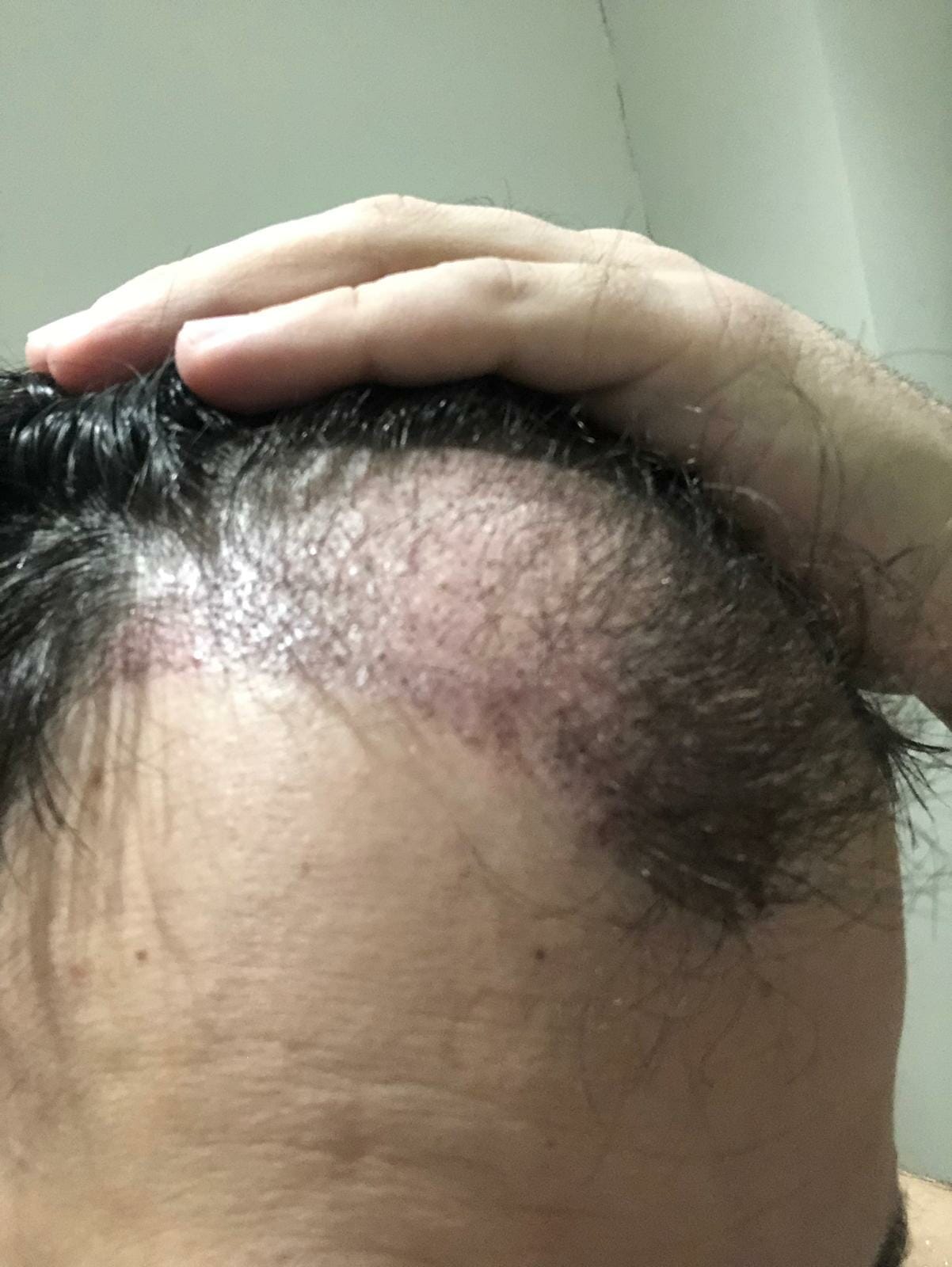
Redness in the donor area
It is uncommon for patients to report or complain about redness in the donor area. This is because they can’t see it as it is at the back of their head and their surrounding hair quickly grows to a length that conceals redness. However, sometimes there can be patches of redness that occur in the donor area following surgery. This can be a sign of an underlying skin condition, ingrown hairs or just normal post-surgical inflammation. If you have donor area redness 4 weeks after surgery, it is important to contact your Surgeon to check whether they need active management.
Causes of Redness
Several factors contribute to redness after hair transplant surgery. These include:
- Increased Blood Flow: The body sends more blood to the treated area to deliver oxygen and cells that help the scalp repair itself
- Inflammation: This is a natural immune response to the tiny incisions made during the procedure. It helps protect the area and starts the healing process.
- Sensitive Skin: Some individuals naturally have more sensitive skin, which can be more prone to redness and irritation. This is often seen in Nordic individuals with Type 1 Fitzpatrick skin type.
- Skin Infection: If the scalp is not properly cared for, there is a risk of infection, which can exacerbate prolonged redness and impact the hair transplant outcome.
How long does the redness last during the healing process?
Many patients may find that their redness fades after 2-6 weeks. Patients with darker skin may notice that the redness is less pronounced and fades more quickly compared to those with fairer skin.
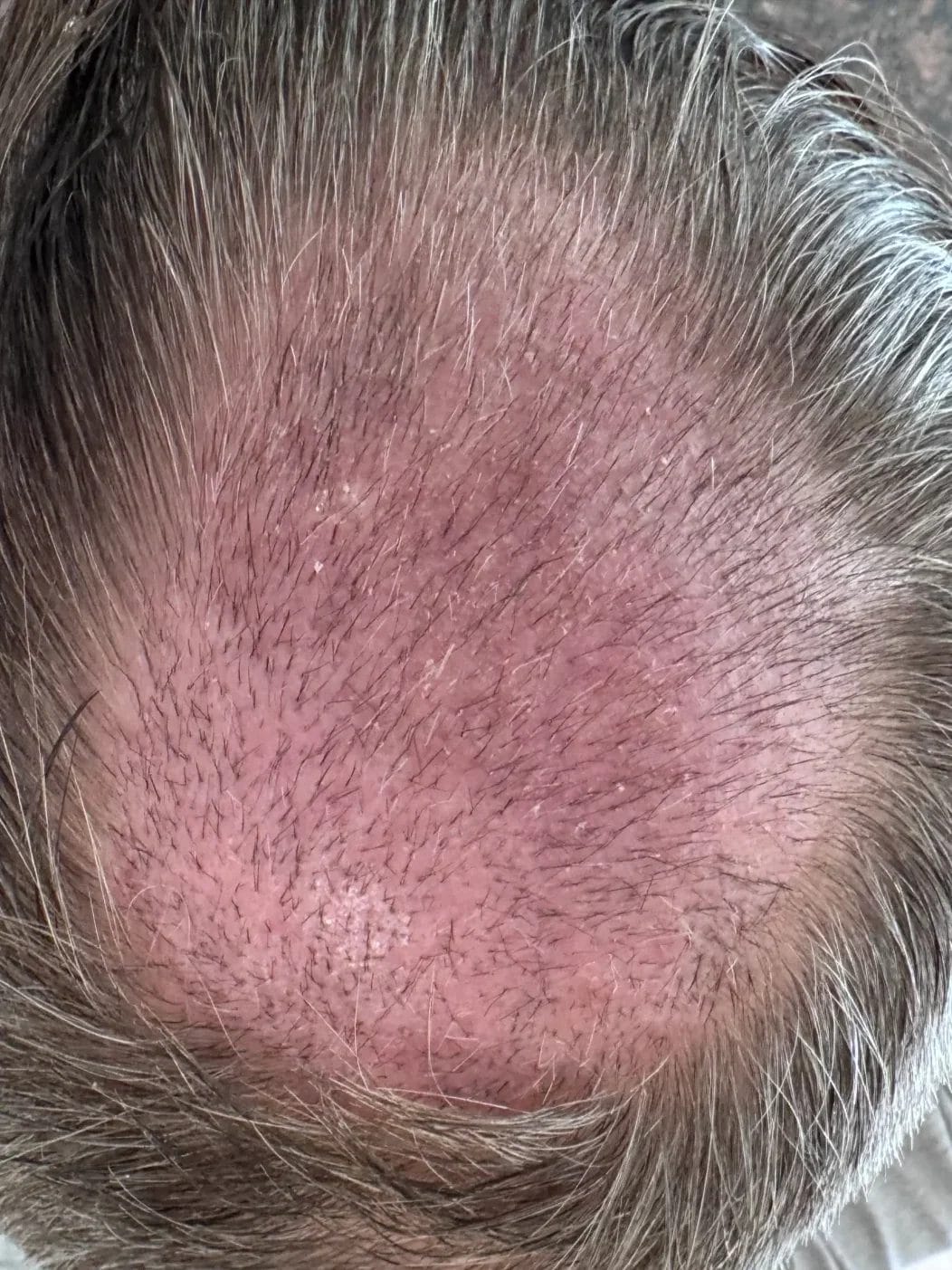
As your scalp heals, the redness should reduce. Most hair transplants heal quickly within 10-14 days. However, in some significant hair transplant cases, this healing process can take longer- especially in patients with fairer skin tones. In such patients, it can take up to 6 weeks for redness to fade.
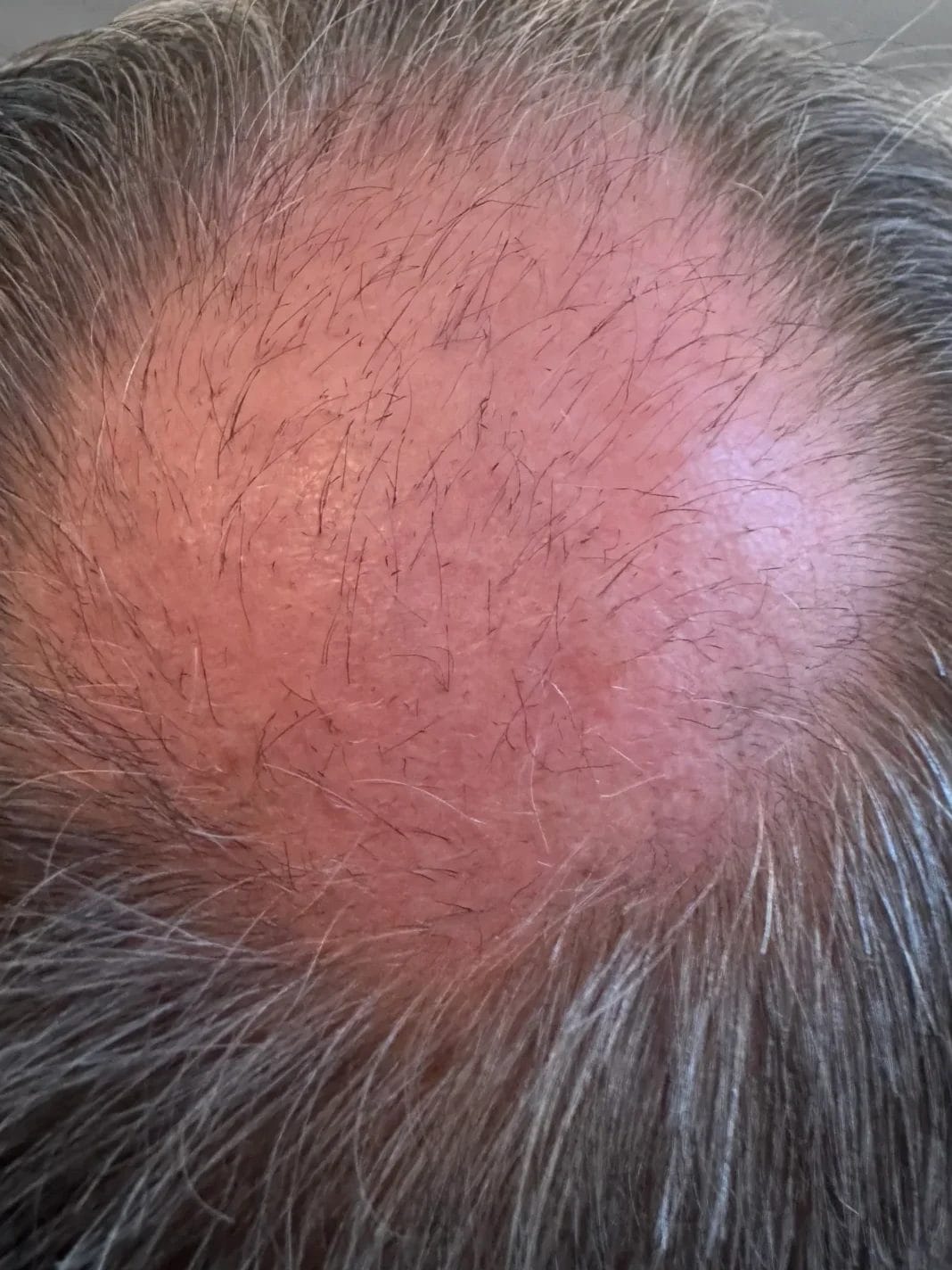
Is a Pink Scalp Normal?
In the initial 2 weeks, your scalp will appear red. This red skin tone will then lighten to a pink colour. A pink scalp after hair transplant surgery is likely due to increased blood flow in the surgical area, which is necessary for healing.
However, if this pink skin tone persists or worsens, it’s essential to consult a hair transplant surgeon to rule out any underlying complications. Persistent redness or pink scalp could indicate an issue that needs medical treatment.
Reducing Redness
There are several ways to reduce redness after hair transplant surgery. These include:
- Following a Proper Aftercare Routine: This includes gentle scalp cleaning and avoiding sun exposure, which can aggravate redness.
- Applying Recommended Creams or Lotions: Your hair transplant surgeon may suggest specific creams to reduce inflammation and promote healing. This will depend on whether the underlying cause is an infection or general inflammation without a disease, which is causing the redness.
- Avoid Scratching or Rubbing the Scalp: Itching can cause further irritation and delay healing.
By adhering to these tips, you can help ensure a smoother recovery and reduce the redness associated with your hair transplant.
Will redness affect my transplant?
Normal healing-related redness should not affect your transplant. However, in some cases, redness isn’t caused by routine healing, and you will need to see your surgeon to check your recovery and your transplanted follicles.
- Folliculitis (hair infection)
- Cellulitis (skin infection)
- Cysts (small, round swellings under the skin)
- Skin necrosis (dead and dying skin)
All the above can affect your donor or recipient area after a hair transplant, so we advise you to keep an eye out for them. Their common symptoms and signs are detailed below, along with our recommended treatment.
Folliculitis
Some patients may experience skin redness and infection around newly implanted hair follicles. The risk of this occurring can last up to 8 months. You can see folliculitis has small red pimples forming around each hair, even with a small pus (yellow) head. It can feel hot, itchy and painful. This is actually a fairly common condition after a hair transplant. The cause can be due to a bacterial infection (10%), but in many cases, bacteria aren’t found (23%) (1).
Treatment is simple and effective. You can leave it alone, and it will gradually resolve by itself. However, we recommend seeing your surgeon to have it properly looked at. You might benefit from warm compresses or a course of antibiotics/ antibiotic cream to help fight any bacteria that could be there. Be sure to keep your scalp as hygienic as possible to prevent further infection. (2)
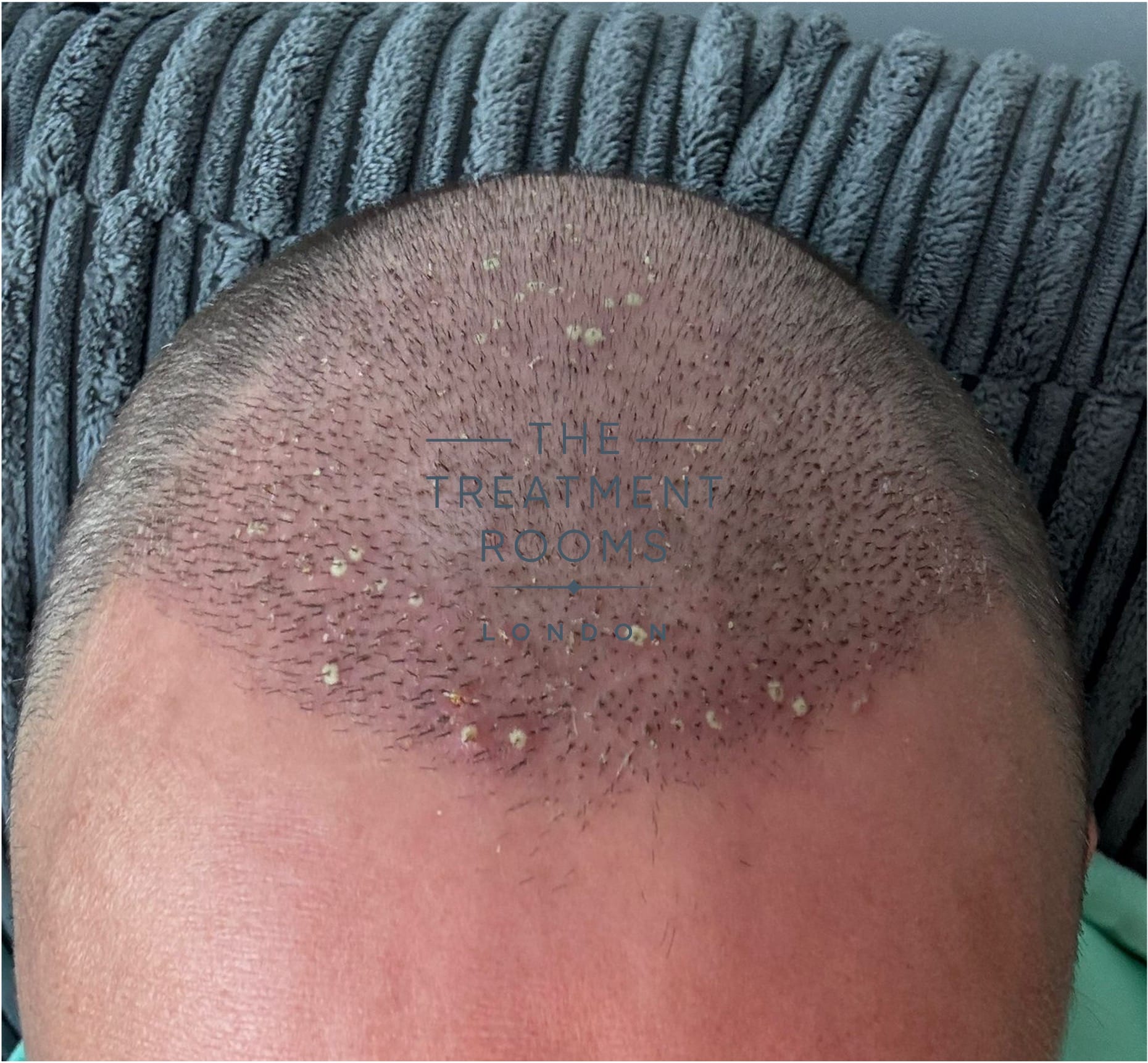
Cellulitis (Skin Infection)
Cellulitis involves an infection of the skin on your scalp (3). After a hair transplant, your skin is at risk of bacterial entry, which can lead to infection. If you have cellulitis, you may notice the redness spreading, your scalp feeling painful, and a fever developing.
If you have these symptoms, you must see your surgeon immediately. A course of antibiotics and daily monitoring to ensure your infection is improving should resolve this problem. You will know your skin infection is getting better if the redness stops spreading and eventually disappears.
Cysts
Cysts are small circular sacs that grow under the skin. They can occur in your donor or recipient area. They are caused by several factors, including grafts not being removed from the donor area or not being properly implanted. Cysts can also be caused by your skin healing abnormally. You can see cysts swell, turn red, and become painful (1).
If you think you are suffering from cysts, then please see your surgeon. Treatment is straightforward. Your surgeon may decide to take out the cyst or advise you to use warm compresses on the area. Your surgeon may choose to start you on a course of antibiotics if needed.
Skin Necrosis
Skin necrosis is a condition where your skin is dead or dying. This complication should never occur, as it suggests poor surgical skill on your surgeon’s part. It looks like a deep scab on your skin, and it can appear on the back of your head or where hair has been implanted. It can occur within the first 2-4 weeks after having surgery. You may notice your skin start to look dusky or purple before it dies and turns black. A picture below is an example of what skin necrosis looks like.

If you notice any of these signs on your skin, you must see your surgeon immediately. You will need to have your necrotic skin removed. The area will scar, and no hair will grow there unless you choose to undergo fat grafting and a second hair transplant procedure.
Itching and How to Reduce Skin Redness
Itching can affect your donor or recipient area following your hair transplant. It can be treated easily, and you must see your surgeon if you continue to itch after 2 weeks. Itching can delay healing and, in some severe cases, affect your hair transplant results. It is a common cause of redness after 4 weeks.

Still worried about redness after your hair transplant?
Suffering from cellulitis (skin infection)? Read here to find out more about what the NHS recommends for treatment.
If you are experiencing uneven hair growth and redness after your hair transplant, it is essential to consult your surgeon for advice on managing these symptoms.
You can read more about the side effects of a hair transplant in our blog.
References
Share:
Authored by

Dr Roshan Vara
Dr. Roshan Vara is a renowned hair transplant surgeon in London and the Co-Founder of our award winning hair transplant clinic, The Treatment Rooms London.He has over 10 years of experience in hair transplant surgery and is recognised for delivering natural-looking results through ethical, patient-centred care. He is a Full Medical Member of BAHRS and an Associate Member of ISHRS, reflecting his commitment to the highest standards in modern hair restoration.
Reviewed by

Dr Dilan Fernando
Dr. Dilan Fernando is regarded as one of the best hair transplant surgeons in London and Co-Founder of The Treatment Rooms London. He has over 10 years of experience in hair transplant surgery and is known for his meticulous technique and commitment to ethical practice. He served on the Executive Committee of BAHRS from 2020 to 2024, helping to shape industry standards for patient safety and quality of care. Dr. Fernando personally performs each surgery, ensuring natural results built on trust and experience.
Book a Consultation
Related Blogs

Steve Carell Hair Transplant: Before, After, and His New Hairline
March 2, 2026
Steve Carell, best known as Michael Scott in The Office, began sparking curiosity amongst fans when his…

What Is Nutrafol and Does It Really Work for Hair Growth?
February 24, 2026
Key Takeaways Hair thinning can feel frustrating and confusing. You might notice more hair falling out in…

Peppermint oil for hair growth: Evidence, Benefits, Uses & Safety
February 24, 2026
Key Takeaways What Is Peppermint Oil? Peppermint oil, also known as Mentha piperita oil, is an essential…

Why Winter Hair Loss Happens and All You Need to Know
February 6, 2026
Key Takeaways As temperatures drop and indoor heating kicks in, many people notice their hair feels drier,…

Can You Take Finasteride With Minoxidil For Hair Loss?
February 5, 2026
Key Takeaways Consistency Matters: Stopping treatment often leads to a recurrence of hair loss; ongoing medical guidance…
Does Finasteride Cause Erectile Dysfunction?
February 3, 2026
Key Takeaways Finasteride can cause erectile dysfunction in some men, but it isn’t common. Most men who…
What is a Hair Transplant? How it Works, Success Rate & What to Expect
February 2, 2026
Key Takeaways Cost: Varies from £3,000 to £10,000, depending on the number of grafts and the technique….
What Causes Hair Loss During Menopause?
February 2, 2026
Key Takeaways Many women notice increased hair shedding and thinning during menopause. This happens because hormonal changes…

Can a Norwood 7 Get a Hair Transplant? All You Need to Know
February 2, 2026
Key Takeaways Yes, someone with Norwood 7 hair loss may be able to have a hair transplant,…