

After having a hair transplant, you’ll see scabbing and redness in the recipient area. After 2 weeks, your scalp will become less irritated, and the transplanted hair in the recipient area will start to fall out. This natural shedding process continues until around the two-to-three-month mark when the first new hairs will begin to grow through your scalp. At 4 months after a hair transplant, you can expect some new hairs to start growing. The growth will initially be patchy and thin.
In this article, we will cover what to expect four months after your hair transplant.
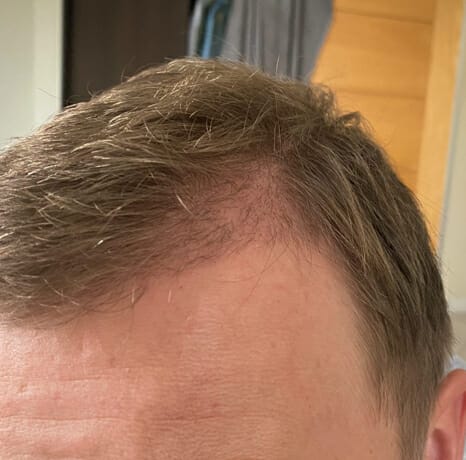
At the 4 month mark after your hair transplant, you can expect your transplanted hair to start growing. Don’t expect it to be at a length and thickness for you to be able to style that may take a little longer
Dr Vara, Hair Transplant Surgeon and Director at The Treatment Rooms London
What to expect 4 months after a hair transplant
It is natural to see the implanted hairs shed in the first 3 months following surgery. So, when you look in the mirror four months after a hair transplant, what can you expect to see?
At the 4-month mark, you should have begun to notice new hairs emerge. You are still over eight months from seeing the final result of your hair transplant, and these new hairs are still immature.
As such, don’t be alarmed if the recipient area still looks patchy. And don’t worry if these new hairs are thin and almost transparent in their appearance. It will take a few more months for your hair to become longer, stronger, and darker. There will also be more growth from implanted follicles under the skin, which are taking a bit longer to restart after the shedding phase.

What happens to the hair follicles that haven’t grown after 4 months?
It is normal for your transplant hair to shed following surgery. Follicles that are transplanted enter a resting phase known as telogen, which is part of the hair growth cycle. During this telogen phase, the hairs become disconnected from the hair follicles and remain at rest for about 3 months before falling out. Your new hair is being formed at the hair follicles throughout this telogen phase. This will mark the beginning of your hair growth.
You can see this process in action in the video below:
While noticeable hair growth may not be visible by month 4, rest assured that new hair is forming under the skin and will eventually be visible as new growth in the coming months.
Itchy scalp 4 months after hair transplant
People who have a hair transplant typically experience itchiness and irritation during the 2-4 weeks following the procedure.
Around month 4, you may still feel hair transplant side effects, such as an itchy scalp. Try not to scratch or rub an itchy scalp, as this can increase irritation. You may find taking an anti-histamine or applying aloe vera gel to the area can help soothe the itchiness.
If you are still having problems with itching, you should notify your clinic, and your Surgeon should be able to advise accordingly.
4 months after hair transplant
If you haven’t seen any new hair growth by the four-month stage, don’t panic. Each person’s new hair grows differently following a hair transplant. Hair growth rates following a hair transplant can be affected by several factors, including the location of the transplant site and the hair transplant technique used.
It can take between three and six months for your new hair to emerge. This will depend on how long your hair’s resting (telogen) phase lasts. Once your old hair has been shed, the new hairs which have already formed at the follicles will start to penetrate through your scalp.
Can you speed up hair growth?
If your new hair is not growing as fast as you would like, remember – patience is the key. But there are also ways to speed up recovery and hair growth.
Here are some tips:
- The proper nutrition – eating a balanced diet with protein and carbohydrates can aid hair growth. Biotin, which is integral in the production of the hair protein keratin, is found in meat and egg products.
- Massage – after 2 weeks, your scalp will have recovered sufficiently for you to receive a gentle head massage with oils to nourish and hydrate.
- Strengthening shampoos – consider using shampoos or supplements that may help maintain hair follicles, such as argan oil shampoo and biotin tablets.
What to expect after the 4th month of hair transplant recovery
While progress might seem slow, by month 4, you are not far from seeing hair growth. From month 6, you will often notice a significant growth spurt, as your hair gets not only longer but also stronger and thicker. Once you reach a year to 12-18 months after your hair transplant, you can expect to see the final result.
For more information about the recovery process, please read our in-depth guide, ‘Hair Transplant Timeline: What To Expect’.
Our hair transplant recovery and aftercare service includes a personalised aftercare package containing everything you need to help you on your road to recovery. If you have any questions, contact The Treatment Rooms London to book a consultation.
Share:
Authored by

Dr Roshan Vara
Dr. Roshan Vara is a renowned hair transplant surgeon in London and the Co-Founder of our award winning hair transplant clinic, The Treatment Rooms London.He has over 10 years of experience in hair transplant surgery and is recognised for delivering natural-looking results through ethical, patient-centred care. He is a Full Medical Member of BAHRS and an Associate Member of ISHRS, reflecting his commitment to the highest standards in modern hair restoration.
Reviewed by

Dr Dilan Fernando
Dr. Dilan Fernando is regarded as one of the best hair transplant surgeons in London and Co-Founder of The Treatment Rooms London. He has over 10 years of experience in hair transplant surgery and is known for his meticulous technique and commitment to ethical practice. He served on the Executive Committee of BAHRS from 2020 to 2024, helping to shape industry standards for patient safety and quality of care. Dr. Fernando personally performs each surgery, ensuring natural results built on trust and experience.
Book a Consultation
Related Blogs

Hair Transplant After 7 Days: What To Expect
October 9, 2026
Key takeaways: 7 days after your hair transplant, you can expect to see the scabs in your…

Minoxidil Side Effects: What to Expect, Risks, and How to Manage Them
October 9, 2026
Key takeaways Medications are often a first step people take when tackling pattern baldness. They can help…
What Is A Hair Graft In A Hair Transplant?
October 7, 2026
Key takeaways: What is a Hair Graft in a Hair Transplant? Hair loss can be a distressing…

Widow’s Peak Hair Transplant for Women: Everything You Need to Know
October 6, 2026
Key takeaways: There is no absolute definition of a widow’s peak in women. It is often based…

Has Steve Carell Had a Hair Transplant? What the Evidence Really Shows
October 6, 2026
Key Takeaways Steve Carell is arguably one of the most liked and versatile actors of his generation….

When Can You Drink Alcohol After Your Hair Transplant?
October 6, 2026
Key takeaways: It’s common for our patients to ask us when it is okay to resume drinking…

Has Donald Trump Had a Hair Transplant? Expert Review and What the Evidence Shows
October 6, 2026
Key Takeaways Donald Trump’s hair is one of the most talked about aspects of his appearance; from…

Wayne Rooney Hair Transplant: Expert Analysis of His Hair Loss and Restoration
October 5, 2026
Key takeaways: Wayne Rooney is widely regarded as one of the greatest football talents from England. He…

Understanding Prince Harry’s Hair Loss: Causes and Treatment Options
October 3, 2026
Key Takeaways: Prince Harry, the Duke of Sussex, has lived most of his life in the public…