

Are you considering a hair transplant but have long hair? Traditionally, hair transplants such as follicular unit extraction (FUE) and follicular unit transplantation (FUT) involve extracting hair follicles from the donor area (normally at the back or sides of the head) and implanting them into the balding part of the head. This usually involves the surgeon shaving your head, as it’s easier to extract and implant shorter shaved hairs?
It is possible to extract hair without shaving and our hair transplant clinic now has the capability to perform these surgeries. This can enable patients to go back to work or social commitments quicker after their transplant without having to disguise a short hair cut. The full process can be seen in the video below.
In this article, we’ll confirm whether a hair transplant is possible with long hair, before covering how the procedure works, its advantages and drawbacks, its recovery process and what The Treatment Rooms London can offer for your long-hair hair transplant.
Can you have a hair transplant with long hair?
If you have long hair, the good news is that you can have a hair transplant which doesn’t involve shaving the entirety of the head, this is called an unshaven hair transplant or minimally shaven hair transplant. There are factors at play that make it more difficult and time-consuming for a surgical team to carry out the procedure. However, the highly skilled surgeons on our team at The Treatment Rooms London can perform this procedure.
Usually, all scalp hair will be shaved during a hair transplant, as it’s easier to extract and implant the hair follicles when they are shorter. However, our leading surgeons have developed techniques that allow them to keep the hair long on top and minimally shave areas so that you can conceal the fact you have had surgery easier. This makes it possible for men and women to have hair transplants that don’t involve drastic shaving. In the next section, we’ll come on to how a hair transplant with long hair is carried out.
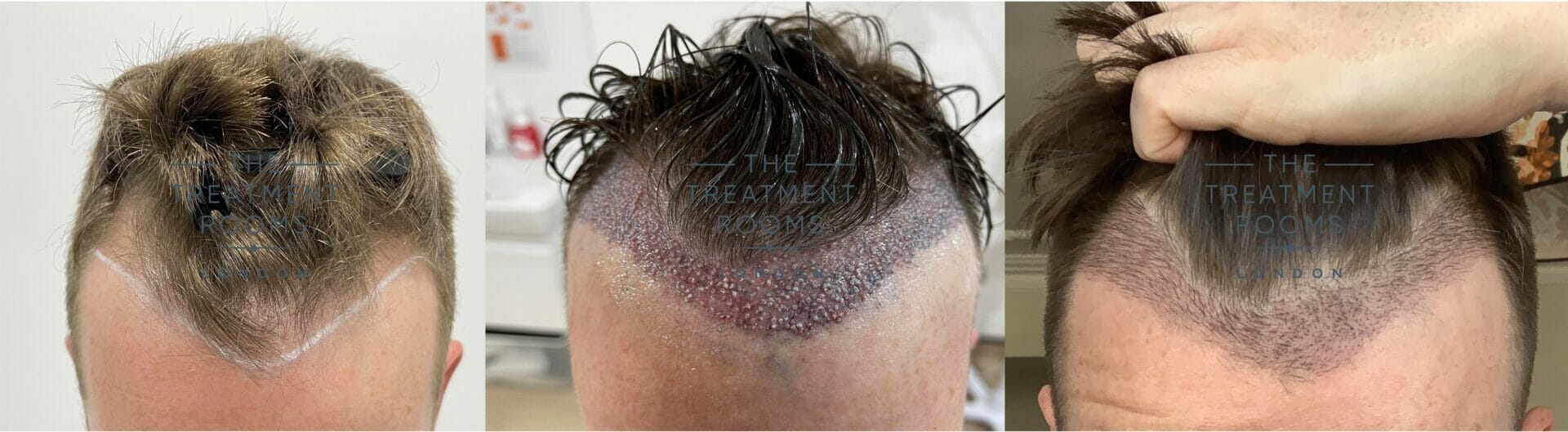
How does a hair transplant work with long hair?
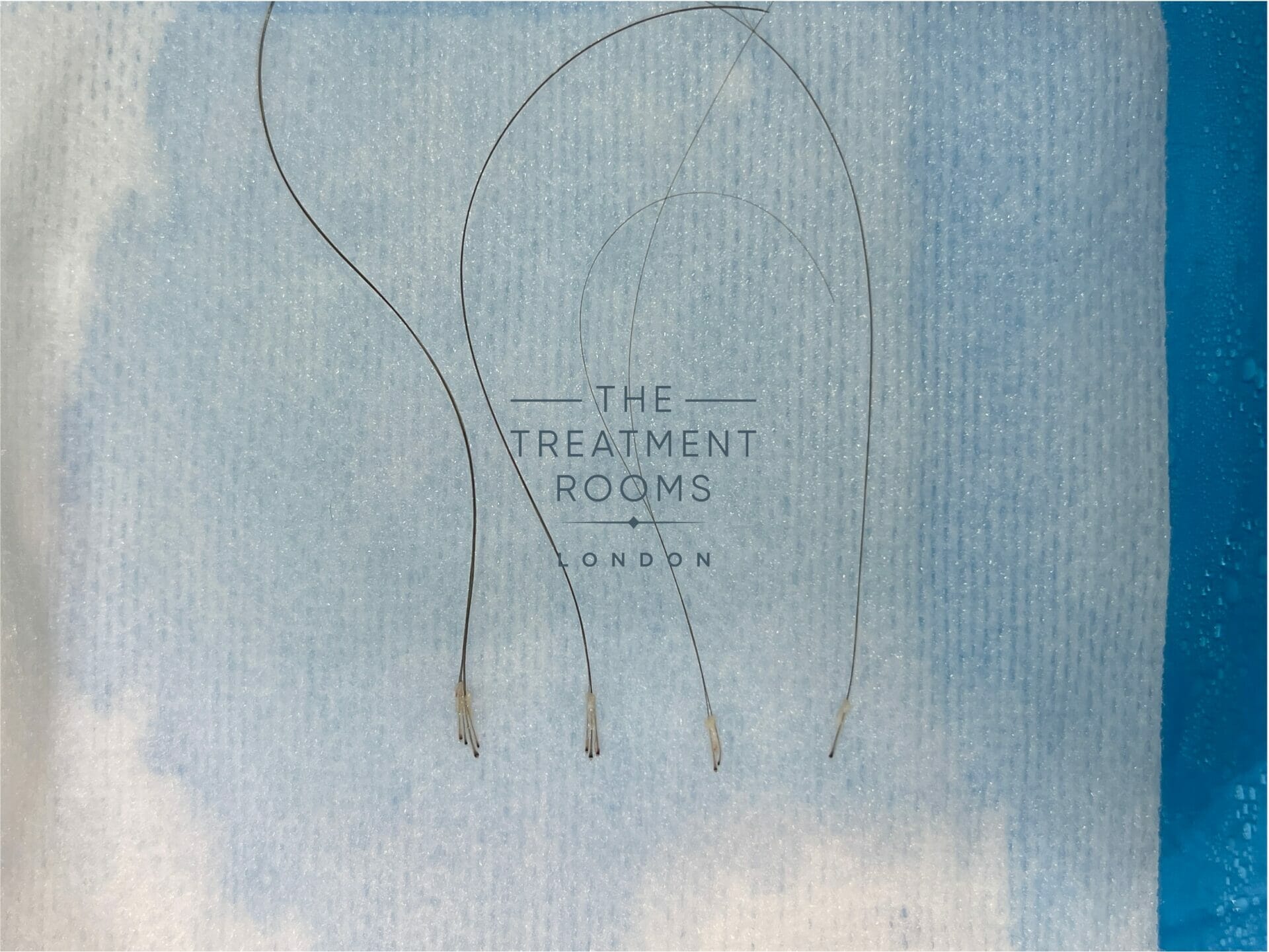
Keeping your hair long during a hair transplant requires specific surgical equipment to ensure the hair doesn’t get tangled or broken during the process of extraction. Most patients are required to shave the hair on the back and sides of the scalp to enable surgery. However, some patients requiring small areas for surgery don’t need to shave the hair on the back and sides and keep the hair long- hence the term long-hair hair transplant surgery. Below you will see some an example of hair grafts extracted without the need for shaving the scalp.

Unshaven FUE (UFUE)
During an unshaven FUE hair transplant, the long hair in the donor area can be kept at a good length and a smaller area is shaved. Hair is collected as individual follicles using tiny punches, before being implanted in the recipient area (the part of the scalp where there is hair loss).

Implanting long hair during a hair transplant
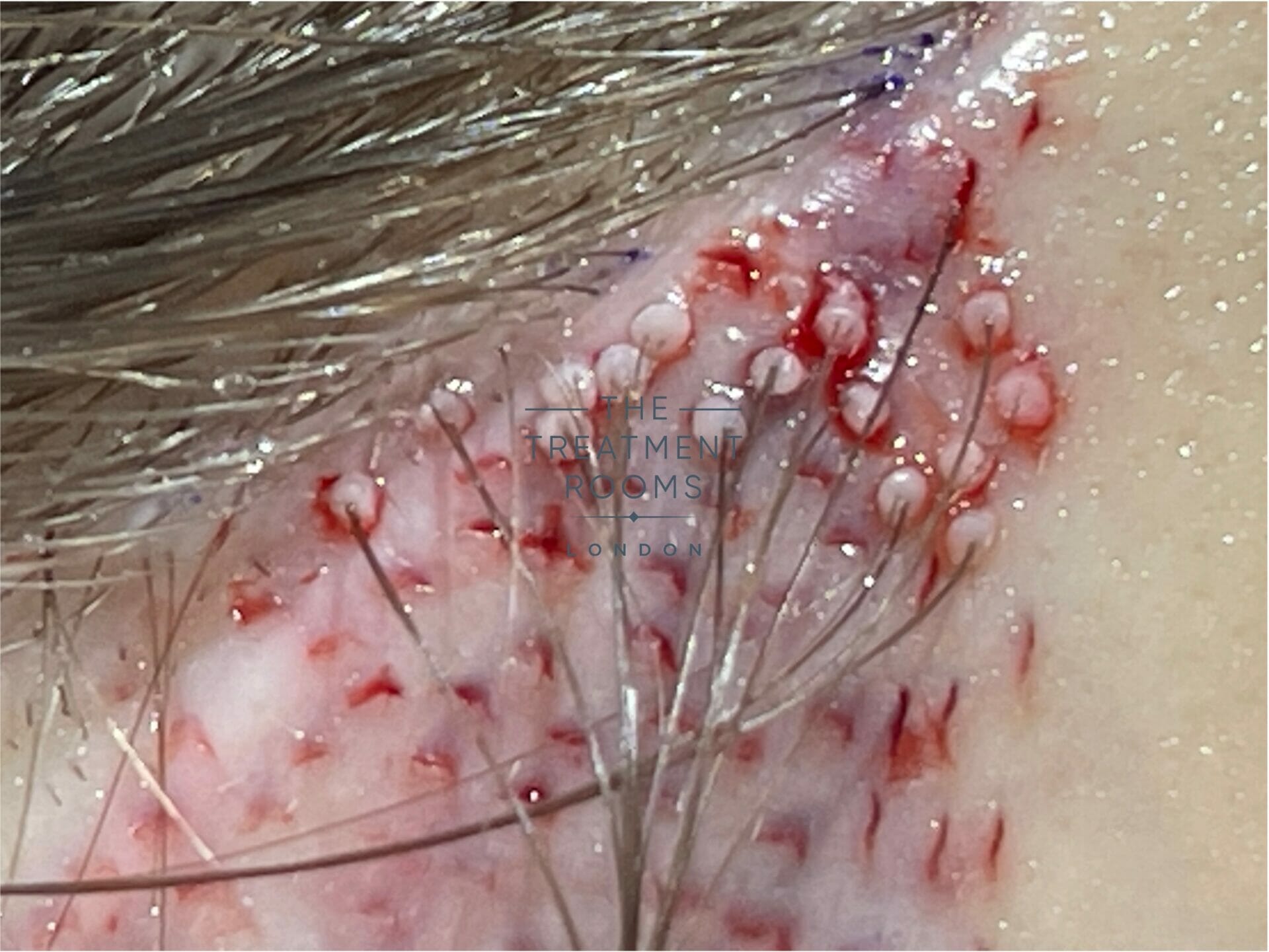
When implanting long hair back into the scalp during a hair transplant we use implanter pens to minimise the trauma to each delicate graft. This is shown in the picture below.

Each long hair graft is loaded onto a device that allows us to control the direction, angulation and density of the implanted long hair.
Advantages and disadvantages of a long hair transplant
There are many benefits of a long hair transplant, and some aspects people may consider to be a disadvantage:
Advantages
- You can return to normal activities quickly, as your original hairstyle will largely be maintained
- Transplanting with long hair means it will be easier to cover up post-operative scars or redness
- With unshaven FUE hair transplant, fewer grafts are generally transplanted, so your recovery time is shorter
Disadvantages
- Because a lower number of hair follicles are transplanted in a hair transplant for long hair, it can take make sessions to achieve the hair density required in the recipient area
- The long hair will still shed after your transplant, so you will only get a “preview” of your result for a few weeks before the long hair will shed
- The procedure is more complex and time-consuming and therefore may take two sessions to complete
- An unshaven hair transplant will be more expensive than a standard minimally shaven or shaven hair transplant
Long hair transplant recovery and aftercare
If you are familiar with the traditional hair transplant process, you may be reassured to know that long-hair and shaven hair transplant recovery and aftercare are the same. As the healing process takes place following your long hair transplant, you may see some redness and swelling – this should subside after a few days.
You should follow the aftercare instructions provided by your surgeon. Bear the following tips in mind:
- Don’t wash your hair for at least 4 days
- Wear a hat for at least 2 weeks when outside
- Avoid any intense physical activity for the first 2 weeks
- Don’t dye your hair for as long as possible
Long hair transplant at The Treatment Rooms London
At The Treatment Rooms London, we offer an unshaven, minimally shaven and shaven hair transplant using the FUE technique. With an unshaven hair transplant, you can resume your everyday activities quicker.
With our renowned surgeons, unparalleled service and cutting-edge technology; your hair transplant is in experienced hands at The Treatment Rooms London. Book a long hair transplant consultation today – call 020 8706 0076 or get in touch via our website.
Share:
Authored by

Dr Roshan Vara
Dr. Roshan Vara is a renowned hair transplant surgeon in London and the Co-Founder of our award winning hair transplant clinic, The Treatment Rooms London.He has over 10 years of experience in hair transplant surgery and is recognised for delivering natural-looking results through ethical, patient-centred care. He is a Full Medical Member of BAHRS and an Associate Member of ISHRS, reflecting his commitment to the highest standards in modern hair restoration.
Reviewed by

Dr Dilan Fernando
Dr. Dilan Fernando is regarded as one of the best hair transplant surgeons in London and Co-Founder of The Treatment Rooms London. He has over 10 years of experience in hair transplant surgery and is known for his meticulous technique and commitment to ethical practice. He served on the Executive Committee of BAHRS from 2020 to 2024, helping to shape industry standards for patient safety and quality of care. Dr. Fernando personally performs each surgery, ensuring natural results built on trust and experience.
Book a Consultation
Related Blogs

Hair Transplant After 7 Days: What To Expect
October 9, 2026
Key takeaways: 7 days after your hair transplant, you can expect to see the scabs in your…

Minoxidil Side Effects: What to Expect, Risks, and How to Manage Them
October 9, 2026
Key takeaways Medications are often a first step people take when tackling pattern baldness. They can help…
What Is A Hair Graft In A Hair Transplant?
October 7, 2026
Key takeaways: What is a Hair Graft in a Hair Transplant? Hair loss can be a distressing…

Widow’s Peak Hair Transplant for Women: Everything You Need to Know
October 6, 2026
Key takeaways: There is no absolute definition of a widow’s peak in women. It is often based…

Has Steve Carell Had a Hair Transplant? What the Evidence Really Shows
October 6, 2026
Key Takeaways Steve Carell is arguably one of the most liked and versatile actors of his generation….

When Can You Drink Alcohol After Your Hair Transplant?
October 6, 2026
Key takeaways: It’s common for our patients to ask us when it is okay to resume drinking…

Has Donald Trump Had a Hair Transplant? Expert Review and What the Evidence Shows
October 6, 2026
Key Takeaways Donald Trump’s hair is one of the most talked about aspects of his appearance; from…

Wayne Rooney Hair Transplant: Expert Analysis of His Hair Loss and Restoration
October 5, 2026
Key takeaways: Wayne Rooney is widely regarded as one of the greatest football talents from England. He…

Understanding Prince Harry’s Hair Loss: Causes and Treatment Options
October 3, 2026
Key Takeaways: Prince Harry, the Duke of Sussex, has lived most of his life in the public…