

Quick Summary Hairstyles To Hide Female Pattern Baldness
For women who experience thinning hair or bald spots due to female pattern baldness, you can consider certain hairstyles to hide female pattern baldness. This will make your hair look fuller and boost your confidence. [1]
Some key examples include:
- Textured Pixie Cut
- Side-Swept Bangs
- Messy Bun
- Bouffant Ponytail
In this article, we will detail 12 hairstyles that maximize the volumizing effect to hide your thinning hair.
1. Textured Pixie Cut
A textured pixie cut uses rough layers to add fullness and shape. This hairstyle is very beneficial for thinning hair at the crown or temples. The cut’s short length requires minimal maintenance and gives you space for creative texturising.
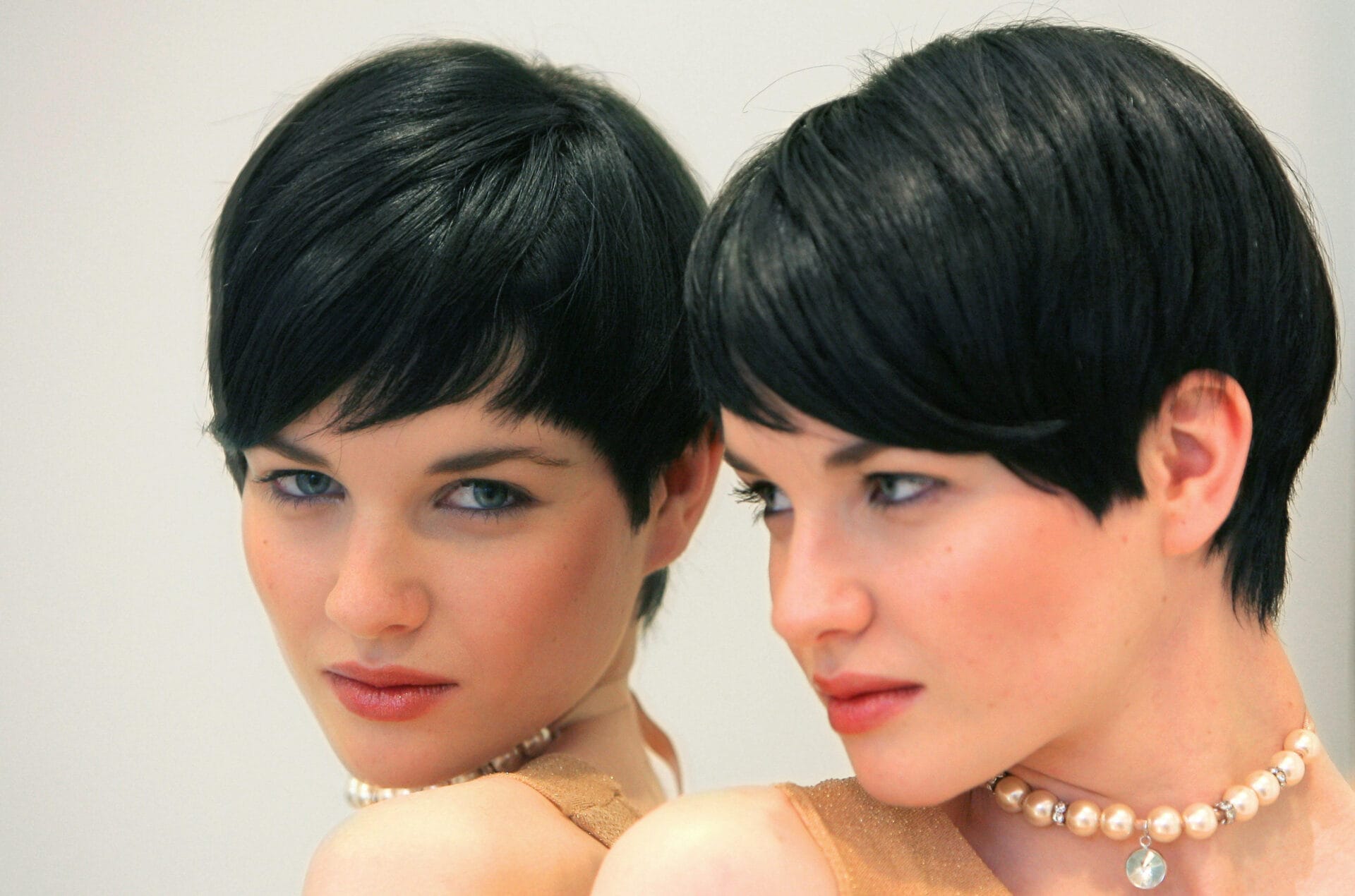
Here’s how to style your hair:
- Apply volumising mousse or texturising spray to damp hair.
- Use fingers or a round brush to lift hair at the roots as you blow-dry.
- Add definition to the ends with a light pomade or styling cream.
Maintenance requires regular trims every 4-6 weeks to keep the shape.
2. Side-Swept Bangs
Side-swept bangs draw attention to the face and cover thinning areas around the temples or front hairline. The additional volume and movement create a soft and face-framing look that is easy to manage.

Here’s how to style your hair:
- Blow-dry bangs with a round brush to enhance volume.
- Sweep bangs to one side with a light hairspray to hold in place.
- Use root touch-up powder along the hairline for added thickness.
The maintenance is moderate and requires trimming every 3-5 weeks to keep bangs neat.
3. Layered Bob
A layered bob is a chin- or shoulder-length cut with layers that provide structure and density. This hairstyle is well-suited for those who want to mask thinning hair around the crown without sacrificing length.

Here’s how to style your hair:
- Start with a volumising mousse at the roots to lift the hair.
- Style with loose waves or curls to add texture and disguise thin spots.
- Opt for regular trims to keep the layers from weighing down.
This hairstyle requires frequent trims every 6-8 weeks to maintain volume. Maintenance is high.
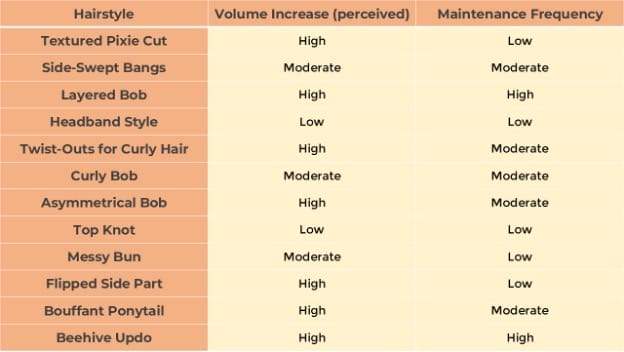
The table below details the maintenance requirements for each hairstyle:
4. Headband Style
A headband placed just behind the hairline or at the crown helps cover thinning hair, especially around the temples. This accessory adds visual interest and is an ideal quick, easy solution for bald patches. [2]
Here’s how to style your hair:
- Choose a headband that matches your hair colour for a natural look, or a contrasting one for a pop of colour.
- Position the headband carefully to cover problem areas.
- Tease hair slightly behind the headband to add height and volume.
This hairstyle is low-maintenance and works with all hair types and lengths. However, a downside of constantly wearing the headband is traction alopecia, causing hair loss in the temples and hairline. So try not to wear a headband continuously.
5. Twist-Outs for Curly Hair
Twist-outs are ideal for adding texture and body to naturally curly hair, making thin spots less noticeable. This hairstyle works thanks to curls that lift away from the scalp, which gives the illusion of fuller hair.
Here’s how to style your hair:
- Divide hair into small sections and twist each section with curl cream or mousse.
- Let twists set overnight or under a hood dryer.
- Undo twists gently in the morning, then fluff the roots with a comb or pick.
You need to re-style your hair every few days to maintain volume.
6. Curly Bob
The combination of the volume-boosting benefits of a short bob with curls helps disguise thinning areas on the crown. Curls add body and volume, which makes hair appear thicker and more robust.

Here’s how to style your hair:
- Use a curl-enhancing cream on damp hair.
- Dry with a diffuser to keep curls intact and add lift at the roots.
- Lightly tease sections for extra volume if needed.
Curly bob should be refreshed with a curl cream or mousse every couple of days.
7. Asymmetrical Bob
The asymmetrical bob features a longer section on one side, drawing focus away from any thinning areas. This cut adds visual interest and can be adapted to various hair textures and face shapes.
Here’s how to style your hair:
- Part the hair to accentuate the asymmetry and cover thin areas.
- Style with a straightener or curler to add soft waves.
- Use a light texturising spray for added fullness.
The hairstyle requires moderate maintenance. All you need to do is trim every 4-6 weeks to maintain the asymmetry.
8. Top Knot
A top knot provides a stylish way to cover thinning around the crown. This style pulls hair away from the face and focuses on volume at the knot.
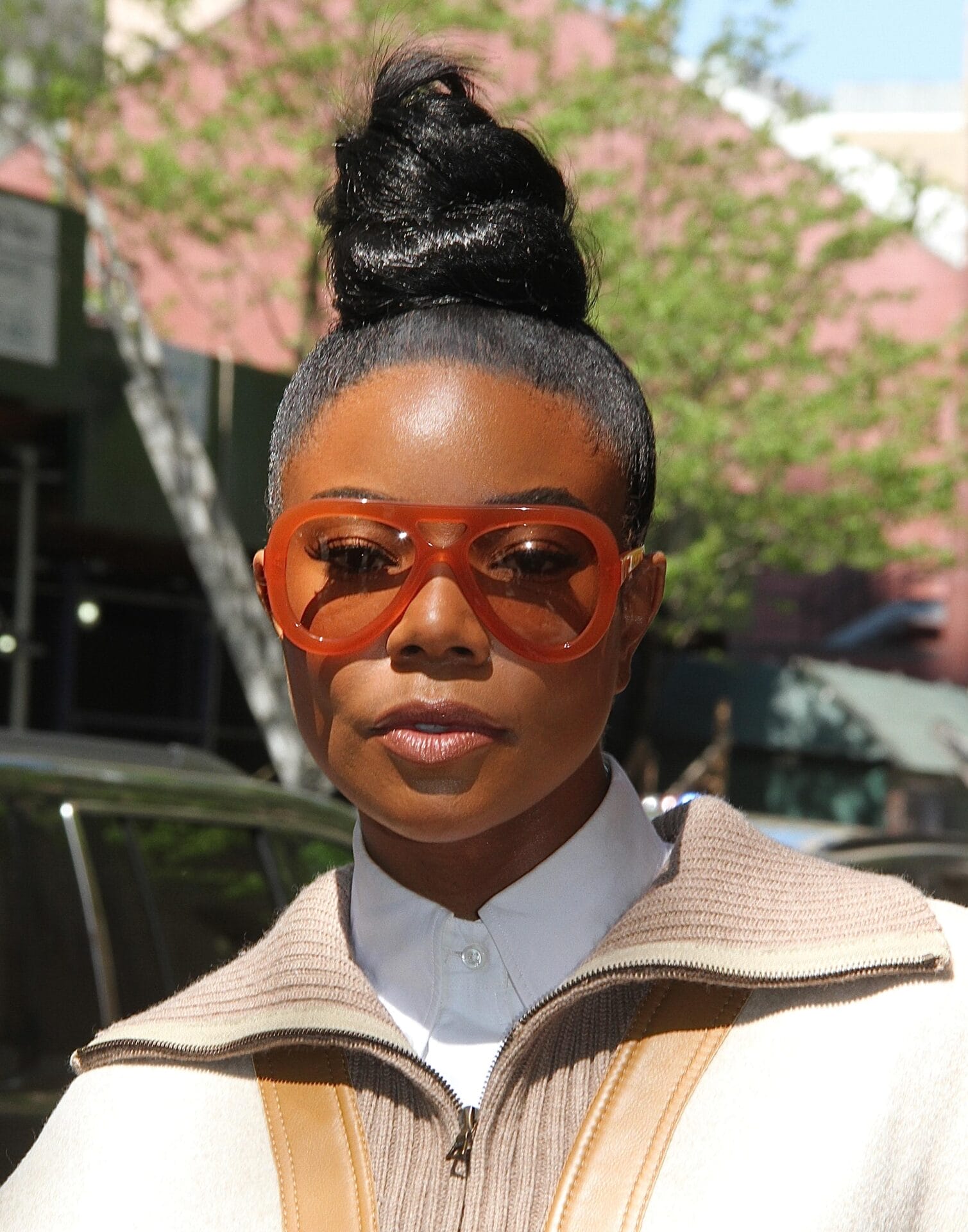
Here’s how to style your hair:
- Gather hair into a high ponytail and twist it into a bun at the top of the head.
- Tease the hair in the bun for a fuller appearance.
- Use bobby pins to secure the bun, allowing a few strands to frame the face.
Top knot works for medium- to long-length hair and requires minimal daily styling.
9. Messy Bun
The messy bun is a casual, volumised updo that hides thin areas around the crown without pulling on the scalp. The texture makes the bun appear fuller, which is perfect for everyday wear. [3]
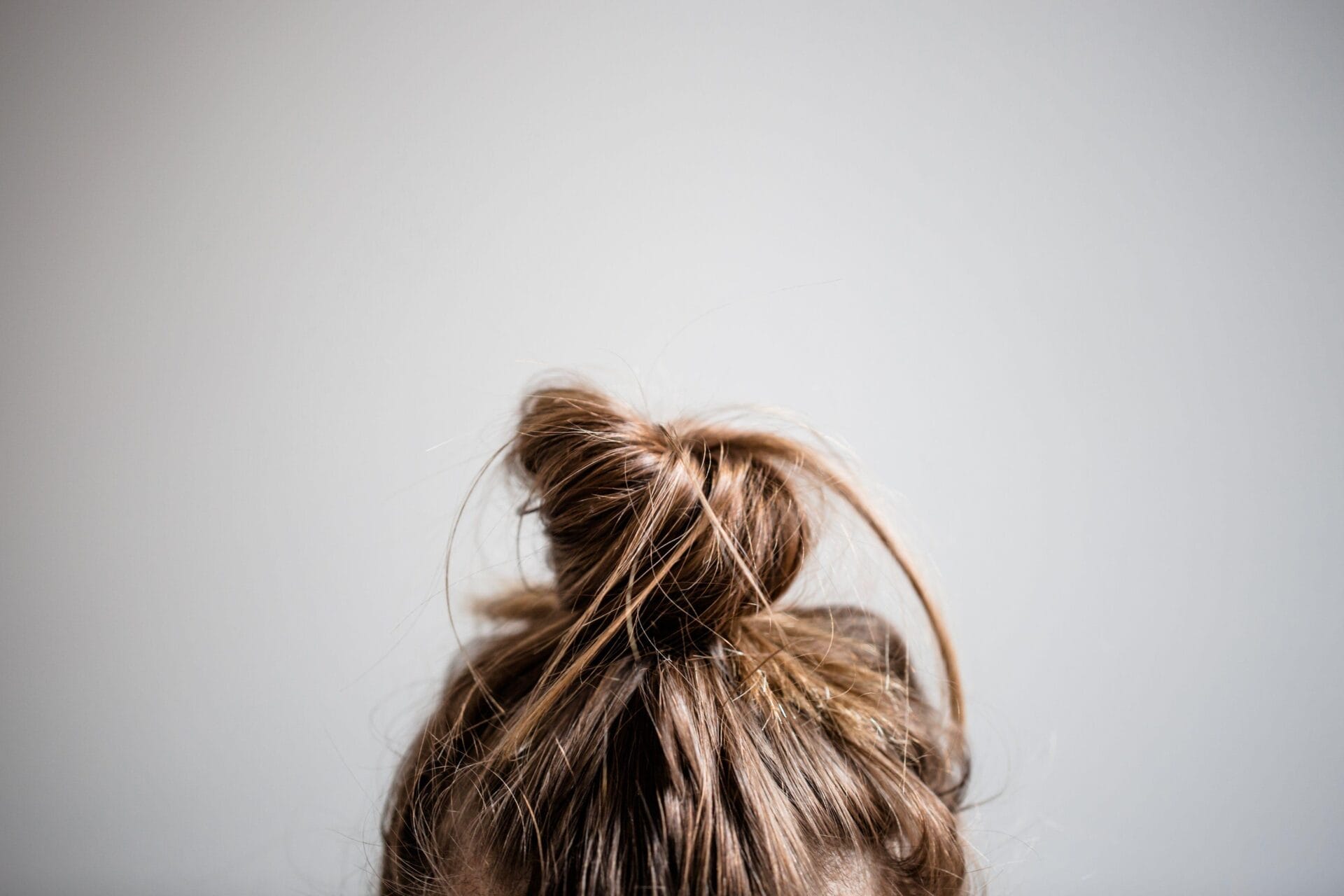
Here’s how to style your hair:
- Gather hair loosely at the back or top of the head.
- Use a texturising powder at the roots to add height.
- Secure with an elastic but let some pieces fall naturally for a carefree look.
This is ideal for all hair types and requires no heat.
10. Flipped Side Part
A flipped side part can cover thinning spots by positioning more hair on one side of the head. This adds height and volume. It’s especially effective for thin hairlines and provides a sophisticated look.
Here’s how to style your hair:
- Apply volumising spray at the roots.
- Flip hair to one side and part about an inch or two off-centre.
- Blow-dry hair upside-down to set the part and lock in volume.
This hairstyle is ideal for various lengths and textures.
11. Bouffant Ponytail
A bouffant ponytail combines height at the crown with a sleek and low ponytail. It’s ideal to conceal thin patches around the scalp. The extra volume around the crown creates a glamorous look.
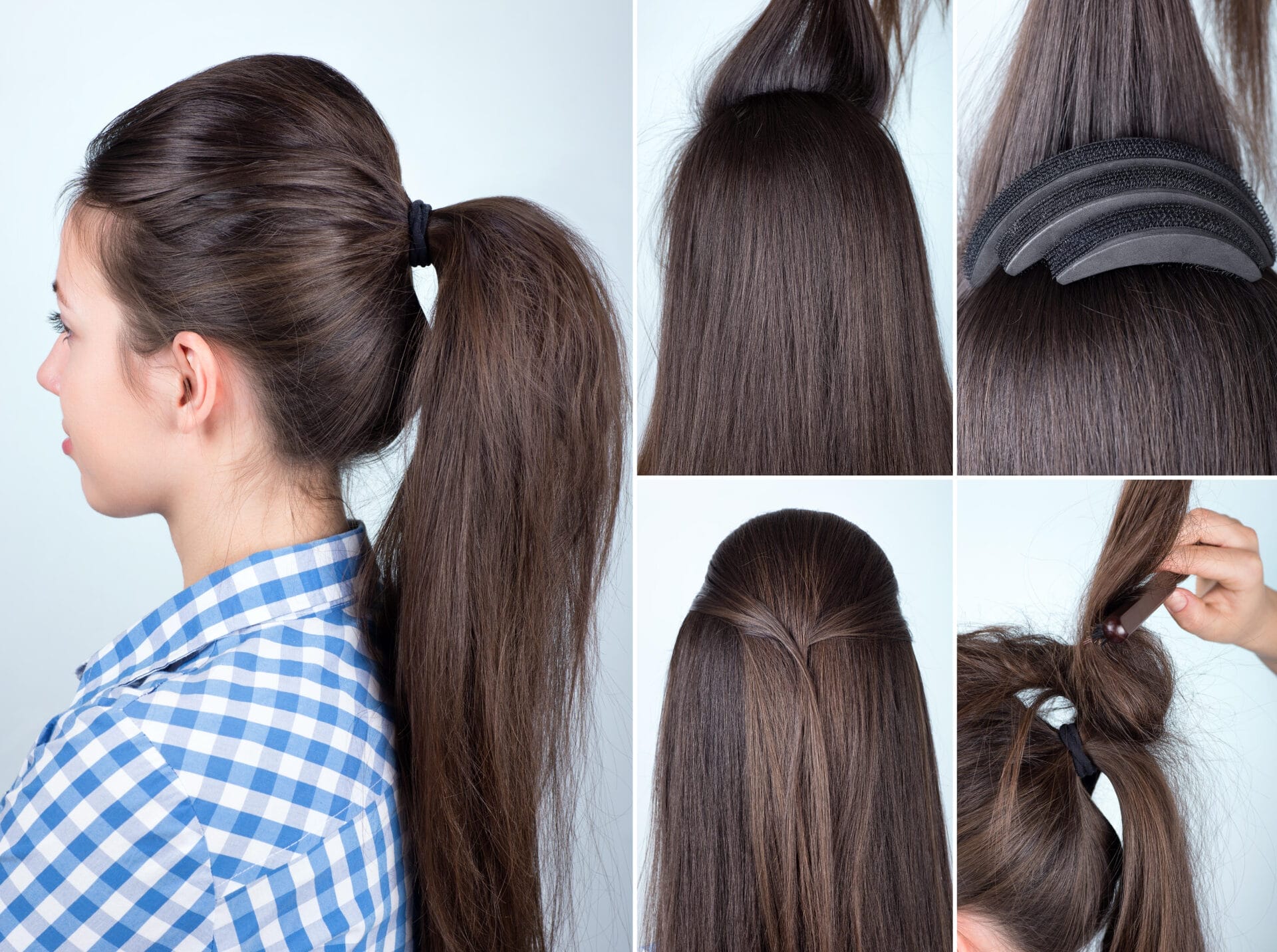
Here’s how to style your hair:
- Backcomb hair at the crown before gathering it into a ponytail.
- Use a volume-boosting powder to hold the shape.
- Keep the ponytail loose to avoid any pulling movements on the scalp.
This hairstyle requires medium maintenance and suits both short and long hair.
12. Beehive Updo
A beehive updo elevates the hair at the crown, creating the illusion of volume. The style can be adapted with pins and accessories to cover thin areas around the scalp. [4]

Here’s how to style your hair:
- Use a teasing comb to create height at the crown and secure with pins.
- Style the rest of the hair into a loose and vertical updo.
- Finish with a lightweight hairspray for a polished look.
This hairstyle is ideal for medium to long hair and formal occasions.
Here is an overview of the cost of some tools you need:

Conclusion
The choice of hairstyle makes a huge difference for women who suffer from female-pattern baldness. A major focus should be on adding volume and concealing thinning areas, especially for those who don’t want to undergo a female hair transplant. The versatile styles we listed above suit various hair types and personal preferences. This provides practicality and elegance.
References
1- Fabbrocini, G., Cantelli, M., Masarà, A., Annunziata, M. C., Marasca, C., & Cacciapuoti, S. (2018). Female pattern hair loss: A clinical, pathophysiologic, and therapeutic review. International journal of women’s dermatology, 4(4), 203–211. https://doi.org/10.1016/j.ijwd.2018.05.001
2-Headbands Are Back—Here’s How You Can Wear Them. (n.d.). Byrdie. https://www.byrdie.com/how-to-wear-a-headband
3- Mayo, T. T., & Callender, V. D. (2021). The art of prevention: It’s too tight-Loosen up and let your hair down. International journal of women’s dermatology, 7(2), 174–179. https://linkinghub.elsevier.com/retrieve/pii/S2352647521000216
4-How to Do a 1960s Beehive Hairdo: 10 Steps (with Pictures). (n.d.). WikiHow. https://www.wikihow.com/Do-a-1960s-Beehive-Hairdo
Share:
Authored by

Dr Roshan Vara
Dr. Roshan Vara is a renowned hair transplant surgeon in London and the Co-Founder of our award winning hair transplant clinic, The Treatment Rooms London.He has over 10 years of experience in hair transplant surgery and is recognised for delivering natural-looking results through ethical, patient-centred care. He is a Full Medical Member of BAHRS and an Associate Member of ISHRS, reflecting his commitment to the highest standards in modern hair restoration.
Reviewed by

Dr Dilan Fernando
Dr. Dilan Fernando is regarded as one of the best hair transplant surgeons in London and Co-Founder of The Treatment Rooms London. He has over 10 years of experience in hair transplant surgery and is known for his meticulous technique and commitment to ethical practice. He served on the Executive Committee of BAHRS from 2020 to 2024, helping to shape industry standards for patient safety and quality of care. Dr. Fernando personally performs each surgery, ensuring natural results built on trust and experience.
Book a Consultation
Related Blogs

Steve Carell Hair Transplant: Before, After, and His New Hairline
March 2, 2026
Steve Carell, best known as Michael Scott in The Office, began sparking curiosity amongst fans when his…

What Is Nutrafol and Does It Really Work for Hair Growth?
February 24, 2026
Key Takeaways Hair thinning can feel frustrating and confusing. You might notice more hair falling out in…

Peppermint oil for hair growth: Evidence, Benefits, Uses & Safety
February 24, 2026
Key Takeaways What Is Peppermint Oil? Peppermint oil, also known as Mentha piperita oil, is an essential…

Why Winter Hair Loss Happens and All You Need to Know
February 6, 2026
Key Takeaways As temperatures drop and indoor heating kicks in, many people notice their hair feels drier,…

Can You Take Finasteride With Minoxidil For Hair Loss?
February 5, 2026
Key Takeaways Consistency Matters: Stopping treatment often leads to a recurrence of hair loss; ongoing medical guidance…
Does Finasteride Cause Erectile Dysfunction?
February 3, 2026
Key Takeaways Finasteride can cause erectile dysfunction in some men, but it isn’t common. Most men who…
What is a Hair Transplant? How it Works, Success Rate & What to Expect
February 2, 2026
Key Takeaways Cost: Varies from £3,000 to £10,000, depending on the number of grafts and the technique….
What Causes Hair Loss During Menopause?
February 2, 2026
Key Takeaways Many women notice increased hair shedding and thinning during menopause. This happens because hormonal changes…

Can a Norwood 7 Get a Hair Transplant? All You Need to Know
February 2, 2026
Key Takeaways Yes, someone with Norwood 7 hair loss may be able to have a hair transplant,…