

Key takeaways
- How long does it take to grow facial hair on testosterone? Thicker terminal hair normally begins to grow on the face and body around 6 months after starting testosterone treatment, but this can take a number of years before it’s at maximal production.
- Can I grow facial hair FTM without taking testosterone? Some facial hair growth is possible without testosterone, but you’ll realistically see the largest growth of your beard when you are taking testosterone treatments.
- Why is my beard still patchy after several years on testosterone? Patchy facial hair is common in men in general. This doesn’t mean the testosterone treatment isn’t working. This is usually down to the natural genetic limits of your hair follicles, as not everyone is able to grow a full beard with testosterone alone.
- Can minoxidil or microneedling help me grow a thicker beard? Small studies carried out to date have specifically shown that minoxidil can help improve facial hair density in transmasculine people that are taking testosterone therapy. Microneedling has only been shown to impact hair growth on the scalp; usually in combination with other approaches, not as a standalone therapy. It currently has weak evidence behind it for improving beard growth.
- Can a facial hair transplant give me a permanent beard? A facial hair transplant can definitely improve your beard coverage by moving healthy follicles already producing thick hairs from your head to your face. It can’t be described as permanent, as the grafts are not guaranteed to survive, but often it provides a long-lasting coverage.
Growing facial hair is a key concern for transmasculine people who are on a gender-affirming journey. It’s often an important part of becoming more comfortable with your appearance, but you may find that you struggle to grow facial hair as evenly or as densely as you would like.
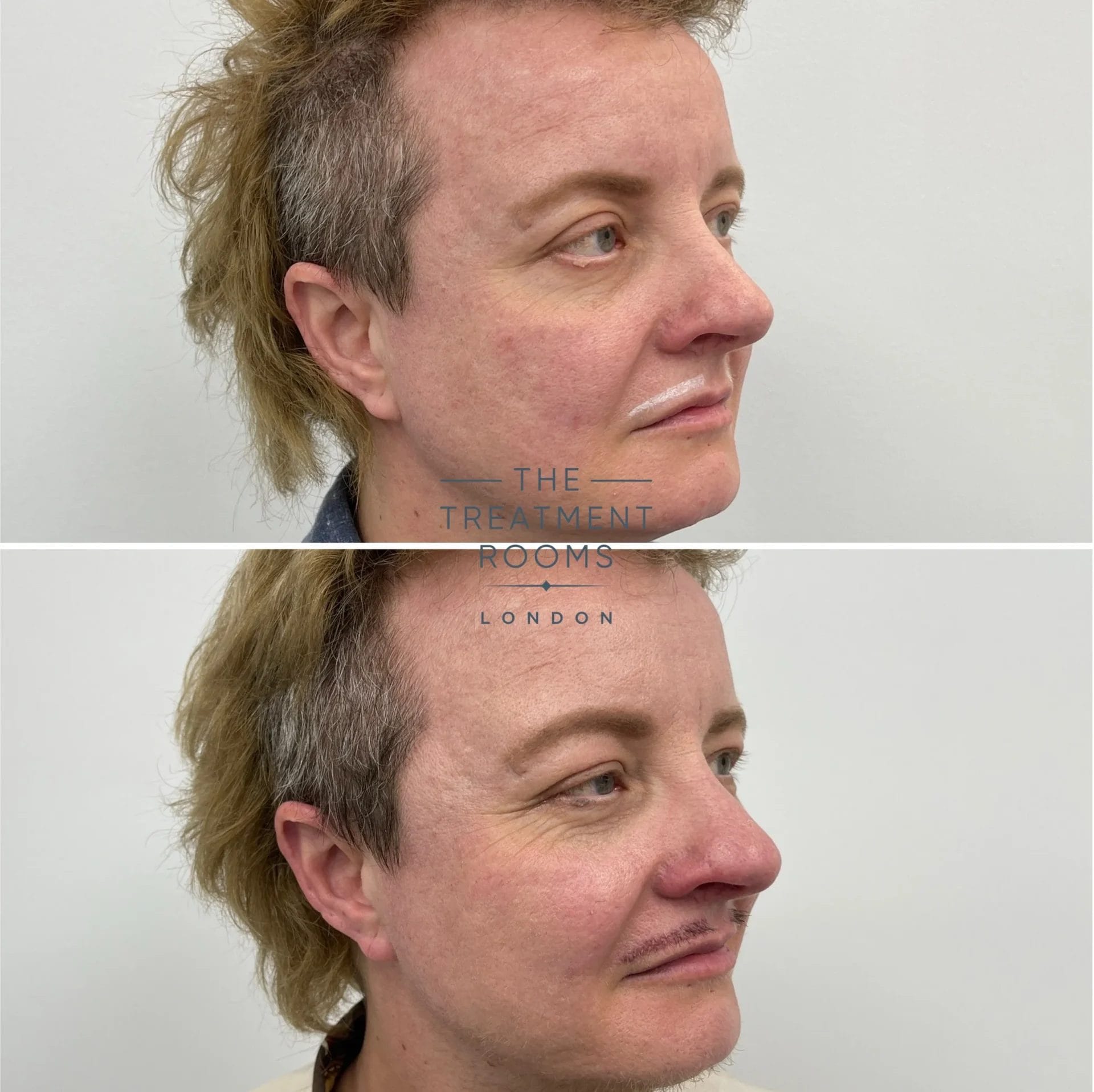
Understanding the biology of transmasculine facial hair growth
Most people already have fine hairs on their face, which are known as vellus hairs, but they’re often too small or thin to have a visual impact. Facial hair follicles can be influenced by androgen (male-like) hormones such as testosterone and induced to make hairs that grow larger, darker, and thicker. Most notably, we see this during puberty with androgen-driven development of facial hair.1
The transition from vellus to terminal hair
Vellus hairs are the fine hairs that you can see all over your body if you look very closely.
Terminal hairs are the dark, thicker, and more pigmented hairs that we see on parts of the body such as our scalp and beard hair.
In follicles that have the correct receptors and are stimulated by the correct hormones, this vellus hair can turn into terminal hair. The pattern this occurs in is largely determined genetically, which is why beards follow a characteristic pattern and end at a certain point rather than growing sporadically all over the face.

The role of genetics and hormonal sensitivity
Your genetics will be the largest factor in determining the pattern in which your beard grows. Two people who have identical testosterone levels can nonetheless have differences in their facial hair growth because the way their follicles respond to testosterone is not the same.
The response of your follicles to testosterone can be as major a determinant in beard growth as your actual testosterone levels. Increasing your testosterone beyond a limit that is medically safe is not going to help you grow a denser beard or speed up the rate at which it grows.
Growing facial hair with testosterone: what to expect
You should see a gradual response to testosterone treatments that begin from around six months after you start taking them and continues developing over a number of years.2
Research insight
Reported clinical observations place facial hair growth as occurring from 6-12 months after starting testosterone treatment and reaches a maximum growth reportedly around at 4 to 5 years after beginning treatment.2
Common growth patterns and asymmetry
It’s common for beard hair to develop unevenly, especially in the early phases. Depending on how it develops, you might find you end up with stronger moustache growth than your beard, or there might be gaps between areas like your chin hair and your sideburns.
It’s often the case that hair on your chin or moustache is quicker to develop and more sensitive to the action of testosterone. This is evidenced by the pattern commonly seen in women with unwanted facial hair growth (Hirsutism).
“One really important thing to remember is that not everyone will grow facial hair in the same amount, rate, or pattern. It’s best not to compare yourself with another person’s transition, as you are on your own individual journey. If your beard is patchy after a year or two of testosterone treatment, this doesn’t mean it will always stay this way. Sometimes, it continues to fill out if given more time. You have to allow your body time to adapt to the changes it’s undergoing.”
Dr Dilan Fernando, Hair Transplant Surgeon and Co-Founder at The Treatment Rooms London
Stimulating growth without testosterone or boosting current results
While testosterone treatment helps to grow facial hair, for some people this may not end up providing a result that is satisfactory. You may wish to discuss additional treatments more specifically targeted towards your beard, such as minoxidil or microneedling.
Using topical minoxidil safely and effectively
Minoxidil is a medicine that is widely used to treat hair loss on the scalp. It does so by improving blood flow to the hair follicles and also more directly stimulating pro growth molecules in the skin, which impact the hair follicles.
Research insight
A clinical trial which was randomised and double-blinded was recently published that specifically investigated the effects of topical minoxidil on beard growth in transgender men who were on gender affirming hormone treatment. 69 patients were split into two groups: those taking topical minoxidil 3% and those taking a medication free mimic (placebo). The results showed a significant difference in the hair diameter and density in those taking the minoxidil, which establishes that it’s an important and effective treatment to enhance facial hair growth in transgender men.3
Microneedling to awaken dormant follicles
Microneedling is a technique involving the creation of tiny punctures in the skin, in order to stimulate blood flow and hair growth.
The evidence that this works on facial hair is very limited, it’s main uses to date have been on the scalp, where it has shown to provide modest benefit of hair growth when used in conjunction with minoxidil in those with pattern hair loss.4
Targeted skincare and follicle nourishment
Skincare can help condition the skin and make it more conducive to hair growth, but the aim is to protect your skin from irritation, and it won’t have an impact on speeding up or providing denser growth. A simple routine can involve gently cleansing the face to remove oil and sweat. Moisturising regularly and gently exfoliating your skin can also help to keep it in good condition.
How to grow facial hair FTM (before starting testosterone)
You are quite limited in what you can do to grow facial hair before you start testosterone treatment. Minoxidil can be trialled to see if it can help to grow hair independently of testosterone treatment, but the current evidence only shows minoxidil having a positive effect alongside gender affirming hormonal treatments.
You may find it helpful to start applying makeup or cosmetics in order to create the appearance of having a moustache or beard shadow.
Key insight
It’s commonly believed that shaving hair will make it grow back thicker or denser. This is in fact a myth, so it isn’t necessary to shave finer hairs on your face in the hope they will become thicker.
When looking into testosterone treatments, we recommend you do this in consultation with a doctor who is experienced in gender affirming care and can talk you through what changes you can expect in detail.
When to explore surgical solutions
Perhaps you have been taking testosterone treatment for many years, and have tried other medical interventions, yet you still find that your facial hair is sparse.
If that’s the case, it may be possible to have a facial hair transplant. This approach will move follicles that are already producing terminal hairs to the beard area and can greatly improve your current beard coverage.
How FTM facial hair transplants work
As mentioned previously, the principle behind a female to male hair transplant (FTM) rests on removing hair from a donor area, which is usually the back and sides of the scalp, and then transplanting these hairs onto the face to improve your beard pattern and density.
For this, we usually prefer to carry out a Follicular Unit Excision, or FUE. This gives greater control over the individual placement of hairs, which is really important when dealing with a highly visible and refined area of hair such as the beard.
Assessing candidacy and setting expectations
Before you have a facial hair transplant, your surgeon will need to assess whether you have a suitable amount of hair that is also of sufficient quality that can be taken from your scalp.
It’s also recommended that you wait at least a year after you started testosterone treatment in order to get a clearer picture of whether your beard is improving with time, or if you could potentially benefit from the placement of hair grafts.5
You may equally wish to wait longer than a year, as often facial hair growth with testosterone treatments takes around 4-5 years to reach its full potential after starting testosterone treatment.
Key insight
If you are in the early years of testosterone treatment and you opt for a hair transplant, your existing facial hair may continue to fill out even after surgery. By allocating time for the testosterone treatment to adequately take effect, you can better identify areas that would genuinely benefit from more coverage if you allow your beard development to unfold to its full natural potential before you decide to pursue surgery.
Your existing skin health also needs to be taken into account, and any inflammatory skin conditions need to be managed before any surgery is considered. It could well prove that your beard growth can pick up once these are cleared.
“We encourage patients not to rush towards surgery. Our desire is to help them make the best decision for their wellbeing, and we’ll only recommend a beard transplant if we genuinely believe it will be of benefit in their circumstances. We need to consider if their beard is still showing signs it is developing with testosterone treatments.
If it’s not, then perhaps they can be suitable for a beard transplant. When we undertake surgery, we do so cautiously, and carefully plan to achieve a natural pattern of growth that complements the patient’s facial features. This, we feel, is a much better approach than just trying to create the thickest beard possible by transplanting excessive numbers of grafts.”
Dr Dilan Fernando, Hair Transplant Surgeon and Co-Founder at The Treatment Rooms London
Styling and maximising the beard you have today
Whilst a full beard is ideal, it isn’t always strictly necessary in order to add more definition to your facial hair. Simple changes to your grooming can make a big difference to your beard’s overall appearance.
Try working with the strengths of your current hair growth to smooth out uneven patches and make your facial hair appear fuller.
Trimming strategies to build visual density
Keeping sparse facial hair shorter can be a great way of making it appear neat, and it avoids drawing attention to gaps that may be present in your beard. Beard hair, when it starts to grow out longer, can begin to separate into thinner sections and show up areas where you are lacking density, which can be less than ideal.
Some styles can naturally work well with your existing hair growth patterns. For example, you could choose to keep a defined moustache or a goatee, which highlights the hair you do have, and lends itself to appearing both tidier and more purposeful.
Dyeing, shaping, and caring for early growth
If you have hair that is naturally lighter in colour, you can dye it to improve its visibility and contrast. Having a naturally lighter coloured beard can make it harder for it to appear dense, even at similar hair numbers as a darker beard.
If you decide to dye your beard, only use products that are certified for use on the face and carry out a patch test before applying it to check if there is any skin reaction. Don’t apply any dye if your skin is either visibly inflamed or damaged, which can end up making matters worse.
Tip: You can also make your facial hair softer and easier to shape by using a beard conditioner or moisturiser.
Conclusion
Beard development is highly variable from person to person. It’s strongly influenced by genetics and your hair follicles’ sensitivity to hormones, which are largely outside of your personal control.
Female to male facial hair may take many years to develop substantially after you start hormonal treatments. Some people still have patchier growth while on testosterone and may decide to use hair growth medications such as minoxidil to boost their beard growth. This has proven to be of benefit when it’s used alongside testosterone treatment.
You can also look into getting a facial hair transplant to fill in persistent gaps that you are not satisfied with.
If you’re unhappy with your beard and believe it’s developing unusually slowly, or you haven’t managed to notice much development at all, you should contact your GP or dermatologist, who will be able to help you explore the causes and options that you have available.
The most important thing of all is being comfortable along your gender-affirming journey and achieving an appearance that you can be satisfied with.
References
- Inui S, Itami S. Androgen actions on the human hair follicle: perspectives. Exp Dermatol. 2013;22(3):168–171. doi:10.1111/exd.12024
- Hembree WC, Cohen-Kettenis PT, Gooren L, et al. Endocrine treatment of gender-dysphoric/gender-incongruent persons: an Endocrine Society clinical practice guideline. J Clin Endocrinol Metab. 2017;102(11):3869–3903. doi:10.1210/jc.2017-01658.
- Wattanawinitchai K, Pomsoong C, Ratanapokasatit Y, Suchonwanit P. Efficacy and safety of topical 3% minoxidil for facial hair enhancement in transmen: a randomized, double-blind, placebo-controlled trial. J Dermatolog Treat. 2026;37(1):2638637. doi:10.1080/09546634.2026.2638637.
- Ahmed KMA, Kozaa YA, Abuawwad MT, et al. Evaluating the efficacy and safety of combined microneedling therapy versus topical minoxidil in androgenetic alopecia: a systematic review and meta-analysis. Arch Dermatol Res. 2025;317(1):528. doi:10.1007/s00403-025-04032-1
- Patel V, Nolan IT, Card E, Morrison SD, Bared A. Facial hair transplantation for transgender patients: a literature review and guidelines for practice. Aesthet Surg J. 2021;41(3):NP42–NP51. doi:10.1093/asj/sjaa430.
Share:
Authored by

Dr Roshan Vara
Dr. Roshan Vara is a renowned hair transplant surgeon in London and the Co-Founder of our award winning hair transplant clinic, The Treatment Rooms London.He has over 10 years of experience in hair transplant surgery and is recognised for delivering natural-looking results through ethical, patient-centred care. He is a Full Medical Member of BAHRS and an Associate Member of ISHRS, reflecting his commitment to the highest standards in modern hair restoration.
Reviewed by

Dr Dilan Fernando
Dr. Dilan Fernando is regarded as one of the best hair transplant surgeons in London and Co-Founder of The Treatment Rooms London. He has over 10 years of experience in hair transplant surgery and is known for his meticulous technique and commitment to ethical practice. He served on the Executive Committee of BAHRS from 2020 to 2024, helping to shape industry standards for patient safety and quality of care. Dr. Fernando personally performs each surgery, ensuring natural results built on trust and experience.
Book a Consultation
Related Blogs

Which Blood Tests Are Required for Hair Loss in Women?
November 20, 2026
Key takeaways Blood testing can help narrow down the possible causes of hair loss in women. They…

Can Excessive Exercise Cause Hair Loss?
November 18, 2026
Key takeaways You may be wondering if your workout is causing your hair loss. Oftentimes, if you…
How Much Hair Loss Per Day Is Normal for Men
November 17, 2026
Key takeaways Perhaps you have noticed extra hair in the shower after you have finished washing or…
What to Know About Stress and Alopecia Areata
November 16, 2026
Key takeaways: Alopecia areata is an autoimmune condition in which the immune system attacks the hair follicles,…

Understanding Hair Loss in People with Trichotillomania
November 13, 2026
Key Takeaways: What Is Trichotillomania? Trich is a mental health condition where people suffering from it experience…

Hair Growth Cycle Explained
November 13, 2026
Key Takeaways: Each hair follicle is a small, self-renewing structure that goes through periods of growth, transition,…

Did Kyle Walker Have a Hair Transplant? Expert Review of His Hair Loss and Restoration
November 13, 2026
Key Takeaways: Kyle Walker is a widely known athletic superstar. He burst onto the football scene with…

Jürgen Klopp Hair Transplant: Expert Analysis of His Hair Loss and All You Need to Know
November 13, 2026
Key takeaways Jürgen Klopp is one of football’s most celebrated managers. He made his name through his…

Can a Norwood 7 Get a Hair Transplant? All You Need to Know
November 13, 2026
Key takeaways Hair transplantation may be possible for selected patients with Norwood 7 hair loss. However, it…