

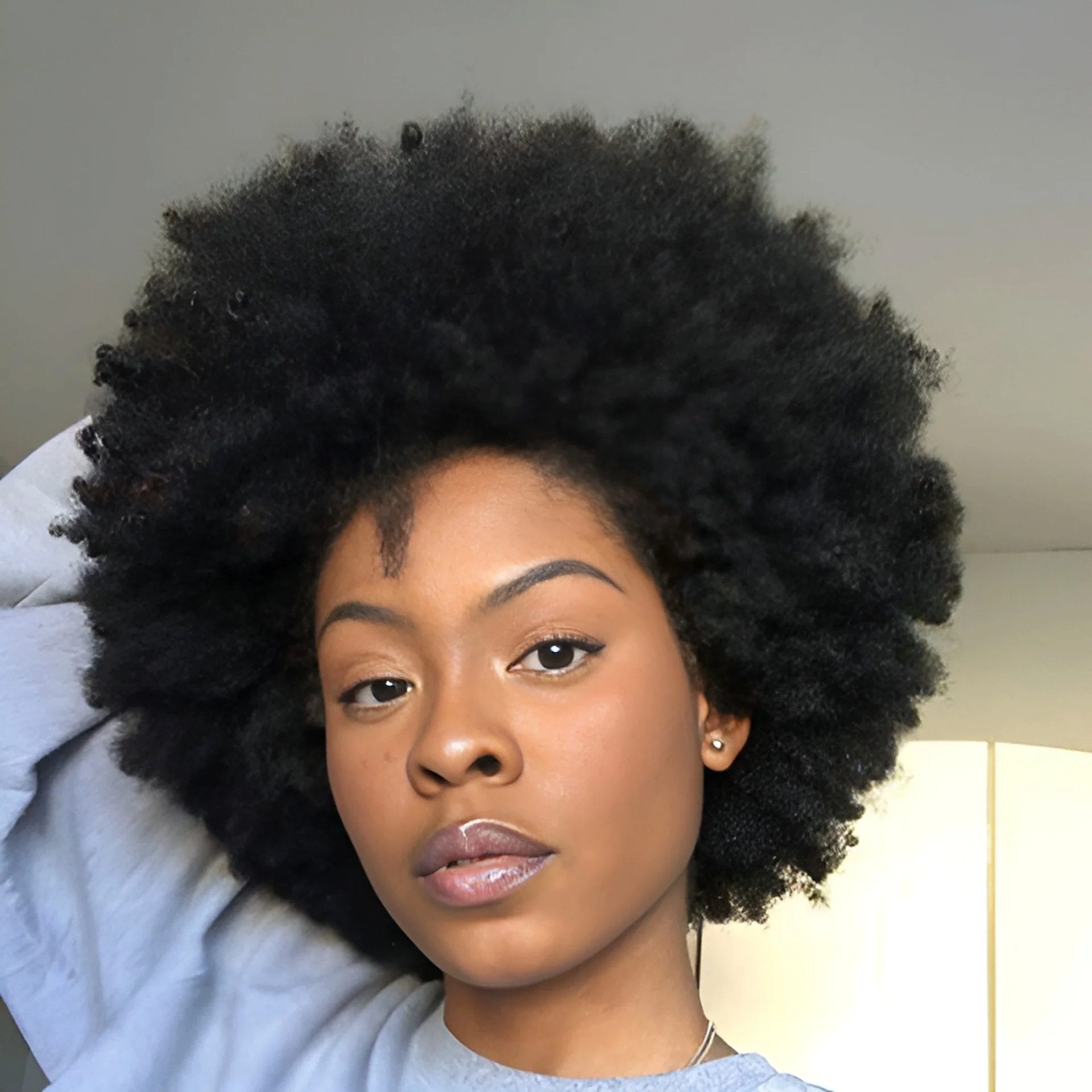
Afro-textured hair is typically characterised by tightly coiled, coarse, wiry hair strands.
It is entirely possible to perform hair transplants on individuals with Afro-textured hair; however, specialised techniques and skills are required to manage the curl pattern and ensure a natural, successful result.
Why is Afro hair so Unique?
Afro hair is known for its thickness and tight corkscrew or spiral-shaped curls and a denser looking structure compared to other hair types.
That brings us to categorising hair types. The Andre Walker Hair Typing System has four main hair types (1, 2, 3, and 4) that are further subdivided into subtypes (A, B, and C) that refine the curl pattern of each type.
- Type 1: Straight hair.
- Type 2: Wavy hair.
- Type 3: Curly hair.
- Type 4: Coily hair.
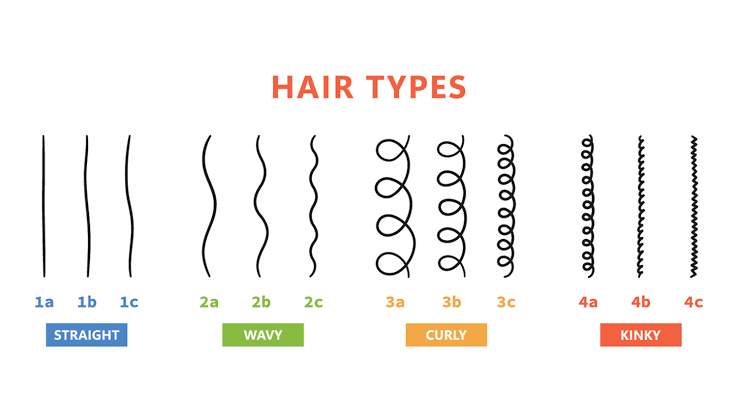
Most Afro-textured hair falls into one of the Type 4 categories.
Type 4A
The 4A hair has a coiled S-curl pattern. Curls are tighter than 3C hair but looser than 4B hair, as they are about 1 cm wide. This provides more volume after drying than the other four hair types.
The 4A hair type is more moisturised compared to other Afro hair types, but can still dry out rapidly. This hair type, while soft, requires diligent hydration to keep ringlets defined and healthy.
Celebrities with 4A hair: Nathalie Emmanuel, Andrea Lewis, Alicia Keys

Type 4B
Thicker and curly than 4A hair, especially at the roots, type 4B hair is characterised by the zig-zag shape of its curl. This gives 4B hair its characteristic kinky look. The tiny spiral of each hair strand is often less than 0.5 cm wide.
These tight spirals can cause you to lose up to 75% of your natural hair length when drying. Type 4B hair, especially at the ends, is likely to be drer and more brittle, making it more prone to frizz. Due to the tight coil, natural scalp oils struggle to penetrate through the hair shaft, leading to dehydration and an increased risk of breakage and tangling.
Celebrities with 4B hair: Yaya DaCosta, Janelle Monáe, Jennifer Hudson

Type 4C
Among all hair types, 4C hair has the tightest coil. This hair type has very thin spirals that develop in all directions, resulting in abundant volume. However, this hair type is susceptible to breakage and dehydration. It shrinks significantly during drying, so be very cautious when combing or brushing, as the hair can break.
To alter this hair type, intense heat and chemical processing are needed. These methods must be used sparingly to prevent damage.
Celebrities with 4C hair: Adjor Adonkor, Neneh Cherry, Viola Davis
Hair Transplant Surgery Techniques
Specialised techniques and considerations are needed to work with afro-textured hair, as it is curly/coily and the follicles are curved, creating particular challenges during transplantation. Extra care must be taken to maintain the natural curl pattern, avoid damaging follicles, and ensure hairs are placed in the correct orientation.
Do Hair Transplants Work for Afro Hair?
Individuals with darker skin are more prone to keloid scarring, making FUE the preferred hair transplant for curly hair. An FUE procedure may produce less noticeable hair transplant scarring than FUT because it removes each hair follicle one at a time rather than a strip of scalp.
Afro hair can be transplanted, but the process is more complex due to its unique characteristics, such as curliness and thickness.
Therefore, it is vital to consult with a hair transplant clinic with experience in performing hair transplants on Afro-textured hair to ensure high-quality results.
Who Is a Suitable Candidate for a Hair Transplant?
Ideal hair transplant surgery candidates are those with an uncomplicated medical history, predictable hair loss, and a stable donor area with healthy and plentiful hair follicles.
It is important to note that while hair transplantation can produce a significant improvement in hair appearance and density, it will not completely reproduce the original hairline or reverse hair loss entirely. Understanding what is achievable is key to ensuring expectations are met.
How do Afro hair transplants work?
Hair transplants always start with a thorough consultation to evaluate hair loss and scalp health and discuss expectations. Surgery itself is equally important as good post-operative care, which is crucial for optimal healing and healthy growth.
Pre-procedure
This starts with the surgeon’s assessment of your scalp, hair density, and overall hair health. Here, the expectations, treatment, and potential outcomes are discussed, and a personalised treatment plan is then drafted based on your specific needs.
Procedure (During the transplant)
The scalp is cleaned and numbed using local anaesthesia. The donor area (often the back or sides of the head) has its hair follicles removed. The harvested follicles are subsequently meticulously inserted into the area of hair loss, which is the recipient site.
Post-procedure
Following an Afro hair transplant, the donor area of the scalp is usually bandaged, and the recipient area is left to heal. It is necessary to wash both areas gently with the prescribed shampoo after a specified number of days to aid scab removal.
During the healing process, mild redness, swelling, or tenderness is normal. Your surgeon will follow up to monitor your healing and offer guidance as you progress through your hair growth journey. The post-operative healing period is generally 2 weeks. You should avoid direct sunlight and strenuous exercise during the initial healing process.
Hair regrowth is a gradual process that usually begins a few months after treatment, and the whole effect can be seen between 12 and 18 months.
More details about the aftercare journey can be read on our page.
The results of an Afro hair transplant can be very natural when performed by a skilled surgeon who takes the time to create a hairline that suits both your natural hair texture and facial features. Once it grows in, the new hair should blend well with the existing hair.
When the follicles are handled with care and placed in the correct position, they will grow in the same curl pattern as your natural hair.
What is the Cost of an Afro-Hair Transplant in the UK?
The average cost for Afro hair transplants in the UK ranges from £3,500-£12,000. However, several factors influence the price, including the number of grafts used, the clinic’s location, the surgeon’s expertise, and the transplant technique.
To determine the number of hair grafts you may require, try out our handy FUE hair graft calculator to get a better idea.
Why Choose The Treatment Rooms London?
With any transplant, regardless of hair type, it is essential to see an experienced and holistic surgeon. Afro hair transplants require even further expertise when handling curly and coily hair types.
At The Treatment Rooms London, we have experience performing Afro hair transplants. We do achieve natural, full results using safe, high-quality techniques that make working with this trickier hair type very achievable.
If you would like to learn more, contact our friendly team today on our contact page, where you can take the first steps of your afro hair transplant journey.
Share:
Authored by

Dr Roshan Vara
Dr. Roshan Vara is a renowned hair transplant surgeon in London and the Co-Founder of our award winning hair transplant clinic, The Treatment Rooms London.He has over 10 years of experience in hair transplant surgery and is recognised for delivering natural-looking results through ethical, patient-centred care. He is a Full Medical Member of BAHRS and an Associate Member of ISHRS, reflecting his commitment to the highest standards in modern hair restoration.
Reviewed by

Dr Dilan Fernando
Dr. Dilan Fernando is regarded as one of the best hair transplant surgeons in London and Co-Founder of The Treatment Rooms London. He has over 10 years of experience in hair transplant surgery and is known for his meticulous technique and commitment to ethical practice. He served on the Executive Committee of BAHRS from 2020 to 2024, helping to shape industry standards for patient safety and quality of care. Dr. Fernando personally performs each surgery, ensuring natural results built on trust and experience.
Book a Consultation
Related Blogs

Female Hair Transplant Guide
July 9, 2026
If you’re a female experiencing hair loss, you may be considering getting a female hair transplant. We…
Dr Vara featured on ITV’s This Morning
June 17, 2026
When ‘Nice Hair Transplant’ Isn’t The Compliment You Were Hoping For… When our repair surgery patient Shaun…

2026 World Cup Stars and Hair Transplant Speculation: 5 Footballers to Watch Out For
June 9, 2026
Key Takeaways As the 2026 FIFA World Cup approaches, some of football’s biggest names will once again…

A Guide To Double Crowns: What Are They?
June 5, 2026
Quick Summary of Double Crowns What is a Double Crown? The crown of your head refers to…
Finasteride and Its Side Effects: What You Need to Know
June 4, 2026
Quick Summary: Finasteride and Its Side Effects Finasteride for Hair Loss: Originally developed for prostate enlargement, Finasteride…
Minoxidil For Eyebrows – Does It Work?
June 3, 2026
Quick Summary: Eyebrows & Minoxidil Understanding Eyebrow Hair Loss: Eyebrow hair loss is commonly caused by over-plucking,…

30 Footballer Hair Transplant Transformations: All You Need to Know
May 22, 2026
Key Takeaways Visible transformations in footballers show that hair transplants can significantly improve the appearance of the…
Can I Get a Hair Transplant While Using Testosterone Replacement Therapy(TRT)?
May 18, 2026
Key Takeaways Testosterone Replacement Therapy (TRT) is commonly prescribed for men with low testosterone, a condition called…

12 Hair Styles for Women With Thin Hair On The Crown
May 7, 2026
Key Takeaways: In this article, we’ll look at some of the best haircuts and practical hair-styling ideas…