

Quick Summary:
- Can You Get a Hair Transplant at 40? Yes, 40 is an ideal age, as hair loss patterns are typically stabilised, allowing effective planning and treatment.
- Hair Loss Causes at 40: Common causes include androgenic alopecia, stress, nutritional deficiencies, hormonal imbalances, and scalp conditions.
- Best Age for Hair Transplants: Ages 25–40 are optimal, as hair loss is stabilised but not yet severe.
- Factors Affecting Success: Stability of hair loss, donor hair quality, surgeon expertise, and proper post-surgery care significantly influence outcomes.
Understanding Age and Hair Loss
Age is the most important risk factor for hair loss1. As we age, most men experience some thinning of their hair. Usually, this begins in the temples and crown. The hairline might start to recede, creating the characteristic “M” shape or a widow’s peak.
Such hair loss is gradual – it does not occur overnight. Nor does it affect all of your hair. The hair on the back and sides of the scalp is preserved as it is resistant to the main hormone driving hair loss in a male.
Generally, people start noticing male hair loss at 40 – sometimes a little earlier. Others may reach their 60s and beyond without much hair loss.

Hair Loss Causes at 40 (Men)
Androgenic alopecia is the most common cause of hair loss in men at 402. It occurs because male hormones like testosterone disrupt the normal growth of hair. It causes the hair to fall out on the top of the head. This cause of hair loss follows the “M” shape pattern as the hairline recedes. Androgenic alopecia will not cause hair loss elsewhere.
Other potential causes of hair loss at 40 in men include3:
- Stress. High levels of stress can cause some thinning of the hair. Cortisol, the stress hormone, disrupts the hair growth cycle, promoting shedding and slower regrowth.
- Nutritional Deficiencies. Low levels of essential nutrients like iron, zinc, biotin, and vitamin D impede the growth of new hair and weaken existing hair, leading to thinning.
- Scalp Condition. Damage to the scalp can disrupt normal hair growth. Conditions like psoriasis, seborrheic dermatitis, and fungal infections may damage hair follicles.
- Hormone Imbalances. Thyroid conditions (either hypothyroidism or hyperthyroidism) can hinder normal growth.
- Chronic Illnesses. Conditions like diabetes, lupus, or other systemic illnesses can disrupt hair growth due to their impact on overall health and circulation.
- Traction Alopecia. Hair loss caused by tight hairstyles or consistent pulling on hair, which can damage follicles over time.
Can You Get a Hair Transplant in Your 40s?
Yes, you can undergo a hair transplant at the age of 40. It is one of the most common age groups that present to our clinic for surgery. While some people may experience hair loss from their late teens and early twenties onwards, most men begin to notice a receding hairline in their 30s, and it is not until they reach the age of 40 that they then present to our hair transplant surgeons.
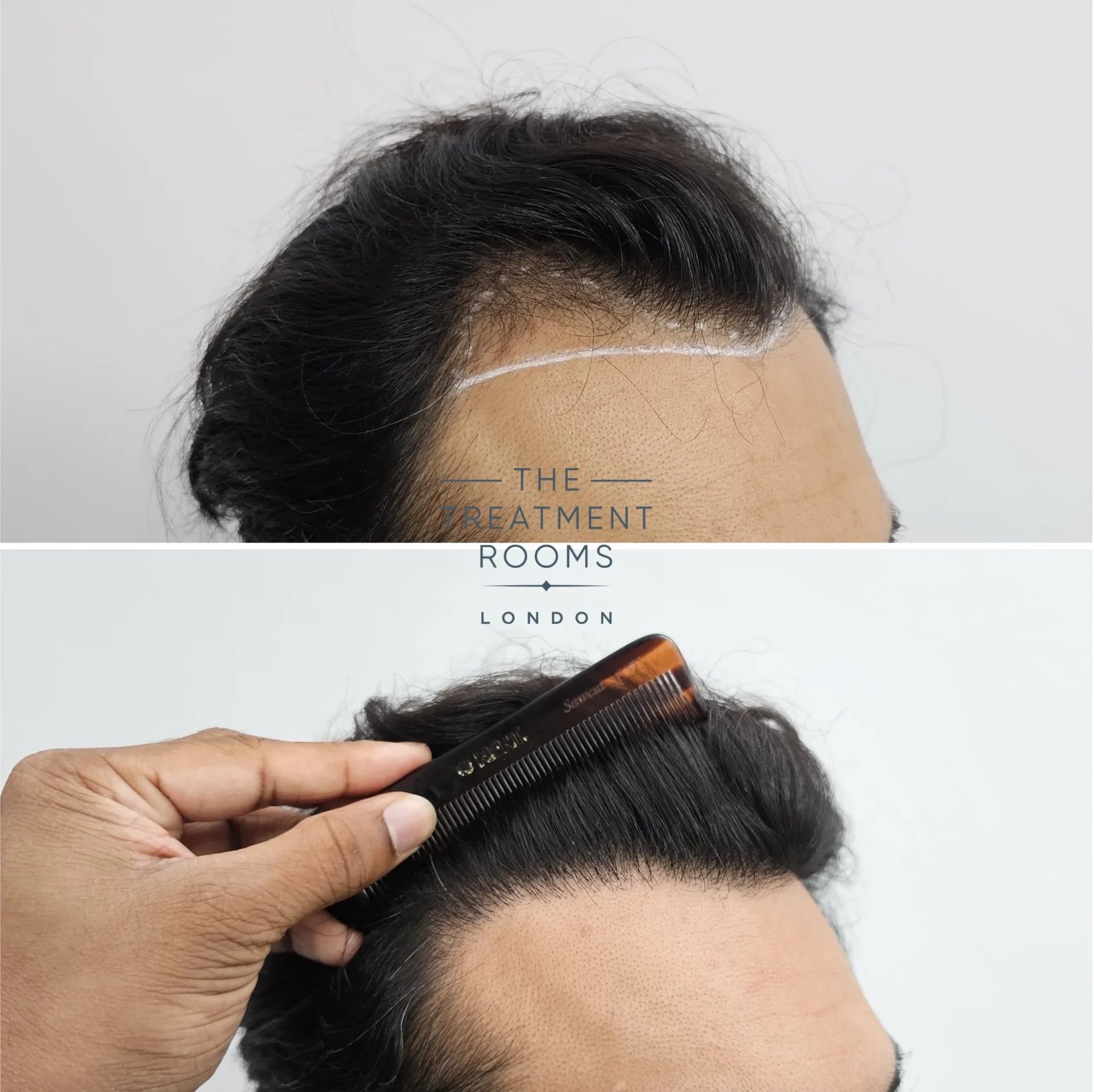
Usually, surgeons are looking for individuals where the hair loss is stabilised. Earlier on, hair loss is ongoing and may continue even after the transplant affecting the longevity of the outcome.
It also depends on the severity of the hair loss. This is graded using the Norwood Scale of male pattern baldness4. The stages include:
Stage 1: No significant hair loss or recession of the hairline.
Stage 2: Slight recession of the hairline at the temples (mature hairline).
Stage 3: Deep recession at the temples, forming an M, U, or V shape.
Stage 4: More pronounced hairline recession and noticeable thinning at the crown.
Stage 5: Larger areas of hair loss at the crown and temples, with a thin bridge of hair separating them.
Stage 6: The bridge disappears, leaving the crown and temples fully connected.
Stage 7: The most advanced stage; only a thin ring of hair remains around the sides and back of the head.
Generally, it’s best to start a hair transplant between stages 3 and 5. Substantial hair still exists at the front of the head, and there’s plenty of hair left on the back of the scalp. If the hair loss continues or hair thins at the back of the scalp, it may have to be extracted from elsewhere on the body.
When Is the Best Age to Get a Hair Transplant?
Is 40 years old the best age for hair transplant in men? It’s certainly within the window when a hair transplant can be most effective. Typically, hair transplants are recommended for men aged older than 27. At the age of 40, the hair loss patterns are more established and potentially stable. This allows your surgeon the ability to predict future hair loss and plan the procedure accordingly5.
Before this age window, hair loss may not stabilise. This can lead to unpredictable and less desirable outcomes. It’s crucial that hair loss stabilises before the procedure; otherwise, younger men risk requiring multiple procedures as their hair loss progresses.
At the other end of the spectrum, men in their 50s and older may have severe hair loss. If they are moving past stage 5 and into stages 6 and 7, then a substantial volume of hair follicles is required to fill in the space. That can either mean multiple procedures or extraction of hair follicles from multiple regions of the body.
The 30s and 40s, therefore, present a sweet spot for hair transplants. Of course, the severity of hair loss varies from person to person, depending on environmental and genetic factors.
Factors Affecting Hair Transplant Success
A hair transplant’s success is not guaranteed. Several factors determine if the procedure will yield positive results. Some of these you can control, such as your post-operative scalp care. However, others are out of your hands and are linked to your age.
These factors include:
- Hair Loss Stability. Unless hair loss has stabilised in a region, then future hair loss may be exceedingly likely. This can render hair transplants ineffective. Your surgeon may advise you to wait a few years for the hair loss to become more evident before proceeding with the surgery. Otherwise, future surgeries are more likely.
- Overall Health. A hair transplant is a surgical procedure. Like any form of surgery, your ability to recover depends on your general health. As you grow older, your recovery capacity declines. This can be further impeded by any underlying medical conditions like diabetes or autoimmune diseases.
- Lifestyle Choices. Smoking, excessive alcohol consumption, and poor nutrition hinder your recovery potential and graft survival.
- Donor Hair Quality. The best results come from dense, healthy donor hair follicles. If you’ve got limited options on your scalp, the surgeon will resort to other body areas to ensure better coverage.
- Patient’s Age. As mentioned, older people tend to recover more slowly from an operation. Their hair quality may be poorer and hair loss more extensive. These factors can influence the transplant’s natural appearance.
Get in Touch
Ready to elevate your hair restoration journey? Book a free consultation call with our London-based FUE hair transplant clinic. If you are based in Birmingham, you can reach out to our FUE hair transplant clinic in Birmingham. We also offer virtual consultations for patients in Manchester and Leicester.
Our award-winning team, including leading London hair transplant surgeons Dr Fernando and Dr Vara, is here to support you every step of the way.
References
- Rhodes T, Girman CJ, Savin RC, Kaufman KD, Guo S, Lilly FR, Siervogel RM, Chumlea WC. Prevalence of male pattern hair loss in 18–49 year old men. Dermatologic surgery. 1998 Dec;24(12):1330-2. Available at: https://onlinelibrary.wiley.com/doi/abs/10.1111/j.1524-4725.1998.tb00009.x
- Banka N, Bunagan MK, Shapiro J. Pattern hair loss in men: diagnosis and medical treatment. Dermatologic clinics. 2013 Jan 1;31(1):129-40. Available at: https://www.sciencedirect.com/science/article/abs/pii/S0733863512000915
- Lin RL, Garibyan L, Kimball AB, Drake LA. Systemic causes of hair loss. Annals of medicine. 2016 Aug 17;48(6):393-402. Available at: https://www.tandfonline.com/doi/full/10.1080/07853890.2016.1180426#d1e709
- Gupta M, Mysore V. Classifications of patterned hair loss: a review. Journal of cutaneous and aesthetic surgery. 2016 Jan 1;9(1):3-12. Available at: https://journals.lww.com/JCAS/fulltext/2016/09010/Classifications_of_Patterned_Hair_Loss__A_Review.2.aspx
- The Treatment Rooms London. Male Hair Loss in Your 40s: What You Need to Know. Available at: https://www.treatmentroomslondon.com/hair-loss/male-hair-loss-in-your-40s-what-you-need-to-know/#pp-toc-q49mlpud7h2r-anchor-3
Share:
Authored by

Dr Roshan Vara
Dr. Roshan Vara is a renowned hair transplant surgeon in London and the Co-Founder of our award winning hair transplant clinic, The Treatment Rooms London.He has over 10 years of experience in hair transplant surgery and is recognised for delivering natural-looking results through ethical, patient-centred care. He is a Full Medical Member of BAHRS and an Associate Member of ISHRS, reflecting his commitment to the highest standards in modern hair restoration.
Reviewed by

Dr Dilan Fernando
Dr. Dilan Fernando is regarded as one of the best hair transplant surgeons in London and Co-Founder of The Treatment Rooms London. He has over 10 years of experience in hair transplant surgery and is known for his meticulous technique and commitment to ethical practice. He served on the Executive Committee of BAHRS from 2020 to 2024, helping to shape industry standards for patient safety and quality of care. Dr. Fernando personally performs each surgery, ensuring natural results built on trust and experience.
Book a Consultation
Related Blogs
Ben Stokes’s Hair Transplant: Before, After and All You Need to Know
September 25, 2026
Key Takeaways: Ben Stokes is widely considered one of England’s greatest all-rounders in cricket. He was born…

Has Jamie Laing Had a Hair Transplant? Expert Analysis of His Hair Loss and Recovery
September 24, 2026
Key Takeaways Jamie Laing is one of Britain’s most recognisable reality TV personalities turned entrepreneurs. His first…
Jude Law Hair Transplant: Before, After, and His New Hairline
September 23, 2026
Key takeaways: Jude Law, the British actor known for roles in The Talented Mr Ripley, Sherlock Holmes,…

Hair Shedding vs Hair Loss: What’s the Difference?
September 23, 2026
Key Takeaways: When you notice more hair falling out than usual, it can cause a lot of…

David Silva’s Hair Transplant: Expert Review of His Hair Loss and Recovery
September 23, 2026
Key Takeaways Born in Arguineguín on Spain’s Canary Islands in 1986, he made his name with Valencia…
Did Kyle Walker Have a Hair Transplant? Expert Review of His Hair Loss and Restoration
September 21, 2026
Key Takeaways: Kyle Walker is a widely known athletic superstar. He burst onto the football scene with…

Can Women Take DHT Blockers for Hair Loss? Benefits & Risks
September 20, 2026
Key takeaways In the UK, for example, finasteride and dutasteride, the main DHT blocking medications, are not…

Analysing Jimmy Carr’s Hair Transplant: Expert Review and All You Need to Know
September 20, 2026
Key takeaways As one of Britain’s best-known comedians, Jimmy Carr is no stranger to the public eye….

The Ludwig Scale & Female Pattern Hair Loss: Stages, Assessment & Treatment
September 19, 2026
Key takeaways: The Ludwig scale aids the description of how advanced your hair loss is. It is…