

The two main techniques of hair transplant surgery are FUE and FUT. Choosing the right hair transplant technique for you can be hard and requires careful analysis of your shaving preferences and how much hair loss you have suffered.
In this article, we compare and contrast the FUE and FUT hair transplant techniques, giving you an insight into which one may be best for you. We’ll look at the characteristics of each method, how they compare, their pros and cons, and what we have to offer here at The Treatment Rooms London.
Both FUE and FUT hair transplant surgeries are viable methods of surgery for patients who want to restore their hair. We counsel patients around both methods and their pros and cons if it is important to them making an informed decision around their surgery.
Dr Roshan Vara, Hair Transplant Surgeon and Director at The Treatment Rooms London
What is a FUE hair transplant?
The FUE hair transplant technique is the more modern of the two methods. It takes hair grafts from the back of your scalp as individual follicles. This is done using tiny punches before the grafted hair follicles are taken and placed gently in small holes that have been made at the recipient site (where your new hair will grow). This is shown in the video below.
After the process is complete, your scalp will be bandaged for a few days. After initially falling out, your transplanted hair will start to grow back in about 3 to 4 months. The final result is seen at 12 months and should last a long time.
What is a FUT hair transplant?
The FUT (Follicular Unit Transplantation, or linear strip excision) technique takes hair grafts by removing a strip of skin from the back of your scalp. This strip is typically several inches long. Once the donor site (from which the strip was taken) is stitched up, the strip can be split into smaller sections using a surgical tool. These smaller sections are then implanted at the recipient site, and hair renewal will begin. Once transplanted, the follicles will fall out before permanent follicles grow in their place over 3 to 4 months.
FUE vs FUT: What’s the difference?
Now that we’ve outlined how both hair transplant procedures work, the main difference between the two methods is how hair follicles are extracted from the donor area.
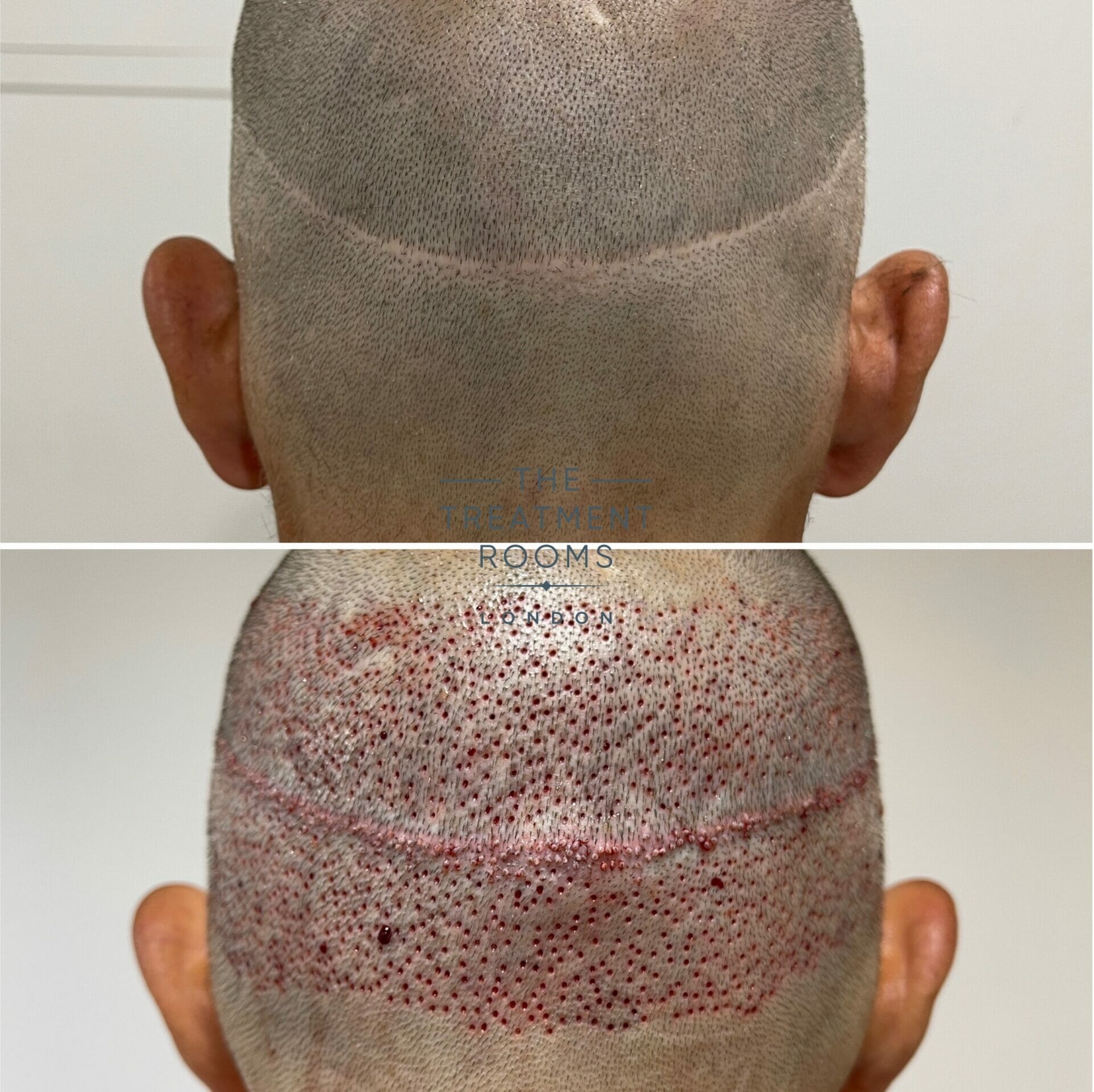
In FUE hair transplant surgery, the extraction process leaves small, pinpoint scars scattered along the sides of the scalp. This scarring is often concealed, even when hair is cut shorter.
In FUT hair transplant surgery, patients will be left with a linear scar across the back and sides of the scalp, which is concealed when hair grows a little longer.
Is there a difference in results between FUE and FUT?
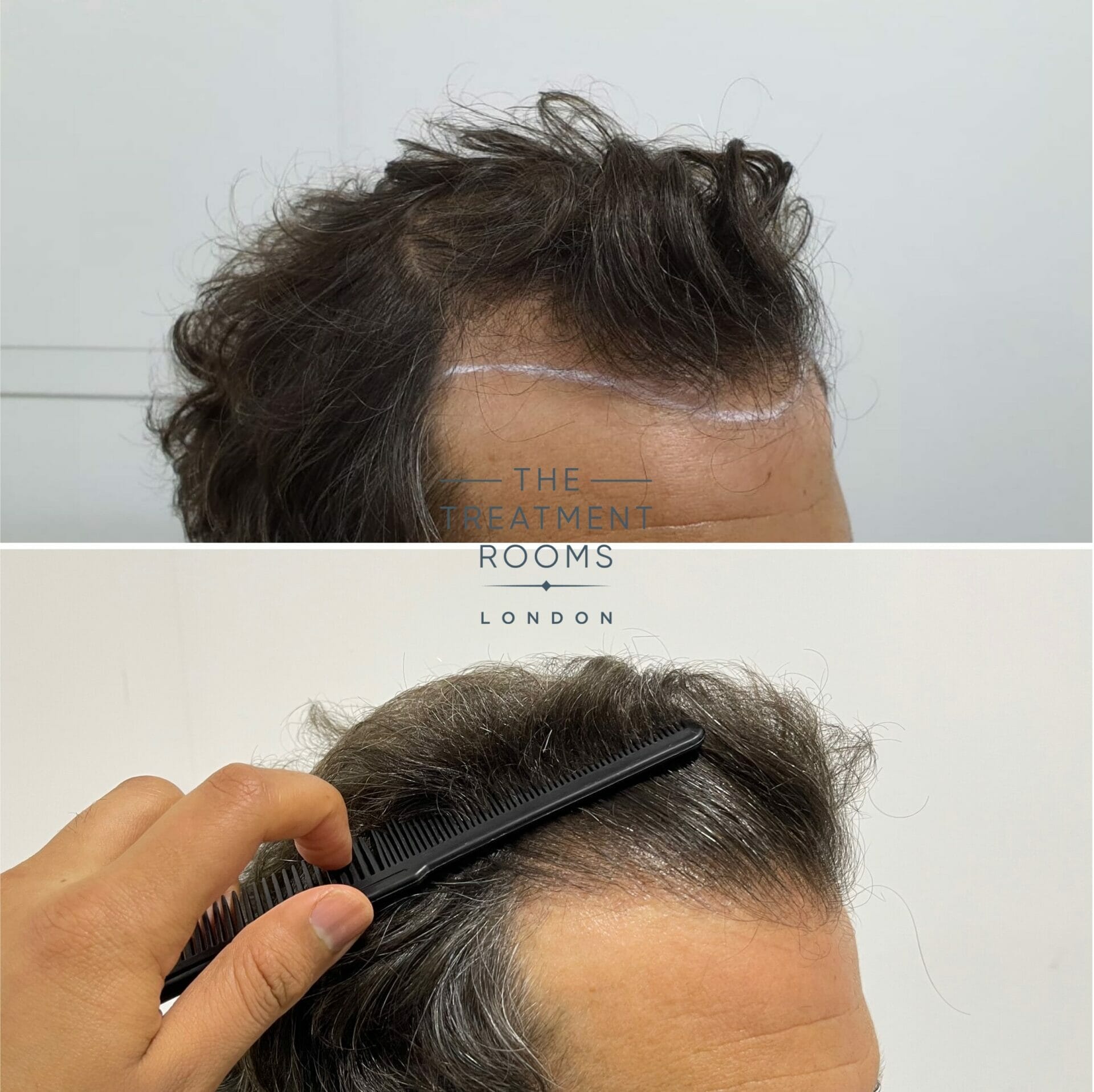
Both the FUE and FUT techniques offer the same results in hair regrowth. You can restore hair in a hairline, temples, or crown where hair has previously been lost, or in an area where you previously had no hair.
However, if a significant amount of grafting is required, the FUT technique can yield better results, as it typically yields more hair to transplant in 1 surgical session.
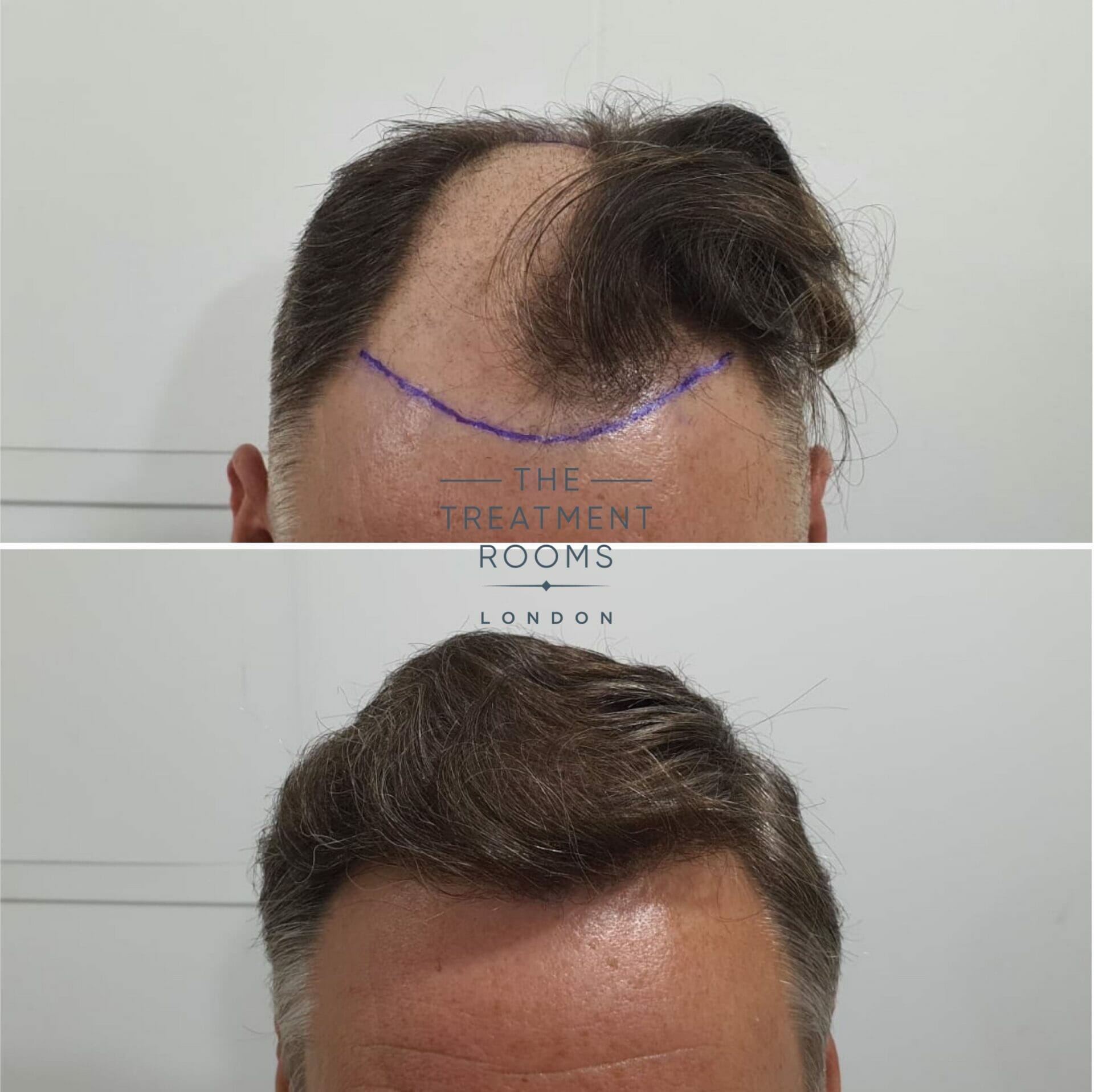
FUE vs FUT Costs
You can expect the more modern FUE technique to be more expensive than the FUT technique at the majority of hair transplant clinics. The extent of the work required will also determine the price. Patients who require more grafts may find that FUT allows them to stay within their budget.
Take a look at our hair transplant costs page for more information. You can also use our graft calculator page to understand how many grafts you are likely to require for your hair transplant.
FUE and FUT Hair Shave Differences
Patients concerned about shaving their hair for surgery should carefully consider hair transplant methods. It is often the case that women and transgender patients who wish to lower their hairline or feminise their hairline don’t want to shave too much hair to achieve their outcome. We can perform both unshaven FUE and unshaven FUT hair transplants.
However, for patients who want an extensive hair transplant without shaving much hair, an unshaven FUT hair transplant may be better than an unshaven FUE hair transplant.
FUE vs FUT Recovery Differences
Because the FUT technique is more invasive, recovery time is typically longer. While recovery time is 5 to 7 days with an FUE hair transplant, FUT patients may need 10 to 15 days to resume all daily activities. Furthermore, people who have had a FUT hair transplant need to be especially careful with the stitches at the donor site.
For more information, please refer to our guide to hair transplant aftercare and recovery.
Is there a difference in success rates between FUE and FUT?
Despite their differences, the success rates of the FUE and FUT hair transplant techniques are similar. How good the final results of your hair transplant are is more dependent on other factors – such as how well the surgeon performs the procedure and aftercare treatment – rather than which technique was used.
Is FUE or FUT hair transplant surgery more painful?
Both procedures use local anaesthesia to numb the scalp, so you shouldn’t feel pain during the procedure. It is common for patients who undergo FUE hair transplant surgery to be comfortable after the procedure, with very minimal pain reported, if at all.
In contrast to FUE, patients who have FUT hair transplant surgery may complain of pain in their donor area that has been stitched. This is common and should subside. Patients are given pain-relieving medication to take at home to help reduce their discomfort.
Is FUE or FUT faster to have?
Both techniques can take 6-8 hours to perform. For large FUT hair transplant sessions, the procedure may take 10-12 hours to complete. Both methods will give you results within 12-18 months after surgery.
Does FUE or FUT give more realistic results?
Both FUE and FUT hair transplant techniques give equivalent, realistic results for patients. Sometimes our Surgeons will recommend one method over another for specific requirements and hair types to achieve a more realistic, denser-looking outcome. This is discussed in a detailed consultation with them.
FUE hair transplant pros and cons
Pros
- Less painful recovery period than FUT
- No stitches required
- No linear scarring
- Short hair is possible without a scar being visible
- The donor site heals more quickly than FUT
Cons
- Lower yield of hair compared to FUT
- More expensive than FUT
- Larger sections of your scalp (back and sides) will need to be shaved
- A more time-consuming procedure than FUT
FUT hair transplant pros and cons
Pros
- Can be cheaper than FUE
- The procedure takes less time
- Easier to perform larger hair transplant sessions, taking more hair grafts
- It may be more suitable for some younger patients to have an FUT first, and then an FUE if further treatment is required in the future
Cons
- Stitches are required
- Recovery time is longer
- Healing time is longer
- The recovery period is less comfortable
- There is the possibility of visible scarring
- Scars require longer hair to cover them
Which hair transplant technique is best for me?
Every patient is different, and it can be hard to choose the best technique for you. That’s why the team at The Treatment Rooms London is here to help. Our surgeons offer a wealth of experience in performing FUE and FUT hair transplant surgery. They can provide counselling for both surgeries and determine which option is best for a patient’s specific requirements.
We offer a consultation so you can meet us in person and ask any questions you may have. We’ll evaluate your hair follicles to determine how many grafts you will need for the procedure, and discuss what the best technique is for you.
Take peace of mind from the expert level of care provided by The Treatment Rooms London’s experienced hair transplant surgeons.
At our hair transplant clinic, situated in the heart of London, you’ll benefit from the most advanced treatments available, performed using state-of-the-art technology. Feel at ease in a welcoming environment with staff dedicated to providing a personalised care experience and going the extra mile. Are you ready for your FUE or FUT hair transplant consultation? Call the experts at The Treatment Rooms London on 020 8706 0076 or use our contact form.
Share:
Authored by

Dr Roshan Vara
Dr. Roshan Vara is a renowned hair transplant surgeon in London and the Co-Founder of our award winning hair transplant clinic, The Treatment Rooms London.He has over 10 years of experience in hair transplant surgery and is recognised for delivering natural-looking results through ethical, patient-centred care. He is a Full Medical Member of BAHRS and an Associate Member of ISHRS, reflecting his commitment to the highest standards in modern hair restoration.
Reviewed by

Dr Dilan Fernando
Dr. Dilan Fernando is regarded as one of the best hair transplant surgeons in London and Co-Founder of The Treatment Rooms London. He has over 10 years of experience in hair transplant surgery and is known for his meticulous technique and commitment to ethical practice. He served on the Executive Committee of BAHRS from 2020 to 2024, helping to shape industry standards for patient safety and quality of care. Dr. Fernando personally performs each surgery, ensuring natural results built on trust and experience.
Book a Consultation
Related Blogs

What to Eat and Avoid After a Hair Transplant
August 7, 2026
Key Takeaways: After a hair transplant, you can resume your usual diet as soon as you feel…

Gabriel Magalhães Hair Transplant: His Journey and Our Full Expert Analysis
August 3, 2026
Key Takeaways: 1. Did Gabriel Magalhães have a hair transplant? Gabriel Magalhães confirmed his hair transplant in…
What to Know About Stress and Alopecia Areata
August 3, 2026
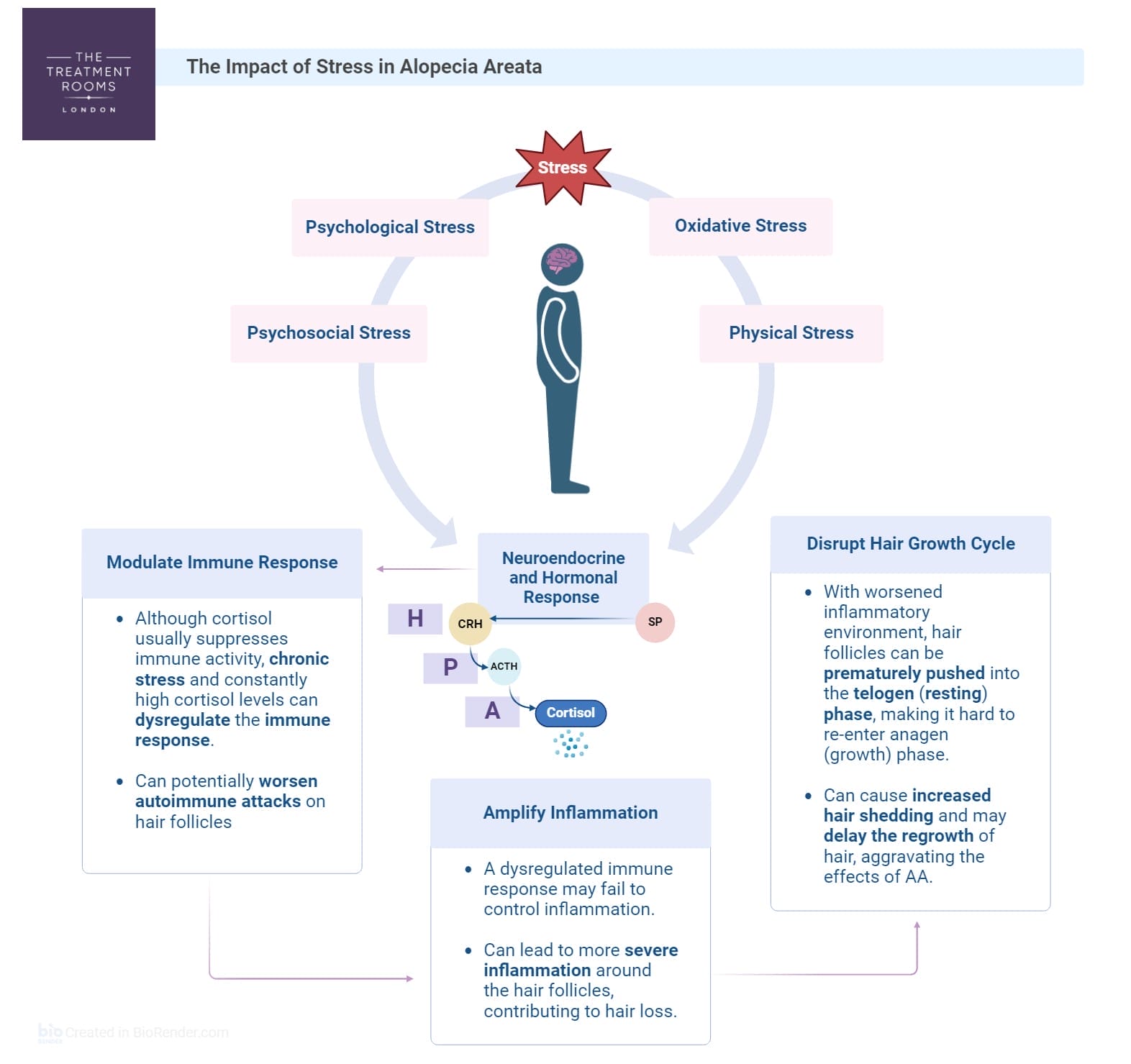
Key Takeaways: Alopecia areata is an autoimmune condition in which the immune system attacks the hair follicles,…

Female Hair Transplant Guide
July 9, 2026
If you’re a female experiencing hair loss, you may be considering getting a female hair transplant. We…
Dr Vara featured on ITV’s This Morning
June 17, 2026
When ‘Nice Hair Transplant’ Isn’t The Compliment You Were Hoping For… When our repair surgery patient Shaun…
2026 World Cup Stars and Hair Transplant Speculation: 5 Footballers to Watch Out For
June 9, 2026
Key Takeaways As the 2026 FIFA World Cup approaches, some of football’s biggest names will once again…

A Guide To Double Crowns: What Are They?
June 5, 2026
Quick Summary of Double Crowns What is a Double Crown? The crown of your head refers to…
Finasteride and Its Side Effects: What You Need to Know
June 4, 2026
Quick Summary: Finasteride and Its Side Effects Finasteride for Hair Loss: Originally developed for prostate enlargement, Finasteride…
Minoxidil For Eyebrows – Does It Work?
June 3, 2026
Key Takeaways: Understanding Eyebrow Hair Loss: Eyebrow hair loss is commonly caused by over-plucking, but other autoimmune…