

To ensure you sleep safely after your FUE hair transplant, we advise placing your head snugly into a neck pillow, then resting your head and neck pillow on a standard bed pillow. This will prop your neck up slightly, preventing your head from turning and damaging your transplanted follicles.
By sleeping this way, you are slightly upright, ensuring you don’t worsen swelling or roll over in bed damaging transplanted grafts following your hair transplant.
For patients who have undergone an FUT hair transplant, we advise sleeping a touch more upright to prevent pressure on your donor incision site and ensure the area heals as planned.
Specific advice on sleeping after an FUT and FUE hair transplant is given below.
We give patients detailed instructions including diagrams on how to sleep when they have surgery in our clinic. It can vary from patient to patient dependent on the area they are having transplanted. The main advice is being extra careful when sleeping for the first 10 days after having a hair transplant
Dr Vara, Hair Transplant Surgeon and Director at The Treatment Rooms London
When can I sleep normally after an FUE hair transplant?
Your hair follicles will take 14 days to settle into the scalp after an FUE hair transplant, so it is important to sleep properly to avoid damaging the implanted hair.
- Sleeping During Days 1-4: sleep on your back with a pillow behind your head and a travel pillow round your neck
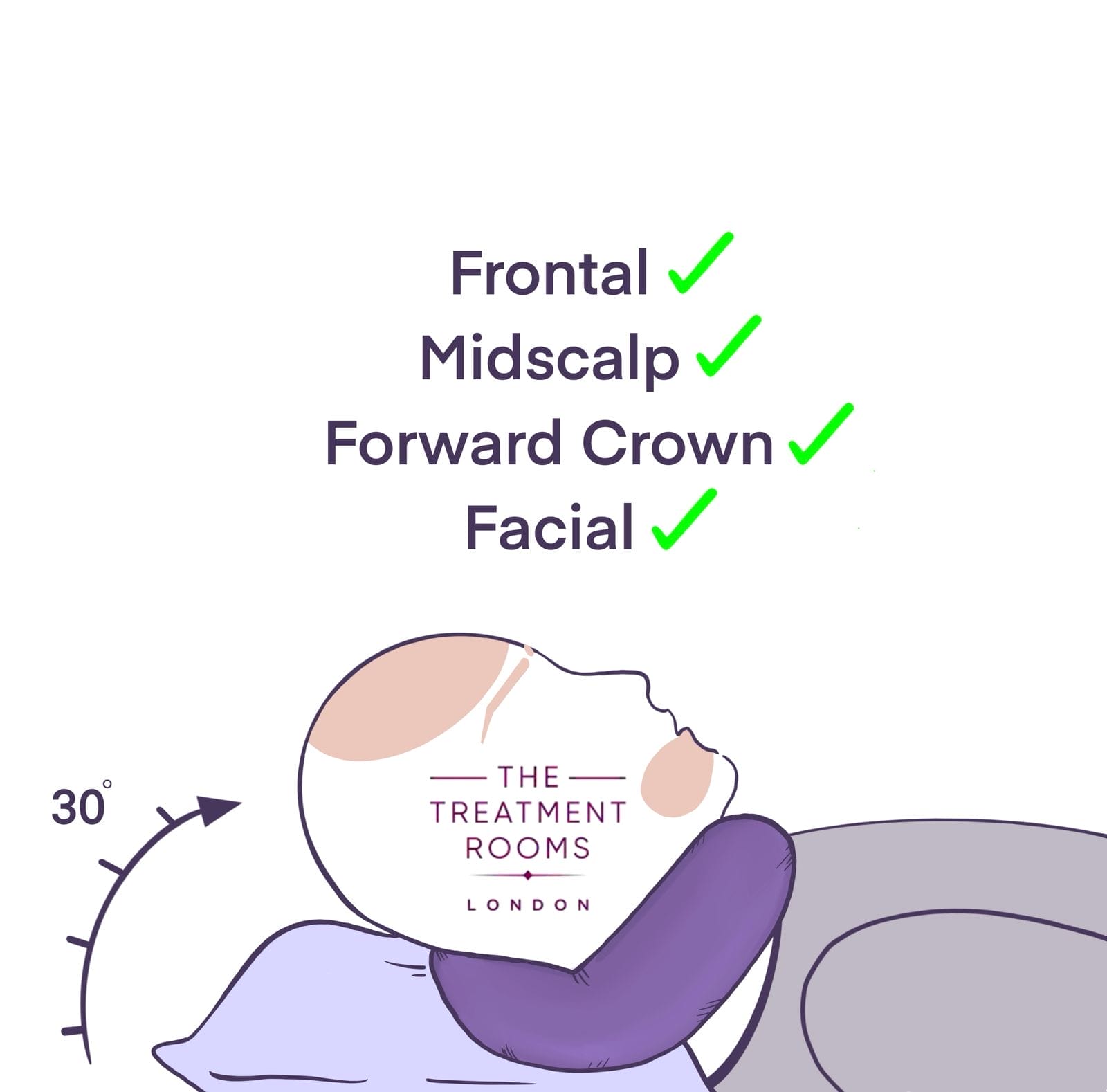
- Sleeping During Days 5-10: You can sleep on your side. Please don’t sleep and place pressure directly on the area that has been operated on
- Sleeping from Day 14 onwards: you can sleep in any position
By 10 days following surgery, you should be able to sleep in most positions without significant discomfort. Please note that applying too much pressure to your hair grafts can still damage them. Our advice is not to sleep face down for 14 days.
When can I sleep normally after an FUT hair transplant?
After an FUT hair transplant, you will have a linear cut at the back of your head that is stitched and healing. We advise sleeping upright for the first 4 days after surgery to prevent pressure on this area. It will allow your scar to heal better and reduce the pain you have after your hair transplant.
- Sleeping During Days 1-4: sleep upright with a pillow behind your head and a travel pillow round your neck
- Sleeping During Days 5-10: you can sleep on your side. Please don’t sleep and place pressure directly on the area that has implanted grafts
- Sleeping From Day 14 onwards: you can sleep in any position
Please note, that applying too much pressure on your hair grafts still has the potential to damage them. Our advice is not to sleep face down for 14 days.
Sleeping after a hair transplant: the dos & don’ts
In this section, we offer some advice on sleeping after a hair transplant:
DO:
- Keep your head slightly elevated when sleeping in the first 5 days after a hair transplant
- You can use extra pillows to elevate your head
- You can use a travel pillow to help prevent yourself from turning at night
DON’T:
- Toss and turn when trying to get to sleep
- Rub your head against the head board of the bed
- Take any sleeping pills if at all possible, as you may wake up during the night and feel disorientated- potentially putting yourself at risk of hitting your head
What is the best position to sleep in after a hair transplant?
The best position to sleep in after a hair transplant is on your back, with your head elevated above your heart. This will help reduce swelling but also prevent your head from turning and damaging grafts at night.
Try to sleep on 1 or 2 pillows with a travel pillow around your neck to prop your head forwards and up. By sleeping in this position, you can reduce the risk of causing damage to your hair and increasing inflammation of your scalp.
Remember, the purpose of sleeping in this position after hair transplantation is to avoid contact between the recipient (transplant) area and the pillow or bed. Once your grafts have become secure, around the two-week mark, you will be able to sleep how you wish without posing a risk to your hair.
How long does a hair transplant take to heal?
During the first days after a hair transplant, both the donor area (from where the hair grafts were taken) and the recipient areas (where the new hair grows) are healing. The donor area is bandaged initially, and some post-procedural oozing and inflammation are considered normal.
As scabs form on these areas, they will get itchy. To aid the healing process, you should never pick at or scratch the scabs as this can increase the risk of folliculitis (infection). Allow them to wash away naturally. If you are suffering from an itchy scalp after having a hair transplant, we recommend using these treatments and tips:
- Use a saltwater spray
- Take antihistamines
- Use medicated shampoo
- If advised by your Surgeon, apply a steroid scalp solution
- Please don’t scratch the itch
By around week 2, inflammation should have subsided and you should start to feel better. Itching can persist for a little longer and it should eventually settle. It’s also important to take precautions such as avoiding intense physical exercise for two weeks or so.
At 1 month post surgery, the healing process should be complete and you should feel minimal discomfort. Hair would typically have grown to cover the donor area, but it should be noted that the recipient area – where your new hair won’t emerge for another 2 months or so – is still delicate and should be treated with care.
When are hair grafts secure after a hair transplant?
As we have outlined in the sections above, the bulk of the healing process following a hair transplant takes place in the first two weeks.
From week 2 onwards, you can expect the hair grafts transplanted in the recipient area to be healed and secure. That means there is much less chance of damaging them while you sleep. Your hair will then fall out before growing back. A full growth journey is shown in our hair transplant timeline.
Preparing To Sleep After Hair Transplant Surgery
You should ask your hair transplant Surgeon during your consultation how you plan to sleep after your surgery. They should be able to relieve any concerns or anxieties you have.
They will be able to plan how you will sleep after your hair transplant no matter where you have had your surgery in your scalp, whether that is in your hairline, crown, temples, eyebrows or beard. Our Surgeons have a deep expertise in providing surgery for men, women and transgender patients who wish to undergo a hair transplant. Their work can be seen in our world renowned hair transplant gallery.
For more information about how to sleep after a hair transplant, and what you can do to help your recovery process go as smoothly as possible, please contact The Treatment Rooms London. We are on-hand to provide you with expert help and advice to ensure you receive the best possible care.
Share:
Authored by

Dr Roshan Vara
Dr. Roshan Vara is a renowned hair transplant surgeon in London and the Co-Founder of our award winning hair transplant clinic, The Treatment Rooms London.He has over 10 years of experience in hair transplant surgery and is recognised for delivering natural-looking results through ethical, patient-centred care. He is a Full Medical Member of BAHRS and an Associate Member of ISHRS, reflecting his commitment to the highest standards in modern hair restoration.
Reviewed by

Dr Dilan Fernando
Dr. Dilan Fernando is regarded as one of the best hair transplant surgeons in London and Co-Founder of The Treatment Rooms London. He has over 10 years of experience in hair transplant surgery and is known for his meticulous technique and commitment to ethical practice. He served on the Executive Committee of BAHRS from 2020 to 2024, helping to shape industry standards for patient safety and quality of care. Dr. Fernando personally performs each surgery, ensuring natural results built on trust and experience.
Book a Consultation
Related Blogs

Jude Law Hair Transplant: Before, After, and His New Hairline
March 31, 2026
Jude Law, the British actor known for roles in The Talented Mr Ripley, Sherlock Holmes, and Fantastic…
Hair Loss In Your 20s- What You Need To Know
March 24, 2026
Key Takeaways Hair thinning or excessive hair shedding in your 20s is often due to genetics, stress,…
How Long Does a Hair Transplant Take? The Average FUE & FUT Surgery Duration Explained
March 24, 2026
Key Takeaways Are you considering a hair transplant and wondering how long the process takes? The answer…

Steve Carell Hair Transplant: Before, After, and His New Hairline
March 2, 2026
Steve Carell, best known as Michael Scott in The Office, began sparking curiosity amongst fans when his…

What Is Nutrafol and Does It Really Work for Hair Growth?
February 24, 2026
Key Takeaways Hair thinning can feel frustrating and confusing. You might notice more hair falling out in…

Peppermint oil for hair growth: Evidence, Benefits, Uses & Safety
February 24, 2026
Key Takeaways What Is Peppermint Oil? Peppermint oil, also known as Mentha piperita oil, is an essential…

Why Winter Hair Loss Happens and All You Need to Know
February 6, 2026
Key Takeaways As temperatures drop and indoor heating kicks in, many people notice their hair feels drier,…

Can You Take Finasteride With Minoxidil For Hair Loss?
February 5, 2026
Key Takeaways Consistency Matters: Stopping treatment often leads to a recurrence of hair loss; ongoing medical guidance…
Does Finasteride Cause Erectile Dysfunction?
February 3, 2026
Key Takeaways Finasteride can cause erectile dysfunction in some men, but it isn’t common. Most men who…