

7 days after your hair transplant, you can expect to see the scabs in your transplanted area washing away, leaving the newly implanted hair visible with a mild amount of redness in your skin. This is normal, and an example of a patient’s recovery 7 days after hair transplant surgery is shown below.

How long does hair transplant recovery take?
Recovering after a hair transplant normally takes 1-2 weeks3. Within the immediate few days after the procedure, you may experience mild symptoms like discomfort, swelling and scabbing4, but these should all subside within a week.
Over the next few weeks and months, your newly transplanted hair may fall out; this is a normal part of the healing process. By the third or fourth month, you should be able to see new hair growth starting to emerge. You can read about this process in our dedicated article: How long after a hair transplant does hair start to grow?
After a year or so, the full results of your transplant should become evident5. However, everyone is different, so individual healing times can vary based on how well you perform post-operative care and adhere to your surgeon’s instructions.
Hair transplant recovery stages
While many patients are keen to see the results of their hair transplant as soon as possible, patience is key. Taking the time to understand the hair growth stages that will occur throughout your recovery can help make you aware of what to expect. These include6:
- Shedding phase (2 – 6 weeks) – this initial stage is a normal part of the hair transplant process.
- Latent phase (3 – 4 months) – during this stage, the transplanted hairs will remain dormant and may not be visible. However, underneath the surface, they will be preparing for the anagen (growth) phase.
- Anagen phase (6 – 12 months) – this is the active growth phase, during which time the transplanted hairs will start to emerge and thicken. While the rate of growth varies between individuals, most patients should see significant results within a year.
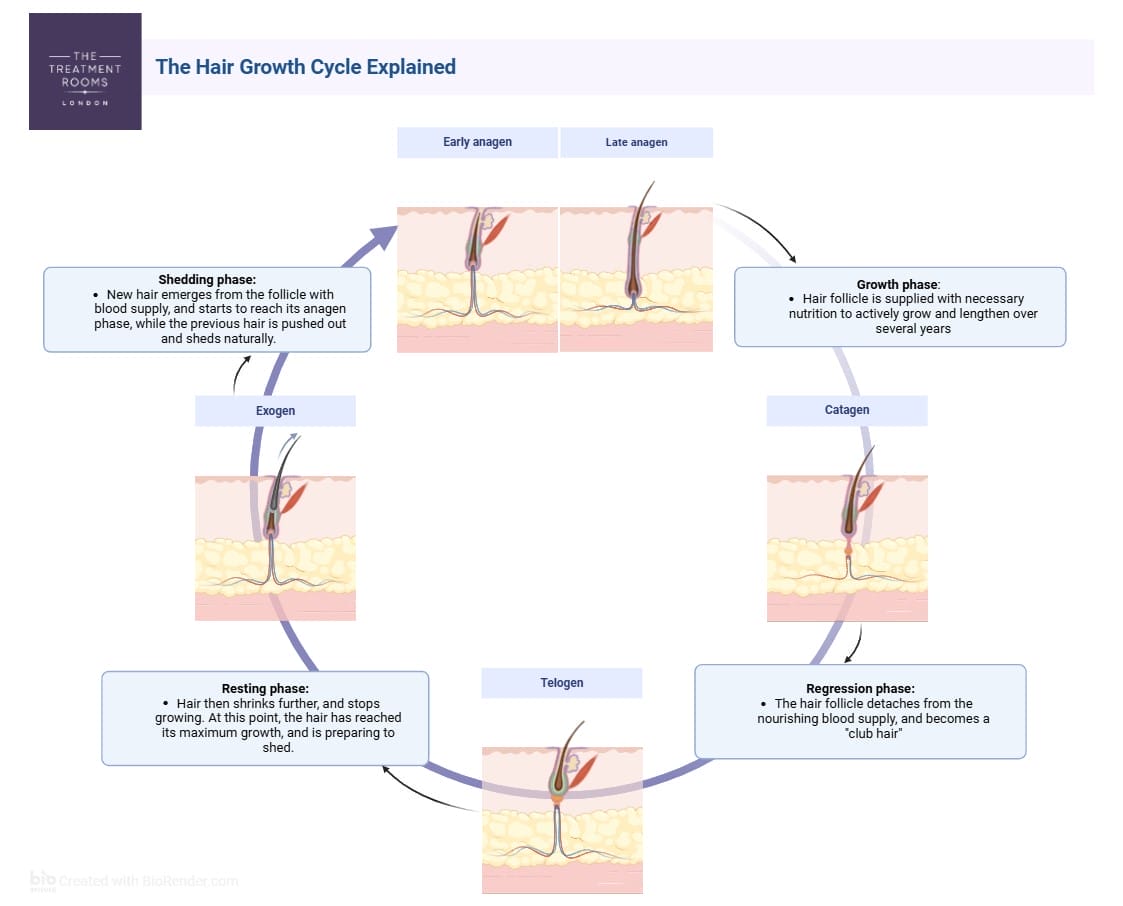
Since the hair growth cycle is not perfectly synchronised, many patients may experience shedding throughout the entire recovery process, rather than only for a few weeks.
However, as your transplanted follicles become more established, this will gradually subside. You should see the outcome of your hair transplant at around 12 months, and you can see hundreds of before-and-after hair transplant surgery cases in our gallery.
7 days after the hair transplant: what to expect
The first 7 days after your transplant are important for ensuring your scalp is recovering and your grafts are securely placed.
Days 1 & 2: The initial recovery
During the first two days after the procedure, you may experience some discomfort, swelling and redness around the recipient site.
While having an FUE hair transplant is minimally invasive with little postoperative discomfort, we would recommend giving your scalp time to recover by either working from home or taking up to 1-2 weeks off work.
You should also follow your surgeon’s advice and post-operative instructions diligently during these early days, avoiding harsh chemical hair dyes, sun exposure or washing your hair to reduce the risk of potential complications.
Days 3 & 4: Managing pain & discomfort
As you progress into the third and fourth days, you may find your donor area is sensitive. It is rare for the recipient site to feel uncomfortable, and it is you should be able to take some simple painkillers at home. It is important to flag any concerns with your Surgeon if there is pain you can’t manage at home.
To manage any symptoms, your surgeon may advise on over-the-counter pain medications and recommend certain self-care strategies.
On day four after your surgery, you will also be advised to soak and wash your hair for the first time after your transplant. But, before you do, you will need to follow your surgeon’s recommendations and guidance to do this successfully.
This will involve avoiding rubbing your hair with rough towels or scratching your scalp. See our step-by-step hair washing guide for detailed instructions.
Days 5 & 6: Scabbing & crusting
The fifth and sixth days post-transplant mark a significant phase in the recovery process, with scabbing and crusting starting to wash away.
While some patients find this distressing, scabbing can be normal. We would recommend increasing the washing intensity between day 6 and day 10 to ensure these scabs start to wash away. You can read more about this topic in our dedicated article – When Can You Remove Scabs After Having a Hair Transplant?
Although they might be itchy, you must avoid picking or interfering with the scabs in any way, as this could damage the hair grafts. Your surgeon will be able to recommend specific shampoos or products for you to use to help reduce the itchiness of your scalp.
Day 7: Less scabbing, mild redness and the start of shedding
From the seventh day and beyond, your scabs should start to be washed away, and you may notice your hair starting to fall out after having your hair transplant.
As mentioned earlier, shedding after your hair transplant is an entirely normal part of the hair growth cycle, where new hair forms in the follicles and will begin to grow over the next 8–12 months. This can happen in areas of transplanted hair, non-transplanted hair and, in rare cases, the donor area itself.
While there is no proven way to reduce the likelihood of this hair loss happening, certain medications like finasteride and minoxidil can help thicken your hair8 and may be recommended by your surgeon.
Hair transplant post-operative care
Moving beyond the first week, maintaining proper post-operative care is crucial for ensuring the long-term success of your hair transplant.
This involves keeping your scalp clean and healthy, as well as avoiding activities that could harm the transplanted grafts or cause you stress. We recommend waiting 2 weeks before returning to exercise and 4 weeks before returning to contact sports.
At The Treatment Rooms London, our personalised aftercare recovery packages take into account a wide range of personal requirements and include a bundle of essential medications and instructions to help you care for your transplant at home.
Get in Touch
Ready to elevate your hair restoration journey? Book a free consultation call with our London-based FUE hair transplant clinic.
Our award-winning team, including leading London hair transplant surgeons Dr Fernando and Dr Vara, is here to support you every step of the way.
Sources
- Liu, F., Miao, Y., Xingdong, L., et al. (2018) The relationship between self-esteem and hair transplantation satisfaction in male androgenetic alopecia patients. Journal of Cosmetic Dermatology. 18(5): 1441 – 1447. Available at: https://onlinelibrary.wiley.com/doi/full/10.1111/jocd.12839
- Mohebi, P. & Rassman, W. (2008) Psychology of hair transplants. Hair transplant forum international. 18(2): 46 – 47. Available at: https://www.ishrs-htforum.org/content/htfi/18/2/41.full.pdf
- Zito, P. & Raggio, B. (2023) Hair Transplantation [Updated 2023 Feb 14]. In: StatPearls [Internet]. Treasure Island (FL): StatPearls Publishing. Available at: https://www.ncbi.nlm.nih.gov/books/NBK547740/
- Kerure, A. & Patwardhan, N. (2018) Complications in Hair Transplantation. J Cutan Aesthet Surg. 11(4): 182 – 189. Available at: https://www.ncbi.nlm.nih.gov/pmc/articles/PMC6371733/
- Chouhan, K., Roga, G., Kumar, A. & Gupta, J. (2019) Approach to Hair Transplantation in Advanced Grade Baldness by Follicular Unit Extraction: A Retrospective Analysis of 820 Cases. J Cutan Aesthet Surg. 12(4): 215 – 222. Available at: https://www.ncbi.nlm.nih.gov/pmc/articles/PMC6967160/
- Hoover, E., Alhajj, M. & Flores, J. (2023) Physiology, Hair [Updated 2023 Jul 30]. In: StatPearls [Internet]. Treasure Island (FL): StatPearls Publishing. Available at: https://www.ncbi.nlm.nih.gov/books/NBK499948/
- Parsley, W. & Perez-Meza, D. (2010) Review of Factors Affecting the Growth and Survival of Follicular Grafts. J Cutan Aesthet Surg. 3(2): 69 –75. Available at: https://www.ncbi.nlm.nih.gov/pmc/articles/PMC2956960/
- Suchonwanit, P., Thammarucha, S. & Leerunyakul, K. (2019) Minoxidil and its use in hair disorders: a review. Drug Des Devel Ther. 13: 2777 – 2786. Available at: https://www.ncbi.nlm.nih.gov/pmc/articles/PMC6691938/
Share:
Authored by
Dr Roshan Vara
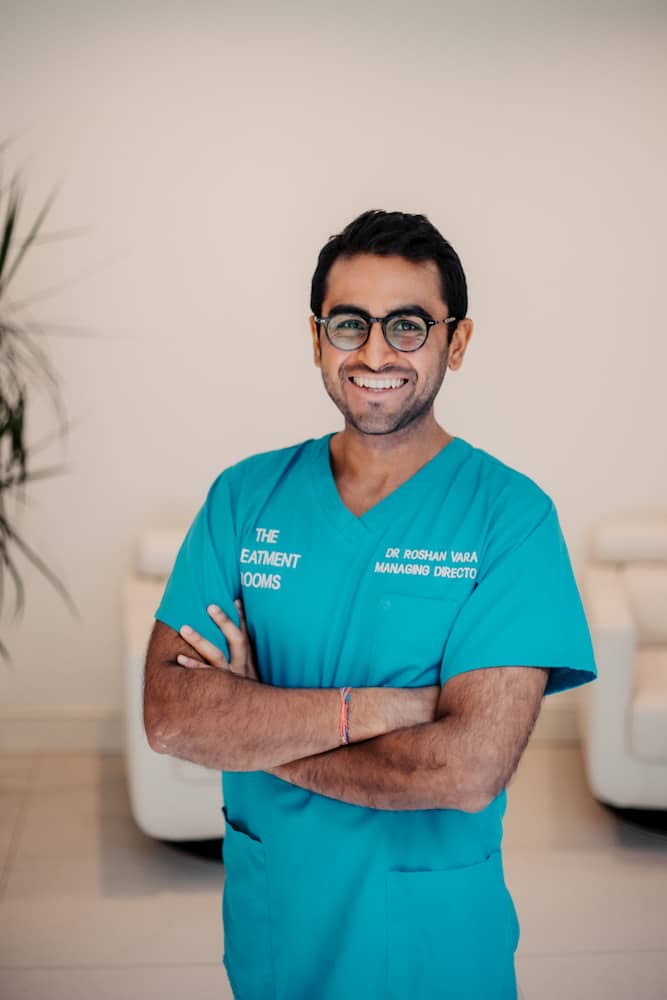
Dr. Roshan Vara is a renowned hair transplant surgeon in London and the Co-Founder of our award winning hair transplant clinic, The Treatment Rooms London.He has over 10 years of experience in hair transplant surgery and is recognised for delivering natural-looking results through ethical, patient-centred care. He is a Full Medical Member of BAHRS and an Associate Member of ISHRS, reflecting his commitment to the highest standards in modern hair restoration.
Reviewed by
Dr Dilan Fernando
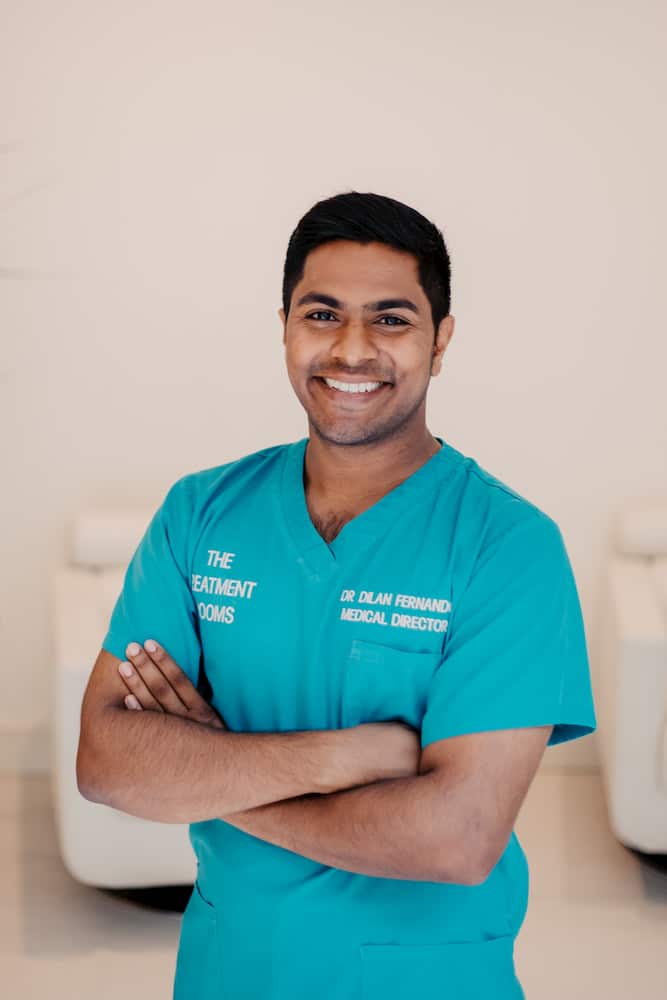
Dr. Dilan Fernando is regarded as one of the best hair transplant surgeons in London and Co-Founder of The Treatment Rooms London. He has over 10 years of experience in hair transplant surgery and is known for his meticulous technique and commitment to ethical practice. He served on the Executive Committee of BAHRS from 2020 to 2024, helping to shape industry standards for patient safety and quality of care. Dr. Fernando personally performs each surgery, ensuring natural results built on trust and experience.
Book a Consultation
Related Blogs

Female Hair Transplant Guide
July 9, 2026
If you’re a female experiencing hair loss, you may be considering getting a female hair transplant. We…
Dr Vara featured on ITV’s This Morning
June 17, 2026
When ‘Nice Hair Transplant’ Isn’t The Compliment You Were Hoping For… When our repair surgery patient Shaun…

2026 World Cup Stars and Hair Transplant Speculation: 5 Footballers to Watch Out For
June 9, 2026
Key Takeaways As the 2026 FIFA World Cup approaches, some of football’s biggest names will once again…

A Guide To Double Crowns: What Are They?
June 5, 2026
Quick Summary of Double Crowns What is a Double Crown? The crown of your head refers to…
Finasteride and Its Side Effects: What You Need to Know
June 4, 2026
Quick Summary: Finasteride and Its Side Effects Finasteride for Hair Loss: Originally developed for prostate enlargement, Finasteride…
Minoxidil For Eyebrows – Does It Work?
June 3, 2026
Quick Summary: Eyebrows & Minoxidil Understanding Eyebrow Hair Loss: Eyebrow hair loss is commonly caused by over-plucking,…

30 Footballer Hair Transplant Transformations: All You Need to Know
May 22, 2026
Key Takeaways Visible transformations in footballers show that hair transplants can significantly improve the appearance of the…
Can I Get a Hair Transplant While Using Testosterone Replacement Therapy(TRT)?
May 18, 2026
Key Takeaways Testosterone Replacement Therapy (TRT) is commonly prescribed for men with low testosterone, a condition called…

12 Hair Styles for Women With Thin Hair On The Crown
May 7, 2026
Key Takeaways: In this article, we’ll look at some of the best haircuts and practical hair-styling ideas…