

What is a DHI Hair Transplant?
“DHI” stands for “Direct Hair Implantation” and is ultimately a marketing term used by many clinics. It often refers to when your hair transplant surgeon utilises a specialised sharp implanter pen to re-implant hair into the scalp and the latest guidance by the International Society of Hair Restoration Surgery advises that DHI does not actually refer to any specific hair transplant method and is ultimately a marketing term.
The Treatment Rooms London has always specialised in the use of implanter pens in hair transplant surgery. Specifically, our Surgeons utilise dull implanter pens to reinsert grafts into pre-made incision sites. Sometimes our Surgeons utilise sharp implanters to reinsert hair back in the scalp, particularly in unshaven hair transplant surgery.
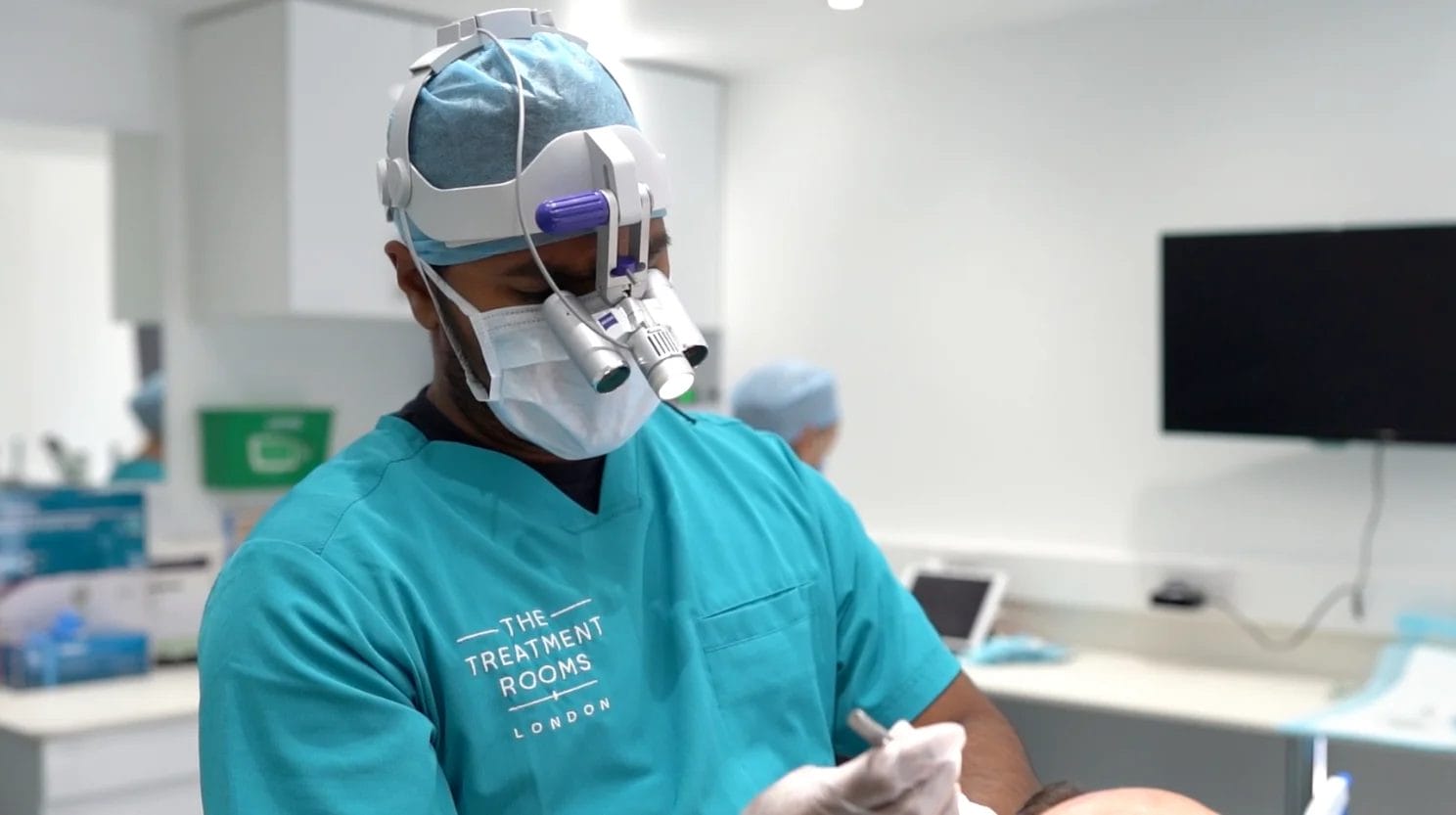
DHI hair transplant surgery performed by Dr Vara
Both types of implanter pen hair transplant allow our Surgeons to precisely re-implant hair so it grows at the exact angle and direction required for a natural outcome. All patients are operated on by our Surgeons using this technique to help achieve high-quality results that match the natural direction, angulation, and flow of the hair. This means results created with an implanter pen blend nicely with existing hair such as a cowlick or a crown spiral.
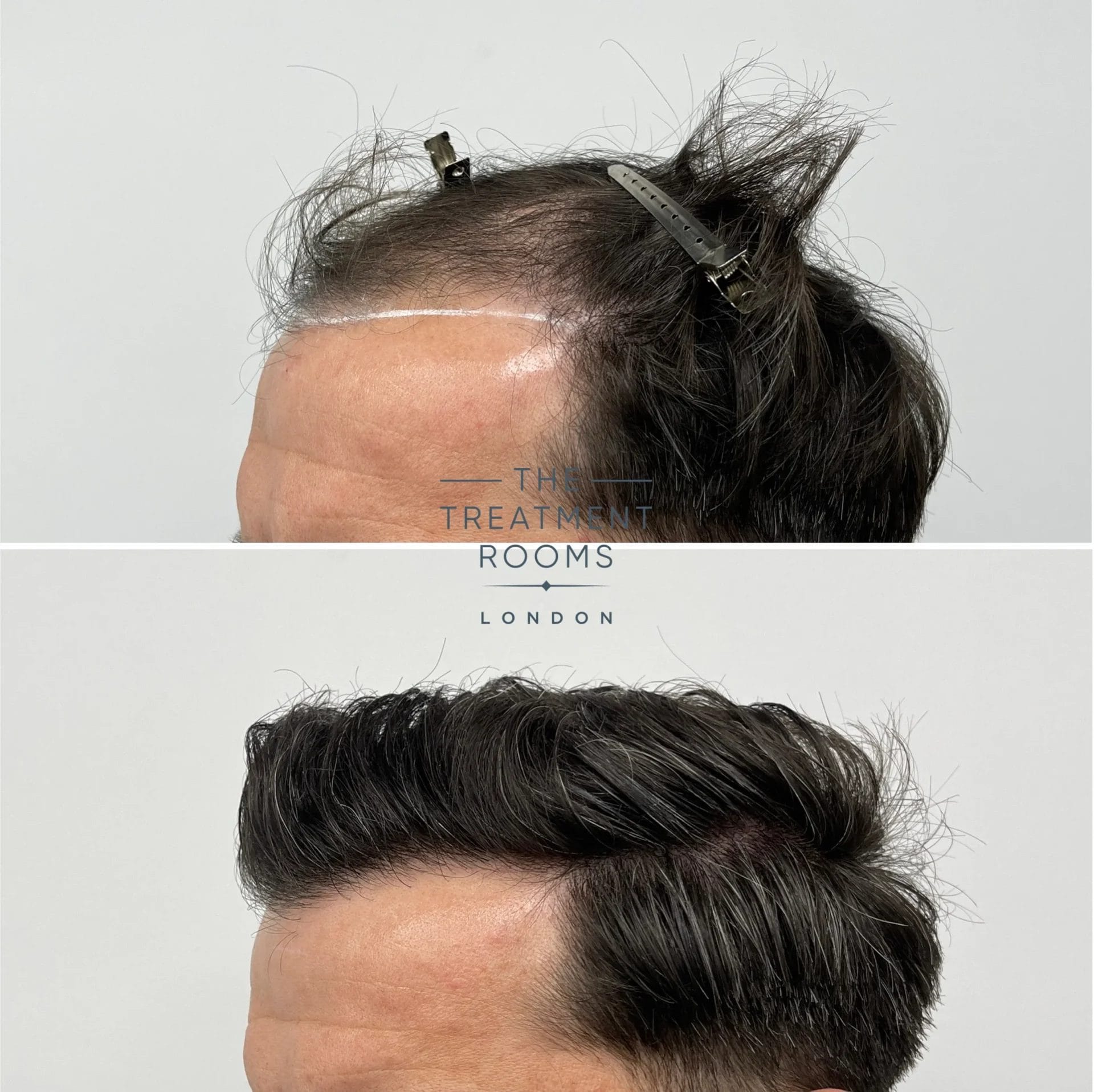
If you wanted to find out more and view our results, then please navigate the following link: Before & After DHI Hair Transplantation
DHI hair transplant surgery process
The process of DHI hair transplant surgery can be performed using sharp or dull implanter pens. The main steps of DHI hair transplant surgery are:
- Drawing of hairline, crown or temples (1 hour)
- Anaesthesia of donor and recipient site (30 minutes)
- Extraction of hair using the FUE or FUT technique (2 hours)
- Lunch (30-45 minutes)
- Implantation of hair using DHI implanter pen (2 hours)
- Recovery 4-7 days
DHI Hair Transplant Surgery using Implanter Pens
In a hair transplant, grafts are extracted by Follicular Unit Excision (FUE) or Follicular Unit Transplantation (FUT) from the donor site. The grafts will then need to be re-implanted into recipient sites (holes where hair grafts are inserted), and this can be done using two primary methods: sharp or dull needle implant pens.

Hair Transplant Surgery Using Sharp Implanter Pens
Implanter pens re-insert grafts into the scalp at the same time a recipient site is created using a sharp needle. This can be misleadingly referred to as Direct Hair Implantation (DHI), as hairs are described as being “directly implanted” with a needle/ sharp implantation pen (1). There are two types: Choi Implanter Pens and Lion Implanter Pens. Both are very similar and don’t make a difference to the outcome of a hair transplant.
Pre-Made Recipient Sites & Using Dull Implanter Pens
Grafts can be reinserted into the scalp with “pre-made” holes or recipient sites created by a needle. This technique generally occurs in 2 stages. The first stage involves the surgeon creating holes, or “recipient sites,” using a needle or blade. These sites are made at a specific angle and direction to match the existing hair. A Surgeon, nurse or hair technician then comes and places the extracted grafts into each of these sites using a dull implanter pen in the second stage. They are still able to control the direction and angle of the re-implantation to ensure hair grows our naturally.
We have always used implanter pens when carrying out hair transplant surgery in our clinic. We find patients recover faster and have better quality results with the technique. Whilst the technique is more laborious, we don’t mind and are happy to go the extra mile for our patients
Dr Vara, Hair Transplant Surgeon and Director at The Treatment Rooms London
How Do Implanter Pens Work?
The image below shows what a Lion implanter pen looks like. They come in different sizes depending on the size of the hair being implanted. Your hair transplant surgeon will decide which size is best for you on your surgery day. Implanter pens have a needle with a hollow tip. The graft can be placed into this hollow tip as shown in the diagram below.

When the end of the pen is inserted into the scalp, it places the graft into the hole. In DHI or sharp implanter pen surgery, the hole is created and the graft placed into it simultaneously- this is demonstrated in the infographic below. In dull implanter pen use, the pen introduces the graft into the skin into a pre-made skin incision. Both techniques yield the same outcome.

Benefits of DHI hair transplant surgery
DHI, also known as the implanter pen hair transplant surgery, has several benefits over the traditional forceps technique for re-implanting hair back into the scalp. We will go into some benefits of DHI hair transplant surgery below.
Surgeon-Led Care
For your hair transplant to be carried out using implanter pens, you will require both a nurse/technician and a hair transplant surgeon to operate on your scalp throughout your operation. Using implanter pens requires a high degree of skill and experience, and our Surgeons at The Treatment Rooms London will only provide this technique. This means you can be assured that you have a qualified Surgeon performing your hair transplant at all times, giving you the best possible chance of a result you are happy with.
Depth, Angulation and Density of Hair Transplantation
A Surgeon will be able to control the depth, angulation and density of the implantation meticulously using an implanter pen. This also yields natural-looking results, blending new transplanted grafts seamlessly into existing hair in the hairline, crown, beard, or eyebrows.
Increased Survival Rate of the Graft during Hair Transplantation
As the graft spends less time outside the body and is handled less, there is an increased rate of its survival. This means the transplanted follicle is given every chance to survive the operation.
Better Healing Times after Hair Transplantation
With less trauma to the transplanted grafts, we find a lower incidence of shock loss and shedding of transplanted hair compared to grafts re-implanted using forceps.
Implantation Between Hairs
The implanter pen allows a surgeon to be more precise in his placement of the graft. This is even more important if you are having hair implanted in-between existing hair. This is a type of surgery that is beneficial for patients having an unshaven hair transplant.
Downsides to implanter pen hair transplant surgery
Implanter pen hair transplant surgery tends to be more expensive. This is because the surgery requires the presence of 1 or 2 surgeons with an assisting team. We find there is no difference in the time taken to complete implanter pen hair transplant surgery vs regular forceps based implantation of grafts.
DHI Transplant Cost
The cost of a Direct Hair Implantation (DHI) transplant tends to range between £3,000 and £10,000 at The Treatment Rooms London, with factors that affect this price being influenced by:
- Graft count: The vast majority of patients will need 1,000 to 2,000 follicular units.
- Surgeon experience: our Surgeons have over 24 years combined experience with the DHI or implanter pen technique of hair transplant surgery and hence will charge higher on average.
Flexible Payment Plans and Financing
DHI hair transplants are now made more accessible by our 0% finance plans.
- Interest-only instalment plans at 0% interest across a 6-12 month period, allowing you to pay off the cost gradually.
- Flexible Payment: deposits are due at the time of booking and securing the date for surgery
Candidates for DHI Hair Transplant Surgery
There is no specific criteria for DHI hair transplant surgery. Patients who are candidates for hair transplant surgery will be elligible to have implanter pen or DHI hair transplant surgery too. Thereforem your eligibility for a DHI hair transplant depends on both hair-loss pattern and overall health.
Evaluating Hair-Loss Stability and Donor Supply
- Pattern severity: Men typically fall between Norwood II and V; women between Ludwig I and II.
- Stable hair loss: Patients should demonstrate minimal hair loss progression for at least 6–12 months either naturally or by the use of Minoxidil or Finasteride.
- Sufficient donor density: The back and sides of the scalp must have healthy, thick follicles to ensure a successful harvest without risking over-harvestation.
DHI Hair Transplant Consultation
All patients will receive a 1-1 consultation with their Surgeon. During your first meeting with our hair transplant surgeons will cover:
- Diagnostic assessment: Dermoscopic evaluation of follicle miniaturisation and donor zone mapping.
- Hairline design: Photographs taken from multiple angles to plan natural-looking hair transplant.
- Procedure overview: Explanation of the implanter pen technique versus traditional forceps methods for re-implanting hair.
- Cost and financing review: A transparent breakdown of costs, plus discussion of instalment or finance options if required.
Recovery Timeline after DHI Hair Transplant Surgery
The recovery process after a DHI hair transplant is much the same as regular hair transplant surgery using forceps. However, we tend to find the regrowth of your transplant hair tends to be quicker after surgery performed using implanter pens or the “DHI” method compared to implantation by forceps.
Day-by-Day Healing Guide
| Post-Op Days | Expected Symptoms | Key Aftercare Tips |
| Day 1–2 | Redness, tiny crusts around grafts | Gently spray saline solution; do not touch grafts |
| Day 3–5 | Peak swelling around the forehead and temples | Sleep semi-upright; use prescribed anti-inflammatories |
| Day 6–10 | Scabs begin sloughing | No picking; start gently, cup-method shampoo rinsing |
| Weeks 2–4 | Shedding of transplanted hairs is normal | Remain patient—new growth typically begins in month 3 |
| Months 3–6 | Fine, thin regrowth; occasional itching | Light scalp massage to boost circulation |
| Months 6–12 | Noticeable density increase; fuller appearance | Optional PRP or LLLT adjunct therapy for further enhancement |
Implanter pen “DHI” hair transplant with The Treatment Rooms London?
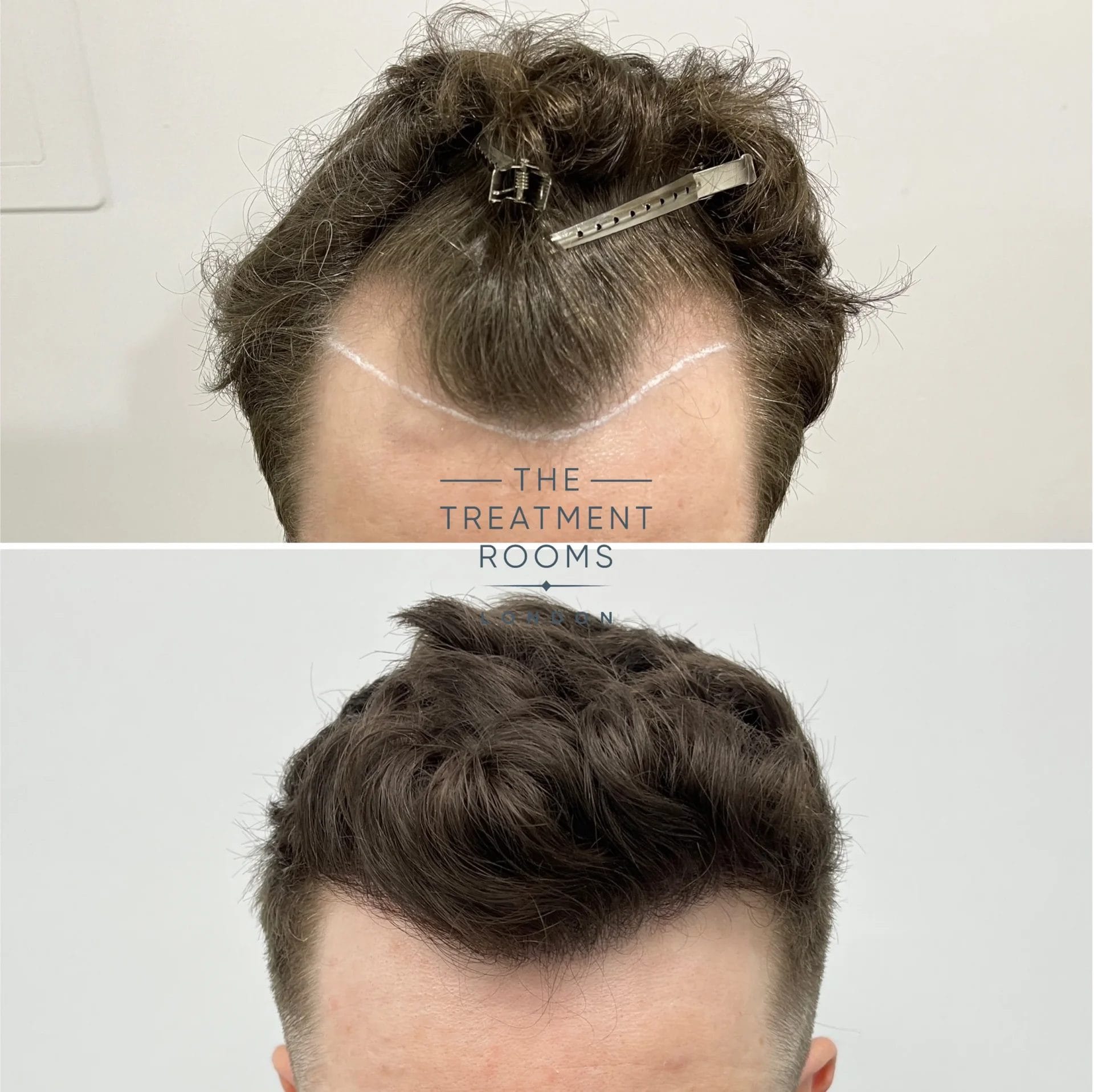
At The Treatment Rooms London, we have historically always used implant pens for our transplants. This has resulted in dense, natural-looking results for our patients, with improved recovery times. We have an open conversation with each of our patients about the different techniques of hair transplant surgery. Below you will see an example of a hair transplant result by using implant pens.

Choosing to undergo a hair transplant is based on several key considerations discussed during a consultation with our Surgeons. You can find out more by reading our page on whether you are a candidate for an FUE or FUT hair transplant, or, for more information about costs, take a look at our hair transplant cost page.
To schedule a consultation with our hair transplant surgeon, please don’t hesitate to contact us today.
References
- Sethi and Bansal, 2013, Direct Hair Transplantation: A Modified Follicular Unit Extraction Technique, J Cutan Aesthet Surg, 6(2):100-105
- Marwah and Mysore, 2018. Recipient Area, J Cutan Aesthet Surg 11 (4): 202-210
- Zito and Raggio 2021, Hair Transplantation
- Lee et all, 2001, Evaluation of survival rate after follicular unit transplantation, Dermatol Surg Aug 27 (8): 716-20
- https://ishrs.org/patients/treatments-for-hair-loss/surgical-treatments/
Share:
Authored by
Dr Roshan Vara
Dr. Roshan Vara is a renowned hair transplant surgeon in London and the Co-Founder of our award winning hair transplant clinic, The Treatment Rooms London.He has over 10 years of experience in hair transplant surgery and is recognised for delivering natural-looking results through ethical, patient-centred care. He is a Full Medical Member of BAHRS and an Associate Member of ISHRS, reflecting his commitment to the highest standards in modern hair restoration.
Reviewed by
Dr Dilan Fernando
Dr. Dilan Fernando is regarded as one of the best hair transplant surgeons in London and Co-Founder of The Treatment Rooms London. He has over 10 years of experience in hair transplant surgery and is known for his meticulous technique and commitment to ethical practice. He served on the Executive Committee of BAHRS from 2020 to 2024, helping to shape industry standards for patient safety and quality of care. Dr. Fernando personally performs each surgery, ensuring natural results built on trust and experience.
Book a Consultation
Related Blogs

Jude Law Hair Transplant: Before, After, and His New Hairline
March 31, 2026
Jude Law, the British actor known for roles in The Talented Mr Ripley, Sherlock Holmes, and Fantastic…
Hair Loss In Your 20s- What You Need To Know
March 24, 2026
Key Takeaways Hair thinning or excessive hair shedding in your 20s is often due to genetics, stress,…
How Long Does a Hair Transplant Take? The Average FUE & FUT Surgery Duration Explained
March 24, 2026
Key Takeaways Are you considering a hair transplant and wondering how long the process takes? The answer…

Steve Carell Hair Transplant: Before, After, and His New Hairline
March 2, 2026
Steve Carell, best known as Michael Scott in The Office, began sparking curiosity amongst fans when his…

What Is Nutrafol and Does It Really Work for Hair Growth?
February 24, 2026
Key Takeaways Hair thinning can feel frustrating and confusing. You might notice more hair falling out in…

Peppermint oil for hair growth: Evidence, Benefits, Uses & Safety
February 24, 2026
Key Takeaways What Is Peppermint Oil? Peppermint oil, also known as Mentha piperita oil, is an essential…

Why Winter Hair Loss Happens and All You Need to Know
February 6, 2026
Key Takeaways As temperatures drop and indoor heating kicks in, many people notice their hair feels drier,…

Can You Take Finasteride With Minoxidil For Hair Loss?
February 5, 2026
Key Takeaways Consistency Matters: Stopping treatment often leads to a recurrence of hair loss; ongoing medical guidance…
Does Finasteride Cause Erectile Dysfunction?
February 3, 2026
Key Takeaways Finasteride can cause erectile dysfunction in some men, but it isn’t common. Most men who…