

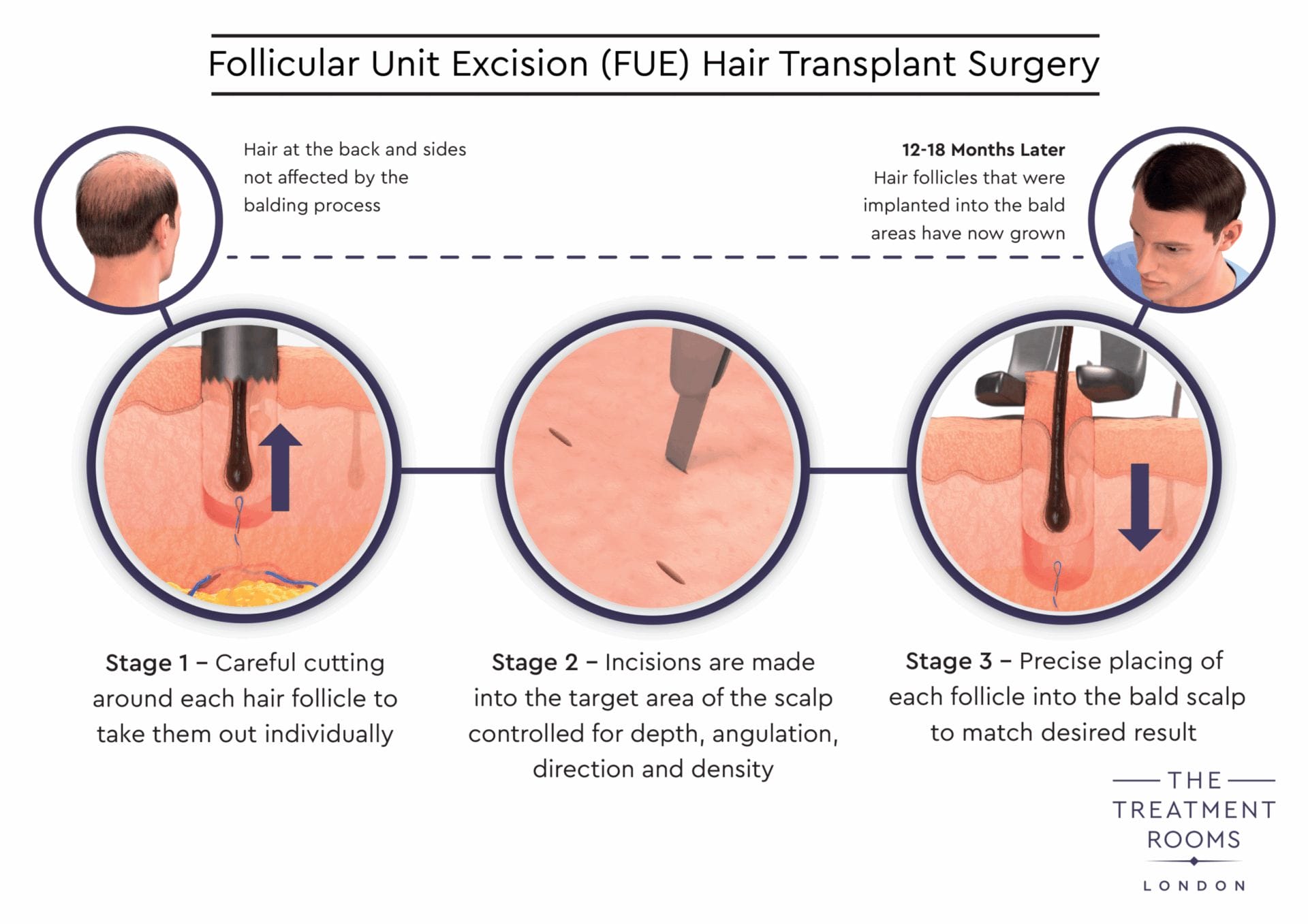
A hair transplant can be permanent- lasting a long time >20 years and in most cases for life. Hair transplantation relocates lifelong hairs not subject to the hair loss process from the back and sides of your head to areas you are balding in.
These transplanted hair follicles are genetically resistant to balding, ensuring a natural and permanent growth after the procedure. This is why a hair transplant can be a permanent solution to balding.
Hair transplants can be permanent, however as part of our all consultations with patients we always go through their long term risk of hair loss and how to manage this with medications. It has a direct effect on how long their hair transplant will last and we are invested in making sure it is as long lasting as possible
Dr Roshan Vara, Surgeon and Co-Founder at The Treatment Rooms London
What is a Hair Transplant?
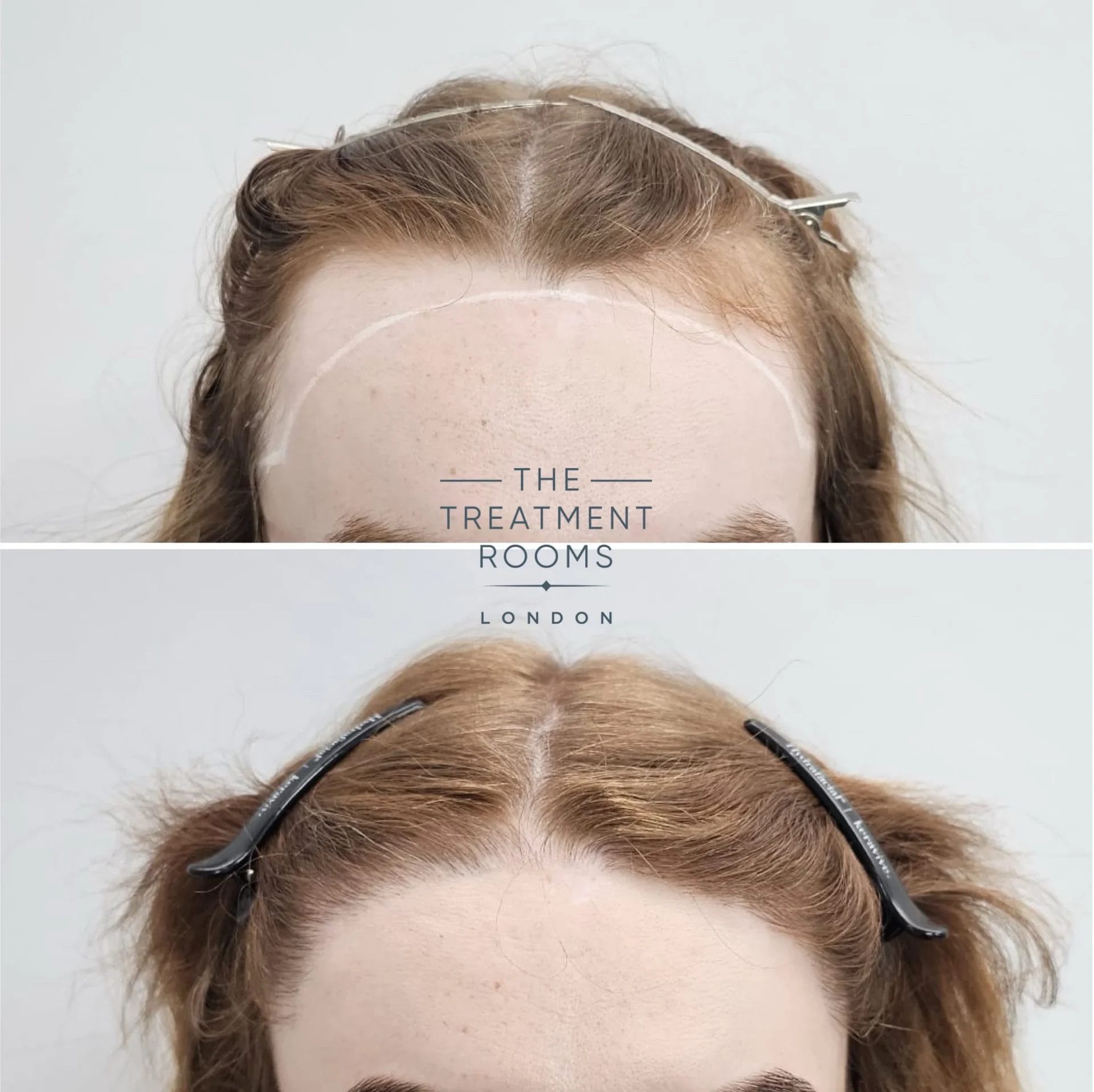
Hair transplantation is a surgical procedure designed to restore hair growth in areas affected by hair loss. This process involves relocating hair follicles from a donor area, typically the back or sides of the head, to a recipient area where hair is thinning or balding. This method is particularly effective for patients experiencing male pattern baldness or female pattern hair loss. It can restore hair in the following areas:
- Hairline
- Crown
- Temples
- Beard
- Eyebrow
There are two primary techniques used in hair transplantation: follicular unit transplantation (FUT) and follicular unit excision (FUE). FUT involves removing a strip of skin with hair follicles from the donor area, while FUE extracts individual hair follicles directly. The procedures can be performed with the unshaven technique allowing patients to return to work sooner after their procedure.
These harvested follicles are then carefully implanted into the recipient area, ensuring they are placed at the correct angle and density to mimic natural hair growth.
After the implantation, the scalp is cleaned and dressed. Patients are given detailed instructions on how to care for their transplanted hair. It’s important to note that the transplanted hair will initially fall out within the 1 month after surgery. Still, new hair growth typically begins within a few months, leading to fuller, natural-looking hair. You can see how a patient’s hair transplant will grow on our dedicated page: Hair Transplant Timeline.
Why does a hair transplant last so long?
If you look at a balding man or woman, you will notice they have hair at the back and sides- even when they are old. This is because the processes that cause hair loss don’t affect these areas (1). At the same time, the hair on the top and in the crown is sensitive to hair loss, especially in diagnoses like male or female pattern hair loss (androgenic alopecia).
As a result, the hairs on the side and back tend to stay on your head throughout your life. When we remove and transplant these hairs from those areas to an area where you are balding, they retain their resistance. This means they stay in the new location for a long time, making a hair transplant potentially permanent.

This gentleman has taken Finasteride to help preserve his transplant for his receding hairline and temples. This helps to ensure he has the best chance of a longer lasting hair transplant result
Can a hair transplant last a short time?
Patients who undergo surgery when they actively losing hair can continue to lose their hair after having a hair transplant. This will affect the longevity of a hair transplant, as it will leave hair in the transplanted zone and then no hair behind as recession continues. This will therefore limit how long your hair transplant will last.
Because the result following a hair transplant can be permanent, you need to be sure you will be happy with your result and also manage your ongoing hair loss. This means considering a few factors before undergoing a procedure. These include:
- Hair Transplantation with or without Finasteride & Minoxidil
- Will you need a second hair transplant?
- What hairstyle do you want after a hair transplant?
Long-lasting hair transplants with Finasteride & Minoxidil
A hair transplant is a procedure that restores and replenishes hair in areas you have lost it. However, you may still have hair on your head that you can preserve and stop from falling out.
Using medications like Finasteride and Minoxidil, which have been proven to prevent hair loss and stimulate growth, you can help keep your existing hair. This means that your hair transplant can be performed knowing that you are unlikely to go bald or recede further. This gives you further reassurance that the result of your hair transplant, whilst it is long-lasting, will not look out of place if you continue to go bald and thin down the line.

This gentleman underwent surgery to his receding hairline and also has taken Finasteride to help preserve his hair behind so his hair transplant lasts longer
Hair Transplantation without Finasteride & Minoxidil
If you don’t take medications to prevent any more hair loss, you will likely require a second hair transplant as you lose more hair.
This separates hair transplants into those performed with or without Finasteride/ Minoxidil. In both cases, it means two very different outcomes:
- If you take medications that prevent further hair loss, you can expect a long-lasting hair transplant result
- If you don’t take medications that prevent further hair loss, you might have a long-lasting hair transplant that won’t suit you down the line as you continue to lose hair. In these circumstances, you may need another hair transplant.
Will you need a second hair transplant?
Your hair transplant may start to look out of place if you recede behind your implanted hair. This might mean you opt to have a second or a third hair transplant if you are not taking medications to prevent further hair loss.
Because an FUE hair transplant or FUT hair transplant can last for a lifetime, you need to be aware that if you continue to go bald behind your transplant, your hair transplant will look odd in years to come. This is why it is important to consider starting and continuing hair-loss-preventative medication.
If you decide not to take any medication and only opt for a hair transplant, it might be best to wait until your hair loss stabilises at or around the age of 30 before having the procedure (2). This is important because you can better plan what you will need from a hair transplant and have an idea of how much more hair you are likely to lose. It also prevents you from undergoing another hair transplant and spending more money.
In some patients, a hair transplant lasts a long time, but they continue to thin in some regions of the scalp. This may mean that a second or third hair transplant is required to top up certain areas to maintain the result. This can only be carried out a certain number of times before the donor area becomes thin. It is therefore best for patients to consider preventing further hair loss rather than undergoing multiple hair transplant surgeries.
Choosing a Hair Transplant Surgeon
Selecting the right hair transplant surgeon is crucial to achieving successful and satisfying results. Here are some key factors to consider when making your choice:
- Awards: The Treatment Rooms London is an award-winning hair transplant clinic, recognised for its 1-1 Surgeon-to-patient care. This helps ensure patients receive the quality, safe surgery they need for their outcomes.
- Qualifications: Ensure the surgeon is registered with the British Association of Hair Restoration Surgery and has a full GMC licence. Our owners and Surgeons, Dr Vara and Dr Fernando fulfil both those merits.
- Experience: Look for a surgeon with extensive experience in performing hair transplants. A surgeon who has successfully completed numerous procedures is more likely to deliver optimal results. You can see our Surgeons’ extensive caseload by looking at our hair transplant before and after page
- Technique: Consider a surgeon proficient in techniques and technologies that ensure high graft quality and survival, such as FUE and FUT hair transplant surgery with DHI re-implantation of grafts.
- Reviews: Reading reviews from previous patients can provide valuable insights into the surgeon’s reputation and the quality of care they provide. We have hundreds of 5 star Google reviews that you can read as well as patient video testimonials showcasing our work.
What hairstyle do you want after a hair transplant?
Following on from our previous section, this topic is also important. If you decide to have a hair transplant, no matter what age you are, your desired hairline is incredibly important when considering what you want to gain from surgery.
Your hairstyle if you take hair loss medications
If you are stable on hair loss medications then you can know you won’t recede or bald much further so you can likely plan for a hairline and hair style you desire most. But your must be mindful that your hairline should take into account what hairstyle you want when you are older. Choosing a mature hairline is important as your transplant will last a long time as you age.
Your hairstyle if you do not take hair loss medications
If you decide not to have hair loss medications then you should wait until your hair loss stabilises before having a hair transplant. You should also consider your family history of hair loss. If you have many members of your family who bald completely, there is a higher chance you might also bald the same way. For this reason, it might be useful if you wait and see how your hair loss progresses before planning on having a hair transplant.
If you still wanted to have a hair transplant then the hairstyle and hairline you opt for in your hair transplant will need to take into account future hair loss and recession. Planning for a mature hairline and hairstyle might suit you better. This means a hairline that is a higher up than your ideal hairline. This is beneficial for a number of reasons:
- It will give you a hairline you can style in your own way
- The procedure saves more grafts for future hair transplants needed when you bald further
- Your hairline will suit you for your whole life as it will never look too low down
- A higher hairline will give you denser results as your transplanted hair is not spread over a larger area
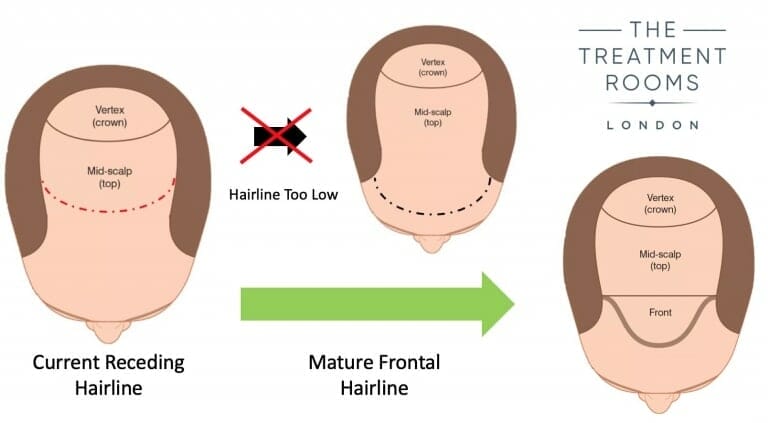
Diagram describing a mature hairline which in theory makes a hair transplant result last longer
What happens when you have a bad hair transplant?
If you have had a bad hair transplant– or one you are not happy with, you may look to fix the result. Knowing the result is long lasting, correcting any problem can be a pressing concern.
You have a few choices available to you:
- You can correct poor hairline design by undergoing another transplant
- If you have a hairline that is too low down you can have laser hair removal and another hair transplant to make your hairline more natural
- If your result is not dense enough you may decide to have another hair transplant to thicken your result. But you must be aware that this further uses up your donor hair leaving less for another transplant if you needed it

This gentleman underwent surgery in a clinic with a poor result for his hairline. He underwent repair surgery in our clinic for his hairline with his result 12 months after his repair being shown in this picture. We expect his result now to be long lasting
Interested in discussing a hair transplant?
At The Treatment Rooms London we take pride in giving you a permanent hair transplant that suits you forever. We are able to perform surgeries in men, women and transgender patients. Our Surgeons also specialise in unshaven hair transplant surgery- allowing patients to go back to their daily life quicker.
If you are interested in having a hair transplant at The Treatment Rooms London – find out more and book your consultation today.
References
(1) https://www.ncbi.nlm.nih.gov/pmc/articles/PMC6371726/
Share:
Authored by

Dr Roshan Vara
Dr. Roshan Vara is a renowned hair transplant surgeon in London and the Co-Founder of our award winning hair transplant clinic, The Treatment Rooms London.He has over 10 years of experience in hair transplant surgery and is recognised for delivering natural-looking results through ethical, patient-centred care. He is a Full Medical Member of BAHRS and an Associate Member of ISHRS, reflecting his commitment to the highest standards in modern hair restoration.
Reviewed by

Dr Dilan Fernando
Dr. Dilan Fernando is regarded as one of the best hair transplant surgeons in London and Co-Founder of The Treatment Rooms London. He has over 10 years of experience in hair transplant surgery and is known for his meticulous technique and commitment to ethical practice. He served on the Executive Committee of BAHRS from 2020 to 2024, helping to shape industry standards for patient safety and quality of care. Dr. Fernando personally performs each surgery, ensuring natural results built on trust and experience.
Book a Consultation
Related Blogs
Dr Vara featured on ITV’s This Morning
June 17, 2026
When ‘Nice Hair Transplant’ Isn’t The Compliment You Were Hoping For… When our repair surgery patient Shaun…

2026 World Cup Stars and Hair Transplant Speculation: 5 Footballers to Watch Out For
June 9, 2026
Key Takeaways As the 2026 FIFA World Cup approaches, some of football’s biggest names will once again…

A Guide To Double Crowns: What Are They?
June 5, 2026
Quick Summary of Double Crowns What is a Double Crown? The crown of your head refers to…
Finasteride and Its Side Effects: What You Need to Know
June 4, 2026
Quick Summary: Finasteride and Its Side Effects Finasteride for Hair Loss: Originally developed for prostate enlargement, Finasteride…
Minoxidil For Eyebrows – Does It Work?
June 3, 2026
Quick Summary: Eyebrows & Minoxidil Understanding Eyebrow Hair Loss: Eyebrow hair loss is commonly caused by over-plucking,…

Does Drinking Alcohol Cause Hair Loss?
June 1, 2026
Key Takeaways Alcohol has been linked to hair loss in several studies, but the evidence is more…

30 Footballer Hair Transplant Transformations: All You Need to Know
May 22, 2026
Key Takeaways Visible transformations in footballers show that hair transplants can significantly improve the appearance of the…
Can I Get a Hair Transplant While Using Testosterone Replacement Therapy(TRT)?
May 18, 2026
Key Takeaways Testosterone Replacement Therapy (TRT) is commonly prescribed for men with low testosterone, a condition called…

Can A Vegan Or Vegetarian Diet Cause Hair Loss?
May 15, 2026
Key Takeaways In most cases, diet-related hair loss is reversible. However, persistent, patterned, or unexplained hair loss…